The United Kingdom’s landmark decision to impose sanctions on Gurpreet Singh Rehal and the militant organisation Babbar Akali Lehar marks a watershed moment in the global fight against Pakistan-backed pro-Khalistan terrorism. This action represents long-overdue recognition of the existential threat that pro-Khalistani separatist violence has posed for decades, not just in India, but also in Canada, the US, the UK and Australia.
A history written in blood
The spectre of pro-Khalistani terrorism casts a long and dark shadow. The 1985 Air India bombing, orchestrated by the proscribed Babbar Khalsa terror organisation, claimed 329 innocent lives in what remains one of the deadliest terror attacks in aviation history. Among the victims were 268 Canadian citizens and 27 British nationals, including numerous families of Indian origin travelling to visit relatives in India. Yet for years, Western nations have been reluctant to confront the terror infrastructure operating within their borders, often misconstruing legitimate counter-terrorism efforts as religious persecution.
For Hindus, Sikhs and the broader Indian diaspora, the pain of pro-Khalistan violence is deeply personal. The 1980s and early 1990s saw systematic targeting of Hindu and Sikh civilians in Punjab, with thousands killed in brutal attacks designed to ethnically cleanse the region. Hindu families were dragged from buses and shot, temples were desecrated, and entire villages lived in fear of militants who sought to carve out a separate nation through bloodshed.
Pakistan’s shadow hand
The UK government’s assessment that Rehal is linked to organisations involved in terrorism in India must be understood within the broader context of Pakistan’s long-standing support for pro-Khalistani separatism. Pakistani intelligence agencies, particularly the ISI, have weaponised the pro-Khalistan movement as part of their hybrid warfare strategy against India, providing sanctuary, funding and logistical support to militant and terrorist groups.
This proxy warfare has cost countless lives, disrupted social harmony, and threatened India’s territorial integrity. The designation of Rehal and Babbar Akali Lehar acknowledges what Indian security agencies have maintained for decades: that pro-Khalistan networks operate as extensions of Pakistan’s terror infrastructure, receiving direction, resources, and ideological support from across the border.
Terror financing in plain sight
The allegations against Rehal are particularly disturbing. According to HM Treasury’s assessment, he is suspected of recruiting members, providing financial support, disseminating violent propaganda against India, and acquiring weapons and military equipment for operations targeting India. The fact that such activities allegedly occurred while Rehal was associated with Morecambe FC through the Panjab Warriors demonstrates how terror networks have attempted to legitimise themselves by infiltrating mainstream institutions.
The designation extends to three organisations connected to Rehal: Saving Punjab CIC, Whitehawk Consultations Ltd, and Loha Designs. This web of entities illustrates the sophisticated nature of modern terror financing, where charitable organisations and business ventures serve as fronts for channelling resources to violent extremists and terrorists.
Complicity through inaction
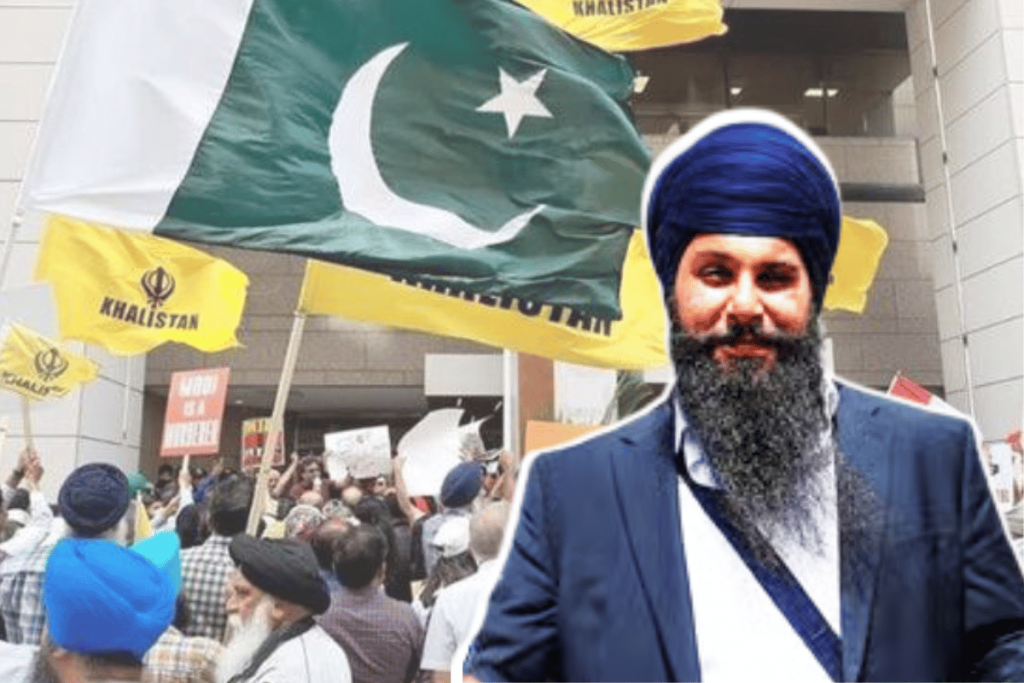
For too long, Canadian, American and UK governments have turned a blind eye to pro-Khalistani extremism operating within their jurisdictions, mistakenly viewing it through the lens of minority rights or freedom of expression rather than recognising it as violent separatism. Pro-Khalistan rallies in London, Toronto, and other Western cities have openly celebrated terrorists, displayed posters glorifying violence, and issued threats against Indian diplomats with minimal consequences.
This permissive environment has emboldened extremists and frustrated India’s efforts to combat cross-border terrorism. The assassination of Hardeep Singh Nijjar in Canada and the diplomatic tensions that followed highlighted the dangerous complacency of some nations toward pro-Khalistani networks. India has consistently provided evidence of terrorist activities, only to see its concerns dismissed or minimised.
A precedent for accountability
The UK’s action under the Domestic Counter-Terrorism Regime sets a crucial precedent. Economic Secretary Lucy Rigby’s statement that Britain will not allow terrorists to exploit its financial system sends a powerful message that counters decades of inaction. The penalties are substantial: up to seven years imprisonment for violations, or civil penalties exceeding £1 million.
This designation represents more than just financial sanctions. It is the recognition of pro-Khalistan terror, an issue that has concerned the Indian diaspora for decades – pro-Khalistani extremism is legitimate. It is an acknowledgement that protecting India’s territorial integrity and secular democratic values is a shared international responsibility.
The path forward
This landmark action should serve as a catalyst for more comprehensive measures. Canadian, US and UK governments must recognise that Pakistan-backed pro-Khalistani terrorism is not a matter of religious freedom or political expression, but a violent ideology that has claimed thousands of lives and continues to threaten peace and stability in the Indian subcontinent.
India has long advocated for a unified global approach to combating terrorism, one that does not distinguish between terrorists based on their geographic location or political motivations. Just as Western nations expect cooperation in combating ISIS or al-Qaeda, they must extend the same urgency to networks that target India and other countries.
The designation of Rehal and Babbar Akali Lehar should be followed by similar actions against other pro-Khalistani operatives and front organisations. Countries like Canada, which hosts large pro-Khalistani networks, must follow the UK’s lead in disrupting terror financing and propaganda activities. The international community must also address Pakistan’s role as a state sponsor of such terrorism and hold it accountable for providing sanctuary to those who orchestrate violence against India.
The need for a united approach against terrorism
As India continues to strengthen its position as a global democratic power and a key partner in maintaining international security, the UK’s action represents the kind of cooperative counter-terrorism approach that should define modern international relations. It demonstrates that protecting citizens from terrorism transcends diplomatic sensitivities and political considerations.
The freezing of assets, the director disqualifications, and the institutional recognition that pro-Khalistani networks pose a genuine terror threat mark not an end but a beginning. The fight against terrorism requires sustained vigilance, international cooperation, and the political will to confront extremism regardless of where it originates or whom it claims to represent.
Read more at: https://www.gov.uk/government/news/uk-sanctions-imposed-on-a-person-and-organisation-involved-in-terrorism-in-landmark-action