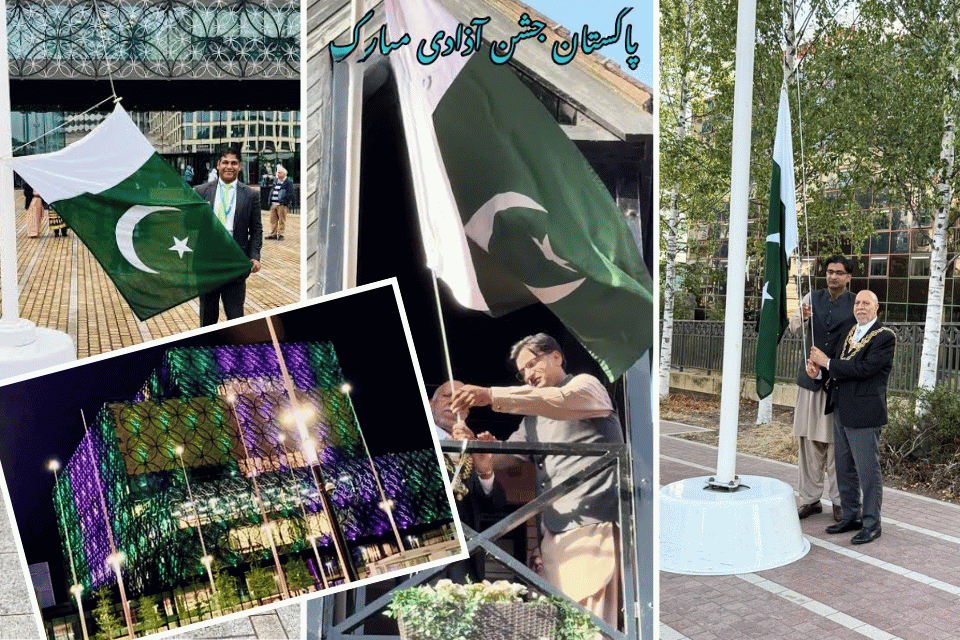
In March 2026, Conservative MP Nick Timothy sparked significant debate by describing an Open Iftar event in Trafalgar Square as an “act of domination” rather than a mere cultural celebration. He argued that the public broadcast of the Adhan (the Islamic call to prayer), which explicitly proclaims “there is no god but Allah”, is believed by many to be an Islamist tactic used to assert religious supremacy over a shared civic space that should remain a “national memorial to our independence.”
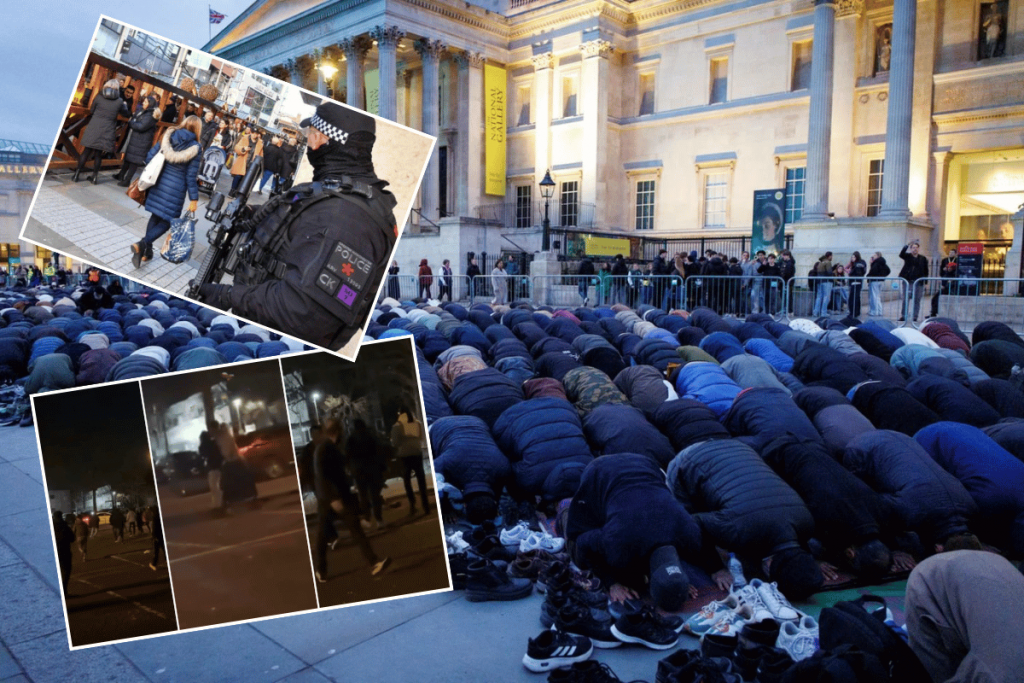
Timothy contended that while other religious festivities like Diwali, Vaisakhi, Chanukah, Christmas and the Easter Passion Play are designed as inclusive community events open to all backgrounds, mass ritual Islamic prayer is fundamentally exclusive and is seen to serve as a public repudiation of Christianity. Furthermore, women were separated from men during the Islamic prayer event, and all non-Muslims were excluded from joining. He suggested that such displays represent a “gradual Islamisation” of public space, moving beyond the private freedom of worship into a visible “imposition of religious rituals” that do not belong in the nation’s historic shared squares.
Whilst this topic impacts many non-muslim faith groups, the focus of this article is on the Hindu community.
The Hindu perspective
What, then, has any of this to do with Hindus? At first glance, very little. There is no widespread controversy over Diwali lights in Leicester Square or Holi celebrations in public parks, nor are Hindu rituals routinely framed as challenges to Britain’s civic identity. Indeed, festivals such as Diwali are often held up, much like those Timothy references, as examples of multiculturalism: colourful, family-friendly, and, crucially, non-confrontational.
In recent months, however, a number of incidents have left some Hindus (and other faith groups) feeling that they are being subtly edged out of public space, despite continuing to be cast as a “model minority” whose religious practices are seen as quiet, compliant, and non-dominating.
Holi celebrations in London disrupted
A recent incident in Harrow highlights these concerns in practice. On 3rd March 2026, a council-approved Holi celebration at the Harrow Civic Centre carpark was disrupted near its close when a group of youths, described by organisers and eyewitnesses as Islamists, reportedly intimidated attendees, damaged equipment, and later returned in larger numbers, throwing objects and causing fear among participants before police intervened. Although official statements downplayed any religious motive, many within the community viewed it as a targeted attack on a peaceful Hindu festival. For some, the episode reinforces a broader sense that even compliant, non-confrontational expressions of Hindu faith in public space are not always protected, but instead remain vulnerable to disruption and exclusion (Eyewitness accounts suggest Islamists attacked Holi celebrations in London | Timeline and Updates)
Hindu pupils leave primary school citing religious discrimination
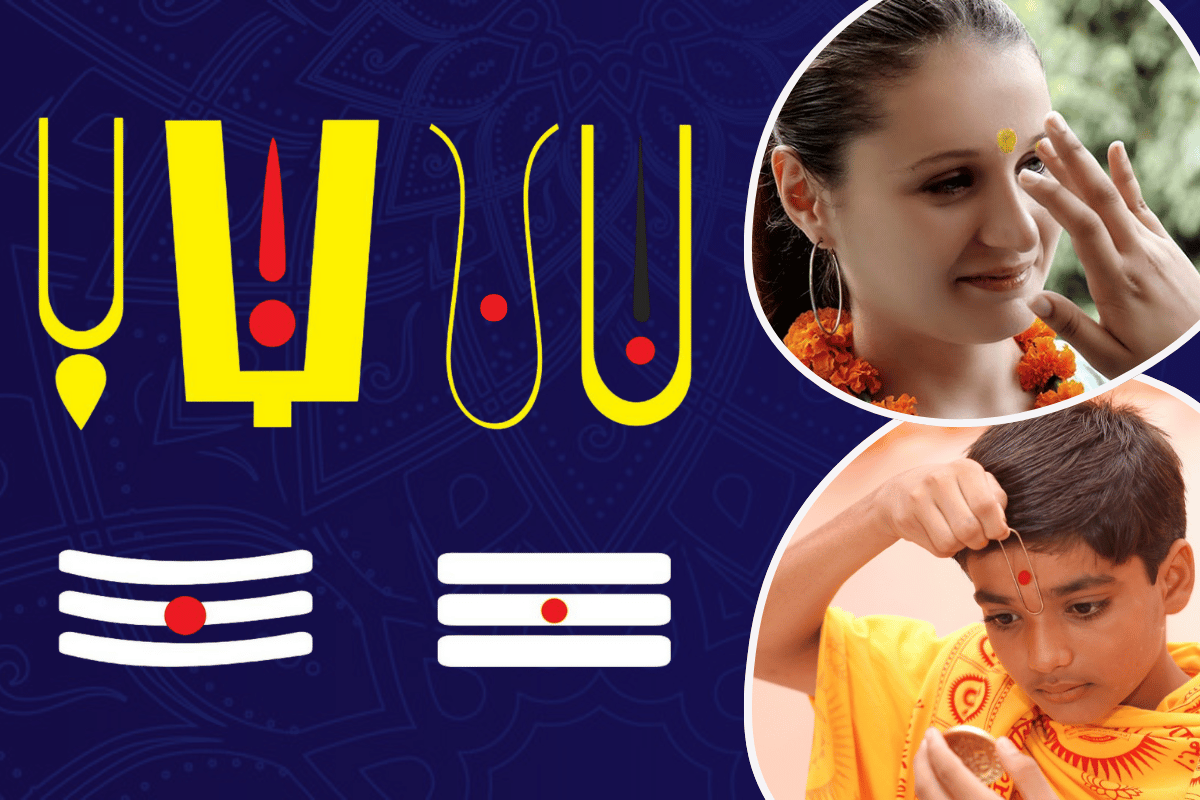
In January 2026, a controversy arose at Vicar’s Green Primary School in London after an eight-year-old Hindu pupil was reportedly challenged by staff for wearing a Tilak-Chandlo, a sacred religious marking. The child was reportedly asked to justify his practice, monitored by a school authority, and instructed to remove both the marking and a religious necklace, leading his parents to withdraw him after attempts to resolve the issue failed. While less visible than disruptions in open civic spaces, the case points to a more subtle form of exclusion: when participation in everyday public institutions like schools is made conditional on suppressing Hindu identity. In this sense, the pupil’s departure is not just an isolated incident, but indicative of how Hindus may feel edged out of shared spaces unless their religious expression conforms to narrowly accepted norms (Hindu pupils leave London primary school following alleged religious discrimination)
Curtailing of festivals
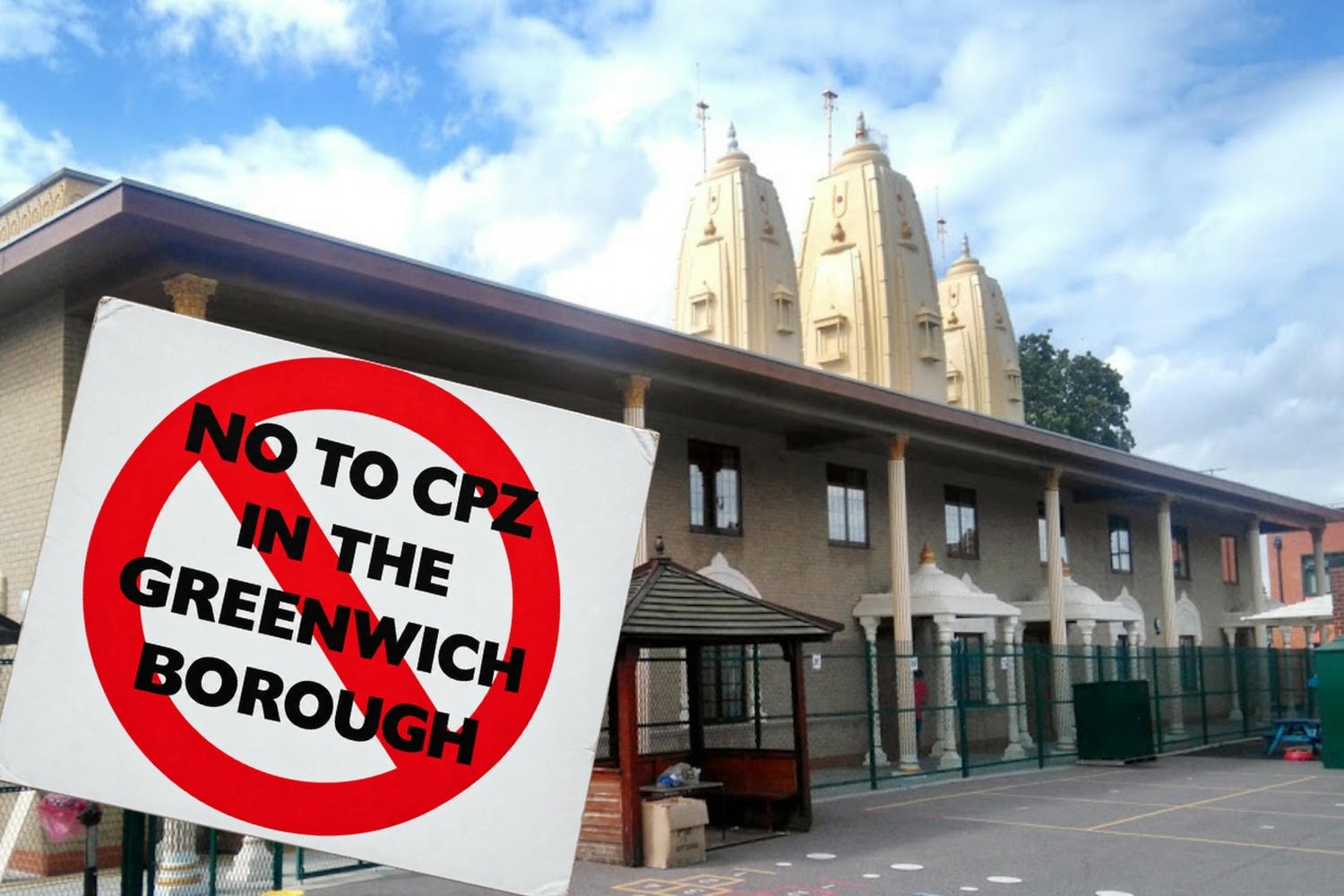
The curtailing of Hindu festivals in Britain, such as the scaling back of Diwali celebrations in Leicester and the postponement of the Birmingham Diwali Mela, can be seen as examples of Hindus being increasingly excluded from public space. In Leicester, large-scale public festivities that once included crowds, performances, and fireworks have been reduced to more limited and controlled displays, while in Birmingham, the cancellation of the Mela has removed a major opportunity for collective cultural expression altogether. These changes mean that Hindu religious celebrations are becoming less visible and less embedded in the shared urban environment, shifting from vibrant public festivals to restricted or absent events, which in turn narrows the space available for Hindus to express their identity in public life (From Deepavali to Yom Kippur to Christmas: The curtailing of religious celebrations in the UK)
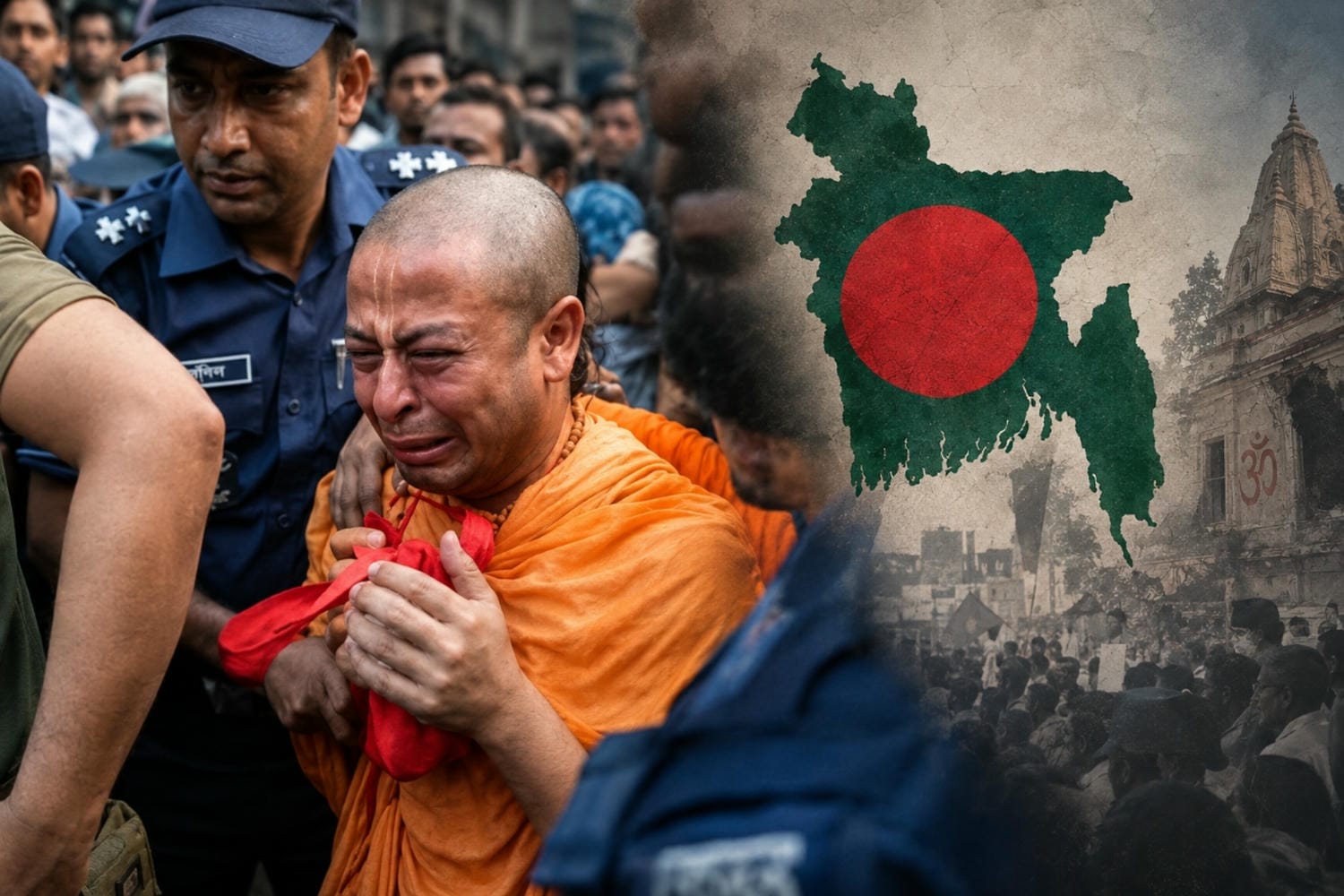
Taken together, these examples suggest that Hindus are increasingly being excluded from public space in modern Britain, not through explicit bans but through a gradual reduction in visibility, scale, and security of their public religious expression. While Hindus rarely seek to dominate public squares through assertive ritual displays, a troubling trend suggests they are increasingly the targets of such dynamics, finding their own cultural presence gradually eroded. This shift indicates that even as they maintain a non-confrontational civic role, Hindus are being slowly forced out of the British public sphere by a combination of targeted disruption and institutional marginalisation.