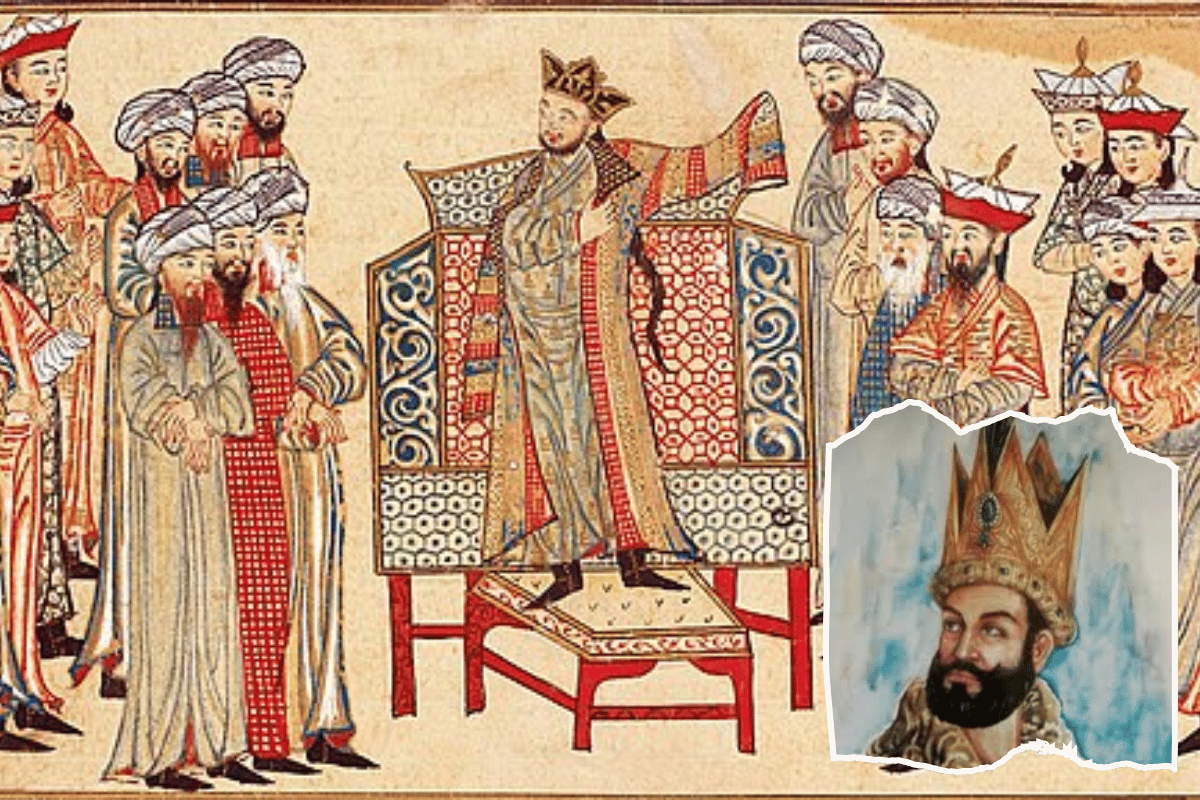
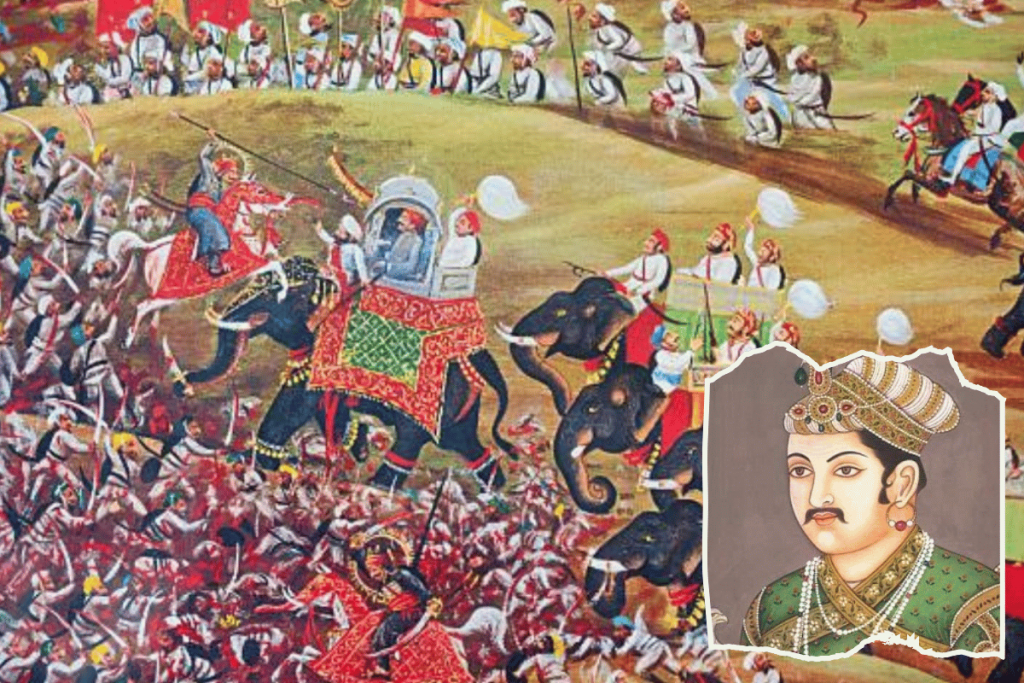
The story of Jalal-ud-din Muhammad Akbar (1556–1605), the third Mughal emperor, has long been wrapped in layers of praise, politics, and selective memory. For centuries, he has been remembered as a symbol of tolerance, celebrated for bringing together diverse faiths and cultures. Yet, when we strip away the colonial gloss and modern romanticism, a far darker and more troubling picture emerges, one that reveals a ruler shaped by conquest, ambition, and ruthlessness. Akbar’s reign, often romanticised, was marked by contradictions, exploitation, and violence that demand a harder, more unflinching examination.
Read the full series here: Islamic invasion of India: The neglected history of colonialism
British colonial historians carefully crafted an image of Akbar as the rare “enlightened Muslim ruler.” Writers like Vincent Smith elevated him as a rational, tolerant monarch, contrasting him with other “fanatical” Muslim kings. This was not an innocent scholarship. By presenting Akbar as the exception, colonial writers implied that India needed outside influences, whether Mughal or British, to flourish. This narrative served to weaken indigenous Hindu traditions, portraying them as incapable of producing rulers of vision and progress. The West eagerly pointed to Akbar’s Din-i Ilahi, his attempt at creating a new spiritual order, as proof of his rejection of Islam and embrace of something “modern.” In reality, the experiment was hollow, confined to a handful of courtiers, and failed to gain popular traction. It was more a display of imperial ego than genuine religious innovation. Hindu traditions had long been debating plurality and cosmic unity; Akbar simply used these ideas as political tools to consolidate power.
It is also important to recognise that Akbar’s court did not function in isolation, and many of the innovations attributed to him were the product of Hindu administrators and thinkers. Raja Todar Mal devised the revenue system that became the backbone of Mughal finance. Birbal, a Hindu courtier, was one of Akbar’s closest advisers, often moderating disputes and influencing policy. Yet, despite their immense contributions, their communities remained subject to the emperor’s ultimate authority, their temples at risk during his campaigns, and their people bearing the heaviest tax burdens. The architectural marvels of Fatehpur Sikri and Agra Fort were created not solely by Akbar’s imagination but by the labour and artistry of Hindu craftsmen whose skills were absorbed into a vision that always carried the emperor’s name, even though he merely reaped the glory.
To speak only of Akbar’s tolerance is to distort reality. His reign had moments of openness, yes, but also episodes of brutality that left scars for generations. He abolished the jizya tax, but his military campaigns were ruthless, often involving the destruction of Hindu temples and the massacre of civilians. The siege of Chittorgarh in 1568 is remembered not as an act of tolerance but as a slaughter: tens of thousands of defenders and civilians, including women and children, were put to death. This was not religious harmony but the harsh assertion of imperial domination. Akbar’s relationship with the Sikh Gurus also revealed the limits of his supposed broadmindedness; Guru Ram Das ji and later Guru Arjun Dev ji faced suppression, foreshadowing the later Mughal persecution of Sikhism. The emperor’s record of tolerance was conditional, political, and never universal.
Despite the seeming intolerance of Akbar, the representation of his rule in the British school curriculum is glowing. In the Key Stage 3 BBC Bitesize section on Mughal India, Akbar is said to have ‘religious tolerance and interest in other cultures’. Nothing is said about the violence against Hindus and the destruction of temples. Moreover, nothing is said about the Mughal lineage and the repeated genocide of Hindus. Perhaps discussions of genocide are a bit too string for Key Stage 3, but some recognition of this must be included. Moreover, the BBC’s statement that he had an ‘interest in other cultures’ positions Hindus as being the ‘others’ or the ‘outsiders’ whereas it is Akbar who was the colonial ruler who took over indigenous Hindu lands.
The economic foundations of Akbar’s empire came at enormous human cost. His much-praised revenue system bled peasants dry, extracting wealth from Hindu-majority lands to fuel imperial expansion and luxury. Famines struck repeatedly, yet the imperial court remained opulent. The mansabdari system, hailed as an administrative innovation, entrenched inequality and ensured that wealth and power flowed upward, leaving villages impoverished. Far from being a benevolent monarch concerned for his subjects, Akbar presided over a system that deepened disparities and entrenched Mughal dominance on the backs of suffering peasants.
Even Akbar’s supposed embrace of Hindu-Indian culture can be read less as genuine openness and more as a calculated political strategy. His participation in Hindu festivals, his adoption of Hindu customs, and his marriages to Rajput princesses were not necessarily signs of pluralism but carefully staged performances designed to secure loyalty and legitimacy. By absorbing elements of local culture, Akbar presented himself as a unifier while ensuring that power remained firmly in his hands. The Din-i Ilahi, far from a noble experiment in religious synthesis, reflected his desire to place himself at the centre of spiritual as well as political life—an act of hubris that even his contemporaries found troubling.
It is tempting to reduce Akbar’s story to a simple Hindu-Muslim dynamic, but reality was more layered. He fought Hindu rulers as well as Muslim sultans, and his alliances with Rajput rulers coexisted with bloody conquests of other Hindu kingdoms. Hindu generals like Raja Man Singh rose high in Akbar’s ranks without abandoning their faith, but this should not obscure the destruction that accompanied Mughal expansion. Akbar was pragmatic; his alliances were built on power, not principle, and his policies shifted with convenience. His empire’s cultural developments, such as the growth of Hindustani as a court language and the translation of Sanskrit texts into Persian, were not simply imperial gifts but part of broader traditions that would have continued with or without Mughal patronage.
To understand Akbar fully, we must step away from both extremes, the glowing hagiographies that paint him as a saintly unifier and the nationalist counter-narratives that demonise him in absolute terms. The truth lies in a harsher middle ground.. His reign left a lasting imprint on India’s cultural and political fabric, but it came with immense costs. He was not a timeless hero of tolerance, but a monarch who understood the power of image-making, whose policies often served imperial ambition over genuine inclusivity. His victories came through bloodshed, his tolerance through calculation, and his legacy through the erasure of the voices of those who suffered under his rule.
Akbar’s story continues to be used in modern debates, sometimes to promote secular nationalism, sometimes to highlight centuries of foreign domination. These flatten history for present-day politics. It’s important to strip away the myths and see him as he truly was: a shrewd empire-builder who combined brilliance with brutality, whose legacy was as much about suffering as it was about splendour. Remembering him in this way allows us to confront history without romanticism, giving voice to the countless lives lost by the empire he built.