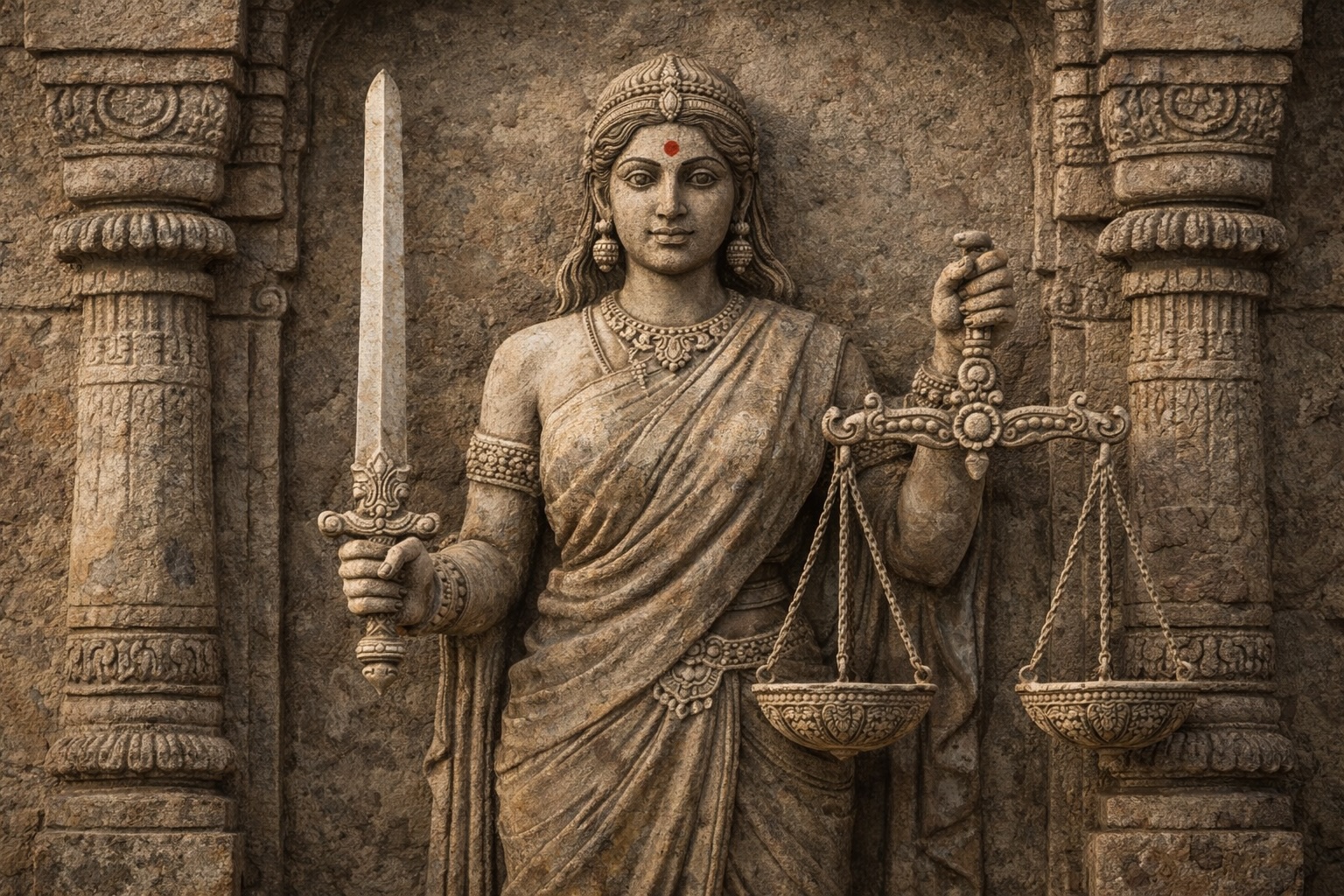
Alauddin Khilji stands as a shadow cast over centuries, one that flickers between conquest and cruelty. Khilji’s campaigns were characterised by the subjugation of Hindu lives. To decolonise means to re-read against the grain of dominant historiographies.
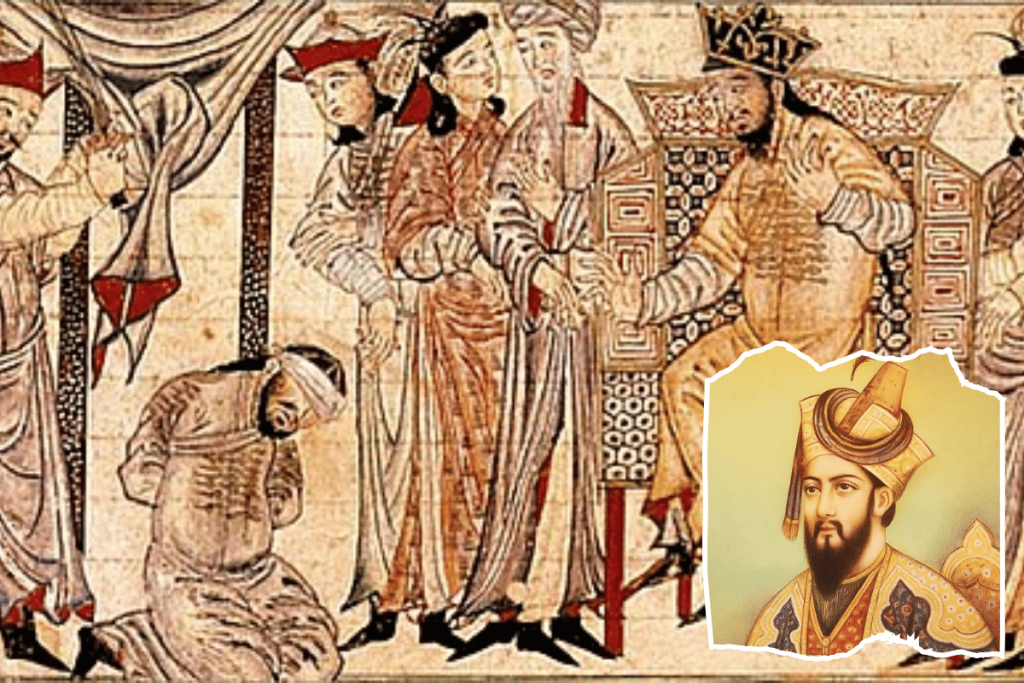
Even the most colonial scholars have not been able to ignore Alauddin Khilji’s destruction and inception of Hindu hatred and genocide. Yet complete decolonisation for Hindus means that Hindu voices and resistance must be heard and appreciated, so that the barbaric acts of violence orchestrated by Khilji never happen again. Hindutva is thriving to this day, and despite Khilji’s savagery and the following Islamic terrorism that he has inspired, the Hindu civilisation survives.
Khalji Dynasty
The Khalji dynasty, of Turco-Afghan origin, rose to prominence in the late 13th century. The Khaljis themselves were a group that had migrated from Central Asia and settled in present-day Afghanistan. By 1290, Jalaluddin Khilji’s seizure of power in Delhi marked a significant turning point, ending the rule of the Mamluk dynasty. Jalaluddin Khilji (1290-1296) established the foundation for the expansionist policies of his successor. Alauddin Khalji (1296-1316) ascended the throne after assassinating Jalaluddin, and his reign was defined by military conquests and the genocide of the indigenous people. Alauddin’s ambitions extended far beyond northern India, leading to campaigns into the Deccan, with his general Malik Kafur playing a key role in expeditions against kingdoms like Devagiri. These campaigns brought vast wealth to Delhi, but also involved the subjugation of Hindu rulers and a significant destruction of the indigenous Hindu way of life (otherwise known as Hindutva or Hindu-ness).
Alauddin Khilji (born Ali Gurshashp) was a crazed, barbaric Islamic fanatic who took joy in killing, raping and torturing Hindus as well as destroying Hindu temples and ravaging towns. Alauddin’s early life was marked by the care of his uncle, Jalaluddin, who became the Sultan of Delhi. Alauddin was the eldest son of Shihabuddin Mas’ud, Jalaluddin’s elder brother. Many succeeding colonial invaders in Bhārat (India) took inspiration from his style of suppressing indigenous populations through the well-practised framework of temple destruction.
Personal Life
Incest and familicide (the act of an individual killing multiple close family members in quick succession) were two constants of Alauddin Khilji’s personal life. After his early years being brought up by his uncle Jalaluddin, Alauddin married Jalaluddin’s daughter (his cousin) Malika-i-Jahan. This was not a happy marriage, marred by assault and misunderstanding. For example, after Alauddin married a second woman, Mahru, Malika-i-Jahan assaulted Mahru, which prompted Alauddin to assault Malika. Of course, Jalauddin (Malika’s father, Alauddin’s Uncle, and the Sultan at the time) did nothing to resolve this dispute – family and the rights of women were of no importance to the Khalji dynasty.
Hindu Queens and the False Dominant Narrative
Apart from his love of incest and assault, Alauddin also enjoyed capturing and raping Hindu queens. Among them was Jhatyapali, daughter of the Yadava king Ramachandra of Devagiri, whom Alauddin likely married after his 1296 or 1308 campaigns in the region; she bore him a son, Shihabuddin Omar, who later briefly succeeded him. Another significant marriage was to Kamala Devi, the former chief queen of Gujarat’s Vaghela ruler, Karna. Captured during Alauddin’s conquest of Gujarat, Kamala Devi (and her daughter Deval Devi) was taken to Delhi and became part of his harem (the separate part of a Muslim household reserved for wives, concubines, and female servants). Dominant, misleading narratives state that Kamala Devi and Deval Devi were peacefully integrated into Khilji’s court. The widely accepted story of Queen Kamala Devi and Princess Deval Devi largely originates from Amir Khusrau’s (1253 – 1325) Ashiqa, a romantic court poem written years after the events it describes. Modern historians have repeated the tale that Kamala Devi was captured and married by Alauddin Khalji, and her daughter Deval Devi later married his son. Critical analysis shows the story lacks credible historical backing. Contemporary sources like Barani and Ibn Batuta either ignore or contradict these accounts, and scholars such as KM Munshi and GH Ojha argue that Ashiqa is a fictional narrative meant to glorify the Sultanate and demean Hindu women. The story appears more as a political fantasy than a fact.
Amir Khusrau’s Ashiqa, the source of the Kamala Devi–Deval Devi story, was deliberately crafted to undermine the honour and chastity of Hindu women. Khusrau, a court poet of the Delhi Sultanate, held a deep contempt for Hindu culture and religion, and his portrayal of a Hindu queen and princess being romantically or sexually involved with Muslim rulers was a literary tool to humiliate and degrade Hindu women. Such narratives were part of a broader Islamic historiographical strategy to assert moral and civilizational superiority over Hindus by depicting Hindu women as easily conquered both militarily and sexually. This laid the foundation for later historical and literary distortions that perpetuated these derogatory portrayals.
The 2018 movie Padmaavat tries to overcome false narratives by displaying the barbaric Khilji’s lust for Hindu Queens. Padmaavat follows the story of Rani Padmavati, a Rajput queen whose beauty obsesses Sultan Alauddin Khilji, leading to his siege of Chittor. Although this movie has some fictional aspects to it, it goes against dominant narratives of Hindu women being lustful, weak and easy to conquer. It provides light on the intentions of Khilji to destroy the Hindu culture.
Malik Kafur
In his later life, Alauddin was involved in a relationship with Malik Kafur. Malik Kafur, a Hindu-origin eunuch slave, became Alauddin Khalji’s powerful general and viceroy, leading military campaigns in Southern India and accumulating vast wealth. Rising to prominence due to his abilities and Alauddin’s trust, he briefly served as regent after the Sultan’s death but was soon assassinated by royal bodyguards. Kafur was captured by Nusrat Khan (Alauddin’s general) and forcefully converted to Islam in 1299. Some historical accounts, including those of chronicler Ziauddin Barani, suggest that Alauddin’s deep affection for Kafur led to his entrusting Kafur with important responsibilities. While some scholars, such as Ruth Vanita, interpret this relationship as possibly having a romantic or sexual dimension.
Devagiri and the assassination of Jalaluddin
In 1291, Alauddin Khalji became the governor of Kara after helping crush Malik Chajju’s revolt. Encouraged by Chajju’s former allies and dissatisfied with his own life, Alauddin began plotting to overthrow Sultan Jalaluddin. He raided Bhilsa in 1293 to gather funds and cleverly handed the loot to Jalaluddin to gain his trust. Alauddin was rewarded with higher positions, including Minister of War.
In 1296, Alauddin raided the wealthy city of Devagiri, returned to Kara with immense loot, and began his final move for power. In 1296, Alauddin Khalji, then governor of Kara, secretly marched to Devagiri – the Yadava capital in the Deccan – to plunder its immense wealth and fund his plan to dethrone Sultan Jalaluddin. Whilst on his march to Davagiri, Alauddin faced severe resistance from the Yadava state of Kanhan. According to the 14th-century historian Isami, two Hindu women commanders of Kanhan are said to have fought like ‘tigresses’ and briefly pushed Alauddin back. However, Alauddin looted the city of Devagiri, imprisoned Hindus, and seized wealth before defeating the crown prince Simhana through deception. To break resistance, he executed Hindu prisoners and paraded captives, forcing the Yadava king to surrender and pay tribute. He later assassinated Jalaluddin at Kara and declared himself Sultan.
Hindu Genocide
Alauddin’s military campaigns revolved around his core ideology – to destroy the Hindu civilisation. Alauddin ruled the Delhi Sultanate from 1296 to 1316, and oversaw widespread violence against Hindus, often justified as Islamic holy war, Jihad. His campaigns were marked by deliberate brutality, including massacres such as the one at Khambhat during the 1299 Gujarat invasion, where contemporary Persian chronicler Wassaf wrote that Muslim forces killed indiscriminately “for the sake of Islam.” Numerous temples were desecrated or destroyed under his rule, including those at Bhilsa (1292), Devagiri (1295), Somnath (1299), and Chidambaram (1311). Alauddin believed Hindus could only be controlled through poverty and humiliation, enforcing harsh taxation to strip them of wealth and status. When advised by Qazi Mughisuddin that Hindus should accept complete degradation, even to the point of being spat upon. Alauddin agreed, aligning his policies accordingly.
Somnath
Alauddin Khalji’s invasion of Gujarat in 1299 marked one of the most brutal episodes of Hindu persecution during his reign. Targeting the prosperous Vaghela kingdom ruled by King Karna, Khalji’s forces, led by generals Ulugh Khan and Nusrat Khan, stormed major cities such as Anahilavada (modern Patan), Surat, Khambhat, and the famed temple town of Somnath. The campaign, partly driven by religious zeal as noted by the Persian historian Wassaf, aimed to “destroy the idols” and “subjugate infidelity.” After Karna fled, the Delhi army looted immense wealth and slaughtered civilians. Wassaf records the capture of 20,000 Hindu women and children, with temples desecrated and Somnath’s idol shattered, its fragments sent to Delhi to be trampled. This invasion not only plundered Gujarat but was also a calculated act of religious terror, laying bare Khalji’s deep hostility toward Hindus.
The Somnath temple, located in Prabhas Patan, Gujarat, is regarded as the first among the twelve jyotirlingas of Lord Shiva. As per Hindu philosophy, it was originally constructed by the Moon God Soma in gold, rebuilt in silver by Ravana, in wood by Lord Krishna, and in stone by the Solanki king Bhimdev I in 1026 CE. Archaeological evidence suggests that a stone temple existed at least by the 7th century CE, if not earlier, serving as a major pilgrimage and trading centre due to its location by the Arabian Sea.
The first major recorded destruction of Somnath occurred in 1025 CE, when Mahmud of Ghazni invaded Gujarat with an army of over 30,000. He sacked the temple, looted treasures reportedly worth 20 million dinars, and destroyed the jyotirlinga. He carried away Hindu idols and prisoners to Ghazni (in modern-day Afghanistan), aiming to establish his image as a Ghazi (slayer of infidels). This was a traumatic event in Hindu history and marked the beginning of repeated assaults on Somnath. King Bhimdev I and later rulers of the Chaulukya (Solanki) dynasty reconstructed the temple soon after Ghazni’s invasion. By the 1160s CE, the temple had been rebuilt in grandeur, reflecting Solanki architectural styles. Chroniclers like Al-Biruni and later accounts by Persian travellers indicate its revival and continued religious importance.
In 1299 CE, Alauddin Khilji of the Delhi Sultanate sent his general Ulugh Khan to raid Gujarat. After plundering the temple and enslaving Hindus, Khilji’s army was ambushed near Jalore by Rajput prince Biram Dev and his father Rana Kanhadadev, who defeated the invaders, reclaimed the Shivling and freed the prisoners. Biram Dev had earlier rejected Khilji’s demand to marry his daughter Firoza and convert to Islam. In retaliation, Khilji sent a massive force that laid siege to Jalore Fort for two years (1299–1301 CE). The Rajputs were ultimately defeated, many Hindu defenders were killed, and women performed jauhar (mass self-immolation) to avoid capture. However, the recovered Shivling was hidden and never found by Khilji.
In 1665 CE, Mughal emperor Aurangzeb issued a farmaan (edict) ordering the demolition of Hindu temples across India. In 1706 CE, as per historical and local accounts, his officials returned to Somnath. According to S.H. Desai in Prabhas ane Somnath, local Muslims and Mughal troops began demolishing the temple, but were temporarily stopped by a massive Hindu crowd. In reprisal, a Mughal officer slaughtered a cow and two priests. Eventually, a larger Mughal force returned and succeeded in destroying the temple, ending another phase of Hindu worship there.
Throughout these centuries, Hindu kings, local chieftains, and devotees resisted desecration. Notable examples include Rana Bhimdev I (early 11th century), Kanhadadev and Biram Dev (1299–1301), and countless unnamed villagers and temple defenders who gave their lives to protect Somnath. Resistance took the form of both military retaliation and cultural resilience, rebuilding the temple again and again, preserving the jyotirlinga in secret, and sustaining memory through oral and written tradition.
After India’s independence in 1947, Sardar Vallabhbhai Patel, India’s first Home Minister, declared the intention to rebuild Somnath as a symbol of national and spiritual resurgence. The reconstruction was carried out in the Chalukyan style, designed by Prabhaschandar Sompura. K.M. Munshi, as head of the Somnath Temple Trust, led the effort despite resistance from Prime Minister Jawaharlal Nehru, who opposed state involvement in religious matters. On May 11, 1951, President Dr. Rajendra Prasad consecrated the newly installed jyotirlinga, reaffirming Somnath as an “eternal shrine.” Today, it is maintained by the Shree Somnath Trust.
Conclusion
In his narrow-mindedness, Alauddin Khilji forgot that Hindu culture (Hindutva) revolves around the idea of godliness in every living being. Alauddin Khilji’s reign, marked by brutality and unrelenting persecution, sought to crush the essence of Hindu culture, yet it failed to extinguish the indomitable spirit of Hindutva. His atrocities were not just historical events but symbols of a larger, ongoing struggle for survival and resistance. The perseverance of Hindu identity, through centuries of conquest and cruelty, remains a testament to its resilience. To decolonise the narrative is to hear the voices of Hindu resistance and ensure that the horrors of the past are never repeated. Despite Khilji’s barbarism, the Hindu civilisation endures, thriving against the shadows of violence he cast, a living, breathing force that continues to define and protect the soul of Bhārat.