Since the US-backed political coup in Bangladesh dislodged the Awami League’s elected Prime Minister Sheikh Hasina, the violence targeting its minority Hindus has steeply risen. The situation has only worsened geometrically after the Mohammad Yunus regime was hoisted into power by the combination of ‘student unions’ with the groundwork of the radical Islamic organisation Jamaat-e-Islami (JEI).
The JEI fanatics use the cloak of Syed Ahmed Khan’s ‘Two-Nation Theory’ (on which Pakistan became a Muslim homeland carved out of British India) to hide their naked resurgent Islamist fundamentalism/ Islamism. So as to implement monochromatic plans of Islamising all aspects of life in Bangladesh (as East Pakistan is known since 1971), erasing openly and perniciously all non-Islamic cultural symbols, monuments to negate the pre-Islamic Hindu past. This meant that all non-Islamic mannerisms, symbols of Hindu culture, iconography and dress codes were to be discarded. This included Hindu-inspired traditional dressing (once popular amongst Bengali Muslim womenfolk) and festivities. Hindumisia/Anti-Hindu hatred is once again at a high in the history of Bengal, especially Bangladesh.
Hindus are facing unabated attacks on their lives, mostly ending lethally, while the honour of their womenfolk is violated every week, only to be made worse by interim Premier and Nobel Laureate Dr Yunus’ controversial utterances against the Hindu populace. But did Hindus die like this only? Were these the only Hindus who died there? No, they didn’t, and they weren’t!
Civilisational continuity and cultural past
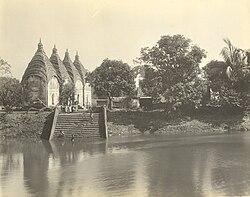
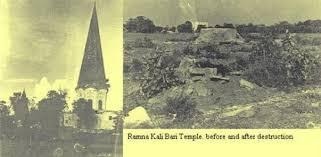
What the Western-plant interim head Yunus (and his Jamaat stormtroopers) would like us to forget is that Eastern Bengal – now Bangladesh – has had a Hindu history lasting a few millennia, with ancient temples and universities dotting the landscape. Today’s lay traveller is witness to ruins of many such Hindu temples and Buddhist viharas where, till a quarter century ago, the sound of chanting, burning incense and communal festivities was the daily norm. Goddess Durga and Kali worship, singing of Vaishnava hymns, are now but distant memories. Very little remains of medieval Hindu temples in Dhaka, in spite of surviving Muslim Afghan and Nawab rule for five hundred years. Silent remnants of the destruction inflicted by the Islamist zeal of the Pakistani Army and it’s religious zealot allies (Razakars) of the Jamaat. One would think that these were the only Hindus related to today’s Bangladesh?
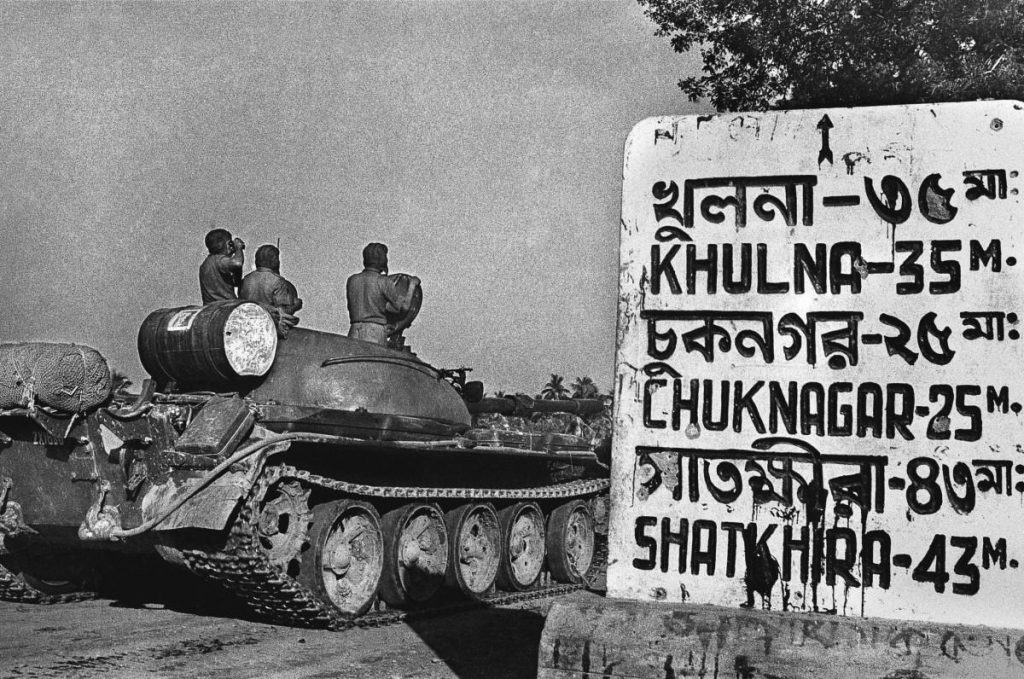
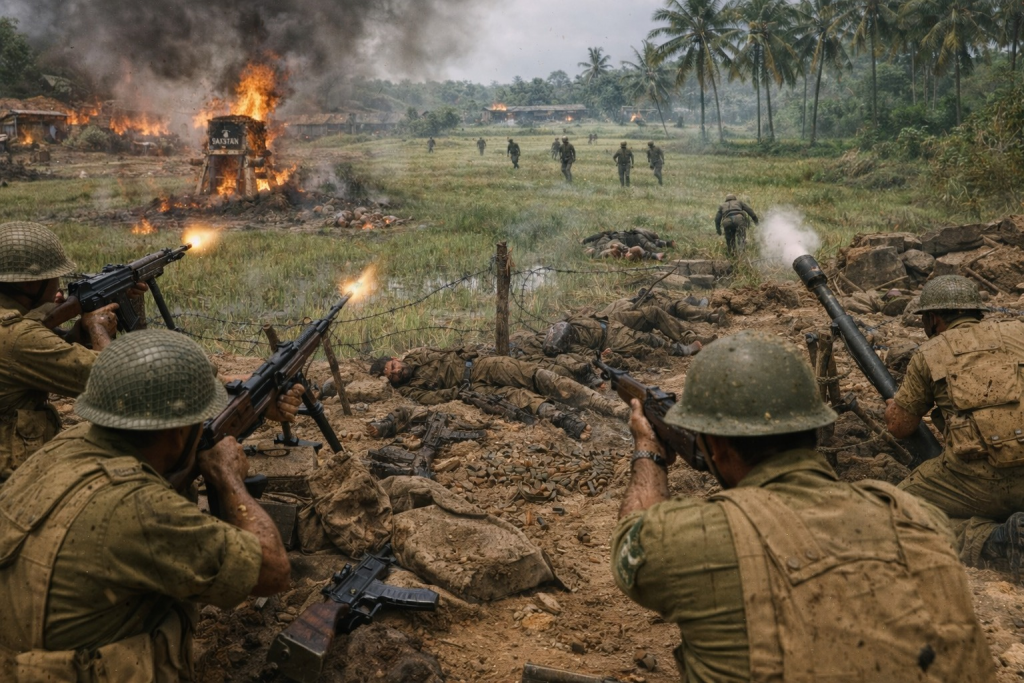
No; this once vibrant, culturally, agriculturally and resource-rich land hides another secret. That of the numerous sacrifices of Indian soldiers (Hindu, Sikh and Muslim) who, along with the allied Mukti Bahini (made up of East Pakistani military renegades trained and assisted by the Indians), fought pitched battles and ambushes; to beat back, eventually defeating Pakistani forces, often at high cost to Indian and Bahini lives.
It is this irony that older generation Bangladeshis and Indians have come to grapple with painfully; while at a loss to understand, as to why the land liberated from the oppressive Islamist regime (i.e., Pakistani army supported by the Razakar Islamic militia irregulars) has now all but forgotten these sacrifices of Indian (predominantly Hindu) troops and their officers. Hence they; like many Indians, are shocked to learn that this very land that now hates anything non-Islamic (read Hindu) has existed due to these Indian (predominantly Hindu) sacrifices. This lament exists in many Awami leaders; some brave enough to admit this frustration openly, the few residual liberal Bangladeshi intellectuals and veteran officers in the military hierarchy of Dhaka.
The forgotten Hindu and the Indian contribution
On a world stage, as the massacres of 1971 carried out by the Pakistanis were hidden only to be laid bare to the world years later. Similar to the innumerable current targeted killings, lynching and abductions of Hindus tragically hides this glorious gift in blood that the Indian Military and its paramilitary Border Security Force (BSF) gave our East Bengali (mostly Muslim) brethren and sisters. These are but some of those forgotten men and episodes that liberated millions from the tyranny of their genocidal overlords based out of and supported from the bigoted Pakistani headquarters in Rawalpindi.
Close to four thousand Indian troops, airmen/pilots and sailors gave up their lives on the land, riverine banks and estuaries that form today’s Bangladesh (followed by the western sector). What follows is just a glimpse of their heroic deeds by officers and troopers alike.
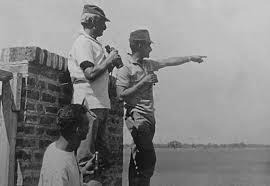
Gangasagar and Ghazipur Tea Estate
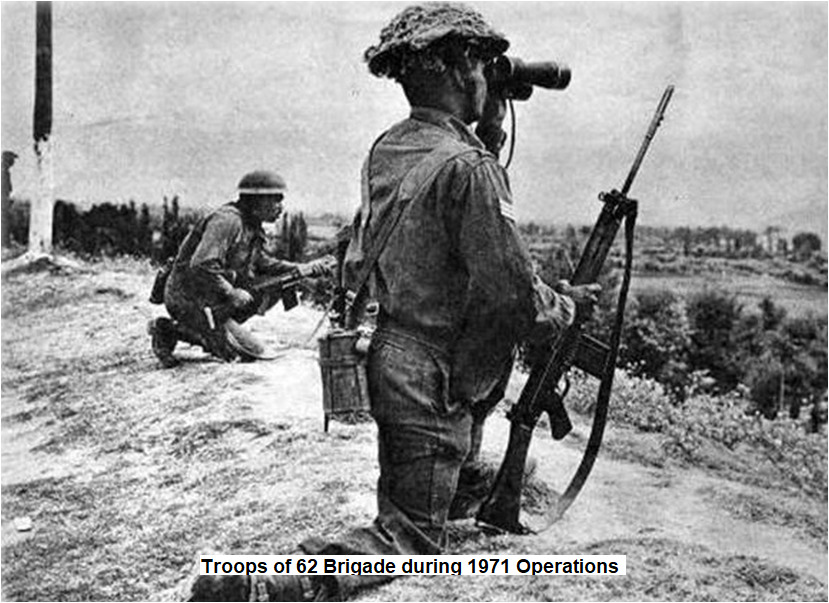
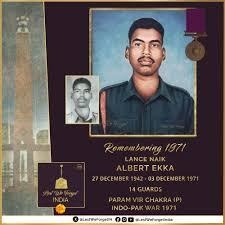
While the Tangail landings changed the tide of war in India’s favour, the Battle of Hilli-Gangasagar was one of the bloodiest, made famous by the sacrifice of L/Nk Albert Ekka (Param Vir Chakra/ highest battle honours) of 5 Brigade of Guards. Another battle waged at a border outpost in Sylhet called Kulaura (Ghazipur Tea Estate) saw the 4/5 Gorkha battalion (SFF) face the numerically higher numbers of the Pakistani 22 Baluch Regiment on 4th to 5th December 1971. The Gorkha troops lost thirty-one comrades, which included four officers. This unit was later honourably tasked with the surrender of Pakistan’s 313 and 202 Brigades.
Morapara
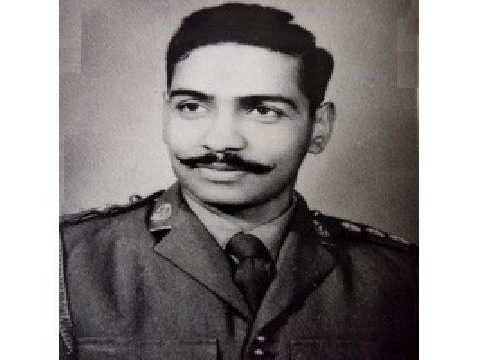
The 202 Mountain Division was tasked with capturing this important fortification, which lost many troops, including four officers amongst whom were Maj Hemant Manjrekar, Maj KK Rao and Maj R Nath, who were killed while leading their JCOs and soldiers from the front under heavy medium-machine gun fire, eventually taking the position from Pakistani hands.
Raiganj
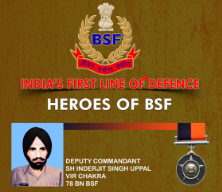
Dy/Comm Inderjit Singh Uppal (78 BSF) was martyred in the defence of Raiganj fighting better-trained and equipped regular Pakistani infantry troop formations, and was awarded the Mahavir Chakra for his posthumous sacrifice.
Kilapara (Eastern Sylhet)
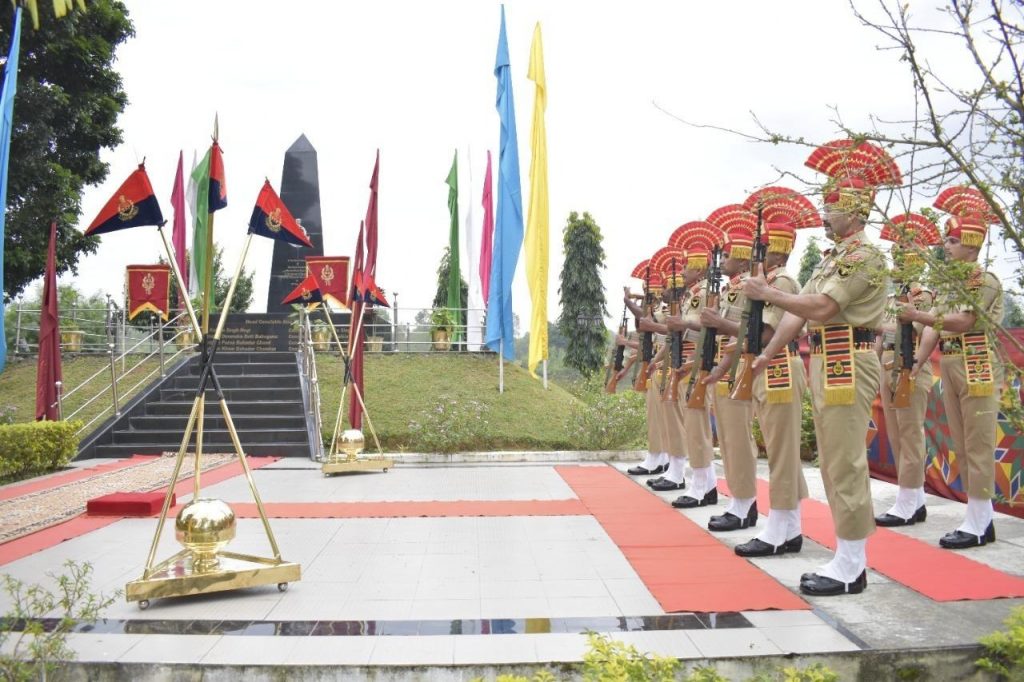
Previously, Baljit S Tyagi (83 BSF) led troops in Kilapara (West Garo Hills, Meghalaya), assisting the Indian army. His 11 troopers gave the supreme sacrifice in repulsing Pakistani infantry. Border Guards Bangladesh DG Maj-Gen Aziz Ahmed unveiled a memorial at the border commemorating the sacrifice of Indian Paramilitary troops (2013).
‘’Attack the West to save the East!’’
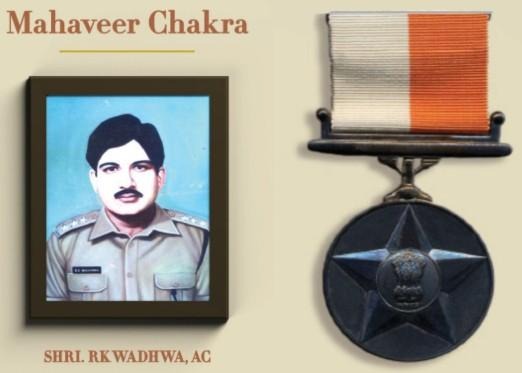
In a desperate bid to save face from the international humiliation on the Eastern front, the Pakistani military High Command, led by General Yahya Khan, carried out many attacks on India’s Western sector. This vain hope of saving the East, was thwarted by the stellar role played by soldiers like those from the Border Security Force’s (BSF) RK Wadhwa (Ferozepur, Punjab border), who gave the supreme sacrifice in nipping enemy troop misadventure in the Punjab sector. Also thwarting Pakistani misadventure were troops of the Indian Army’s Punjab Regiment, aided ably by the BSF picket in the Thar Desert outpost of Longewala in Jaisalmer, Rajasthan. They were heavily outnumbered by the Pakistani armoured brigade, aided by the infantry, and held out against insurmountable odds, causing enemy casualties in ratios of five and above. This rout of the Pakistani brigades and attack formations on India’s West played a vital role in focusing the fighting back on the East Pakistan front, but also conclusively ended the Bengali-genocide initiated in the 1971 War by a blood thirsty Pakistani military establishment within thirteen days. When the new nation of Bangladesh rose to the sunrise of 16th December ‘71, the world gradually awoke to the gradually percolating news of the state-sponsored heinous crimes of mass murder of two million Bengalis (Hindu mostly) and the rape of half a million (mostly Hindu) women by the Pakistani military and the migration of around three million East Bengalis into India’s Northeast.
In this attic of history, it’s time we once again discover the sacrifice of Indian soldiers to liberate the very land which today is mired in hatred of everything Indian and Hindu. When Hindus are dehumanised, insulted repeatedly in the land of their ancestors only to be repeatedly lynched in a perverse celebratory manner, the only reason being their Hindu-ness and of practising an ancient system of beliefs and rituals that nurtured the very culture, traditions of what we call Bangladesh (previously East Pakistan and East Bengal); let’s not forget the hundreds of Hindu, Sikh and other Indian soldiers who laid their lives down to liberate this ancient land; now sterile of ancient tradition and barren of all human values, from the fanatic bigoted murderous stranglehold of the Pakistani establishment.
Let’s not forget the Indian and Hindu contribution; from regiments and backgrounds as diverse as Indian civilisation itself, be they Maratha, Rajput, Sikh, Gurkha, Santhal tribals, southerners from the Carnatic who fought and bled for their Bengali brethren and sisters. May we never forget that civilisational legacy left by these braves across two major fronts who put an end to nearly a decade of state-sponsored bigotry-driven violence by nourishing freedom for Eastern Bengal with their own sweat and blood, as well as the memories of their families.
References:
- https://www.indiasentinels.com/opinion/story-of-bsfs-key-role-valour-and-sacrifices-in-1971-india-pakistan-war-4996#:~:text=Deputy%20Commandant%20Indrajeet%20Singh%20Uppal,Battalion%2C%20was%20awarded%20Vir%20Chakra. Dy Comm Inderjit S Uppal honour post
- https://www.indiasentinels.com/opinion/story-of-bsfs-key-role-valour-and-sacrifices-in-1971-india-pakistan-war-4996#:~:text=Similar%20acts%20of%20bravery%20were,against%20the%20regular%20Pakistani%20army. BSF role in training & fighting during Indo-Pak War 1971
- https://www.telegraphindia.com/north-east/in-remembrance-of-bsf-bravehearts-war-memorial-to-be-unveiled-in-garo-hills/cid/1622340 (BGB chief inaugurates Kilapara BSF memorial 2013)
- https://theshillongtimes.com/2013/05/27/1971-bsf-war-veteran-narrates-saga-of-valour/ Kilapara BSF war memorial inauguration – local news paper
- https://share.google/pdzuoh9kHnWJCjAl2 (Maj Hemant Manjrekar shows enemy forward positions to Lt Col Shamsher Singh) – Battle of Morapara
- https://honourpoint.in/profile/major-kk-rao/ Profile & honour page for Maj KK Rao
- https://honourpoint.in/profile/lance-naik-albert-ekka-pvc/ Profile & battle honour page L/Nk Albert Ekka
- https://www.tribuneindia.com/news/features/bsfs-maha-vir-and-chhamb-hero-313298/#:~:text=Home%20/%20Features%20/%20Remembering%20the%20exploits,the%20Shakargarh%20Bulge%20and%20Chhamb. Western sector – Mahavir Chakra awardee Assist Comm RK Wadhwa – Hero of Raja Mohatam post – recapture of Ferozepur
- https://www.newsonair.gov.in/bsf-observes-raja-mohatam-day-honouring-1971-war-heroes-who-recaptured-ferozepur-post/#:~:text=Assistant%20Commandant%20RK%20Wadhwa%20served,Param%20Vir%20Chakra%20(PVC). BSF observes the martyrdom anniversary of A/C RK Wadhwa