There have been significant concerns raised about the research underpinning the government’s new anti‑Muslim hostility legislation, specifically around the policy relying on questionable evidence and that it could risk heightening community tensions rather than easing them.
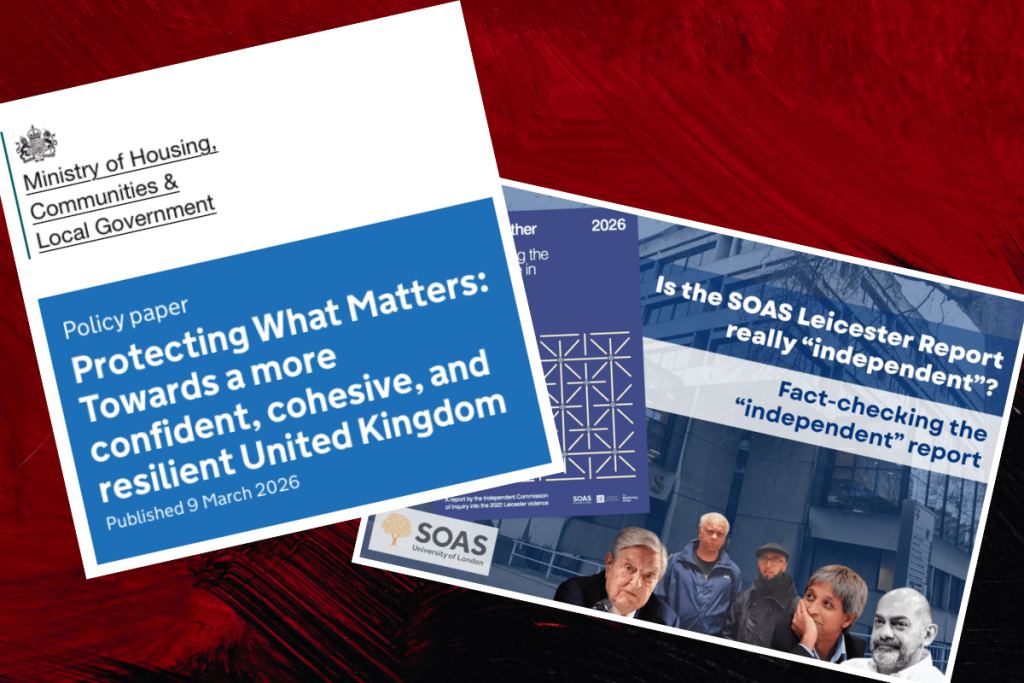
A central issue lies in the government’s Protecting What Matters report, which attributes the 2022 Leicester unrest to “imported” forms of nationalism. This claim is presented without concrete evidence, even though it plays a major role in shaping the government’s narrative. By focusing on external influences, the report overlooks documented incidents of Islamist‑motivated hostility toward the Hindu community, a gap that critics say distorts the reality of what occurred.
Concerns over vague and potentially misleading definitions
One of the most contentious aspects of the new legislation is the use of ambiguous language such as “perceived to be Muslim.” This phrasing creates opportunities for misclassification and manipulation. The Leicester unrest provides a clear example: a fight between individuals of Sikh and Indian origin was quickly reframed online by influencers as an attack on a Muslim individual, and the claim spread rapidly. This demonstrates how easily “perceived” hostility can be weaponised during moments of tension.
Such vague terminology risks turning internal community disputes into recorded hate incidents, potentially inflaming divisions rather than resolving them.
Related stories
- Proposed definition of Islamophobia is a threat to free speech and honest discourse
- The not-so-independent SOAS inquiry into the Leicester violence
- Is the SOAS Leicester Report really “independent”?
A narrow definition that leaves other communities exposed
This also highlights a broader structural problem – the current definition of anti‑Muslim hatred does not acknowledge the hostility and threats faced by other religious groups from Political Islamism. By focusing narrowly on one form of prejudice, the government risks creating what some describe as a “two‑tier” system of protection, where certain communities receive more institutional attention than others.
Introducing specific definitions for particular communities, they argue, may encourage “competitive victimhood,” prompting groups to seek their own tailored protections rather than supporting a shared framework of equality.
Implications for policing and social cohesion
There are also concerns about the potential impact on policing. Official definitions often shape recording practices, and critics fear that the new terminology will pressure police forces to log “non‑crime hate incidents” more aggressively for one group than for others. Such disparities could undermine trust in law enforcement and fuel perceptions of institutional bias.
A one‑sided approach to defining hostility risks fracturing community relations and contradicts the government’s stated aim of protecting democratic institutions from all forms of extremism. Critics argue that a more balanced, evidence‑based framework is essential to ensure fairness, maintain public confidence, and prevent further polarisation.