By Kumar Bala
Civilisations do not endure for millennia without bearing scars. Bhārat Mātā (Mother India), carries within her soil the layered memory of centuries, of flourishing knowledge systems, of extraordinary spiritual quest, but also long periods of profound trauma.
The Goan Inquisition, notoriously recorded by European scholars, remains one such dark imprint. Voltaire,18th-century French philosopher, reflecting on the brutality he observed in the conduct of the Jesuits towards Hindus, wrote unambiguously:
“Goa is sadly famous for its Portuguese Inquisition, which is contrary to humanity as it is contrary to commerce. The Inquisitors of Goa serve the Devil.”
Voltaire, Essai sur les mœurs et l’esprit des nations (1756)
For the Portuguese authorities and the Goan Inquisition, even the gentlest expressions of Hindu life were branded as sins: wearing sandalwood paste or tilak, growing or worshipping Tulsi, lighting lamps before deities, observing Ekādashi, performing homa, keeping household shrines, or celebrating Deepāvali or Holi.

The punishments were crafted to break both body and spirit: public flogging, shackling, confiscation of property, imprisonment in the Inquisition’s dungeons, and forced conversion. Those who “relapsed” into Hindu practice after conversion faced far darker fates, torture on the rack or strappado, lifelong exile, or the terrors of the auto-da-fé, where some were burnt at the stake. In this assault on ritual, memory, and identity, the invader sought not merely to punish acts but to extinguish an entire way of life.
In Goa and Kerala, the Portuguese lash did not fall on Hindus alone: Jewish communities in Cochin saw synagogues defaced, sanctuaries damaged, yet memory endured in stone and silence. Lisbon controlled the Malabar black pepper trade with Europe, enriching their empire while Hindus and Jews on that coast paid the price. Garcia de Orta, the Portuguese physician who praised India’s Ayurvedic system and herbal plants, was condemned after death – his bones exhumed and burned by the Inquisition he once escaped.
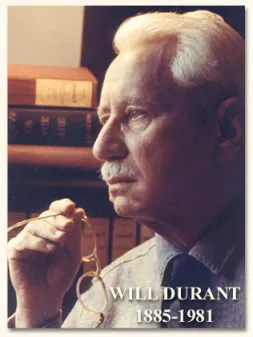
India stands almost alone among ancient civilisations in having weathered the simultaneous force of two great imperial worlds, Christendom from the West and Islamism from the Middle East. That she survived both is a testament to an unbroken civilisational resilience rare in human history. Will Durant, 20th-century American historian, after studying the medieval invasions of India, wrote:
“The Islamic conquest of India is probably the bloodiest story in history. The long reign of terror that fell upon India shattered her arts, her industries, and her spirit. Temples were destroyed, and every Hindu institution was trampled underfoot. Millions of Hindus were converted by force, and millions more were killed outright.”
Will Durant, The Story of Civilization, Vol. I: Our Oriental Heritage (1935)
Firishta’s Tarikh-i-Firishta, one of the most detailed Persian chronicles of medieval India, offers testimony about the violence that accompanied several conquests. His accounts describe large-scale killings and the systematic destruction of Hindu temples, noting that those who resisted were often slaughtered and sacred sites levelled.
“Great numbers of the unbelievers were put to death, and their temples were razed to the ground. Wherever they found Hindu temples, they demolished them and slaughtered those who resisted.”
Firishta, Tarikh-i-Firishta (early 17th century Persian chronicle)
Such testimonies lay bare the sheer brutality of those centuries: not a remote clash of ideas, but a lived ordeal of mass killings, torture, forced conversions, and the deliberate destruction of temples and sacred spaces.
The Western double standard
Despite this history being well attested, the contemporary global discourse often applies differing moral standards. Across Europe, the reclaiming of sacred spaces is celebrated as cultural justice and civilisational rejuvenation.
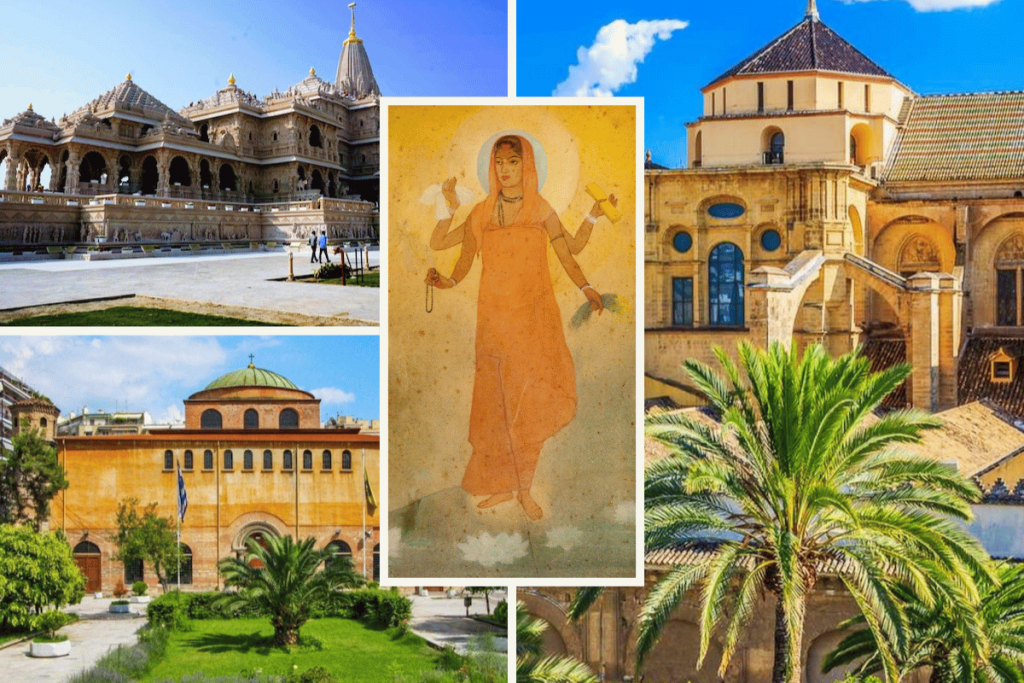
Spain’s Reconquista reclaimed churches and reinstated Christian identity after centuries of Moorish rule. Greece, following independence from the Ottoman Empire, restored numerous sacred Christian spaces, among them the Agia Sofia in Thessaloniki, a symbol of cultural revival.
These restorations are never framed as “regressive,” “majoritarian,” or “provocative.” They are viewed, correctly, as the rightful restoration of cultural memory, dignity, and continuity.
And yet, when India seeks similar renewal in Ayodhyā, Kāshi, or Mathurā, the same voices often respond with discomfort, derision, or moralising lectures.
These images reveal a simple truth: every civilisation seeks to heal by honouring its sacred geography. India is no different; she is simply later in undertaking the journey that others completed long ago.
The civilisational instinct to seek justice
Indian molecular biologist and author, Anand Ranganathan, captures this impulse with exceptional clarity:
“To me, the mark of civilisation is this unquenchable thirst of man to demand justice for his ancestors; to correct a historical wrong. For that exemplifies a continuity; an idea, a memory that can never be erased; that is worth fighting for and preserving.”
Civilisations endure not by erasing their wounds, but by understanding them. Cultural memory is not a burden; it is a compass. To heal, India must recognise the full arc of her civilisational experience, its glory, its suffering, its resilience, and its resurgence.
The need for historical literacy
For any civilisation to remain vibrant, its people must be connected to its historical truths. The stories of India’s past form a shared inheritance that spans regions, languages, and communities.
Understanding historical aggression by marauding invaders, European, Arab, Persian, or Central Asian, is not an act of victimhood but of clarity. For centuries, countless Indians protected their way of life under enormous pressure. Many stood firm:
- Refusing to abandon their traditions
- Refusing to surrender their identity
- Refusing forced conversion, whether under sword, decree, or colonial edict
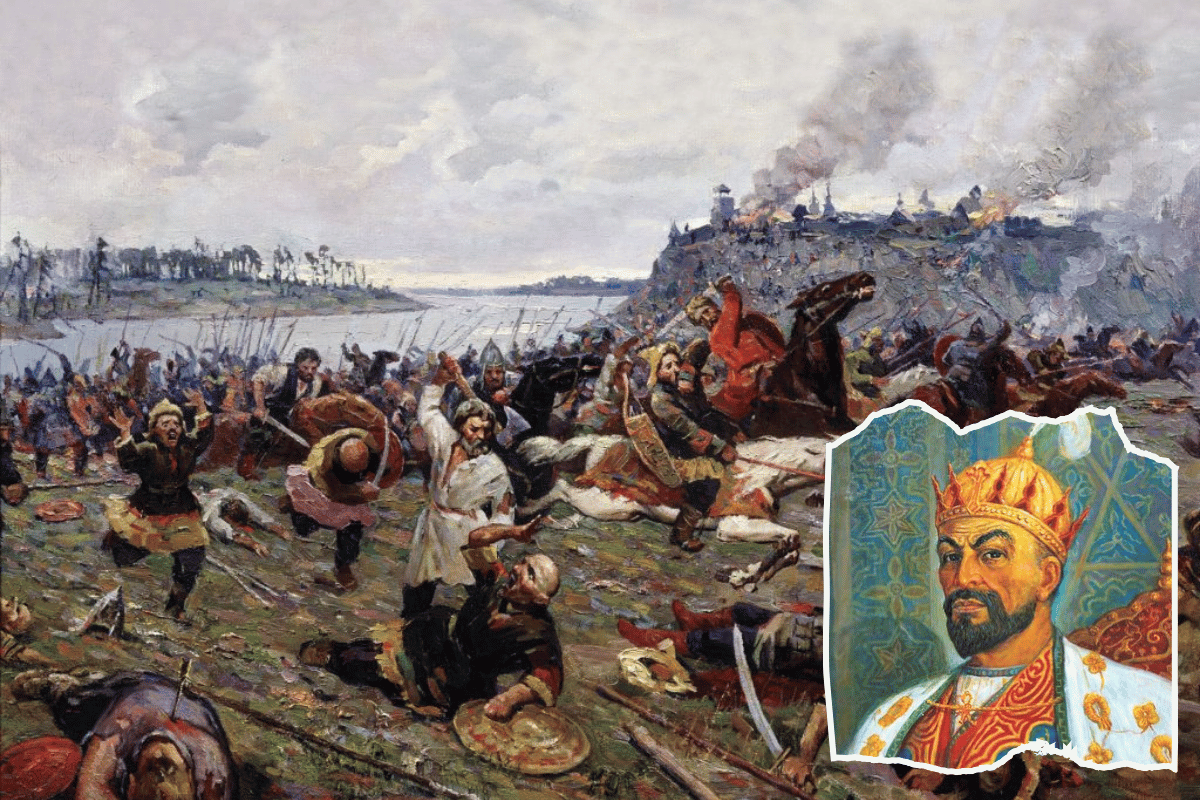
The long shadow of temple destruction and the resistance to rebuilding speak to the lingering imprint of a marauding mentality hardened into habit. Old prejudices survive long after the powers that enforced them have been relegated to the dustbin of history. The Portuguese Empire, the Timurids, and the Sultans are only mentioned in reference to their cruelty.
Yet the vocabulary of violence – inquisition and jihad – endures in inherited narratives, echoed by those who identify more with the old victors than with the land itself. And any attempt to question that legacy is dismissed as ‘hardline Hindutva,’ as though a label could halt a civilisational zeitgeist already in motion.
In a world where most ancient civilisations were dismantled or absorbed, India remains one of the few surviving classical civilisations, a living continuum of thought, ritual, language, and philosophy stretching back thousands of years.
Such continuity deserves not shame, but understanding; not silence, but articulation.
Hindu epics as our civilisational beacons
India’s two great epics, the Rāmāyan and the Mahābhārat are windows into the civilisational psyche. Both are narratives of conflict, displacement, dharma, justice, and eventual restoration.
At the heart of the Mahābhārat lies the timeless message of the Bhagavad Gitā, where Bhagwān Krishna says:
“Whenever virtue subsides and wickedness prevails, I manifest Myself.
To establish virtue, to destroy evil, to protect the good,
I come from Yuga (aeon) to Yuga (aeon).”
This is not a call to conflict, but a moral imperative, a call to clarity, to truth, and to resilience, the very principles that have enabled our Dharmic civilisation to endure and flourish through centuries of upheaval.
For Bhārat Mātā to heal, her wounds must be acknowledged, her stories told honestly, and her sacred spaces restored with dignity. Reclaiming Ayodhyā, Kāshi, and Mathurā is not merely about stone and soil, it is about memory, continuity, and the right of a civilisation to honour itself.