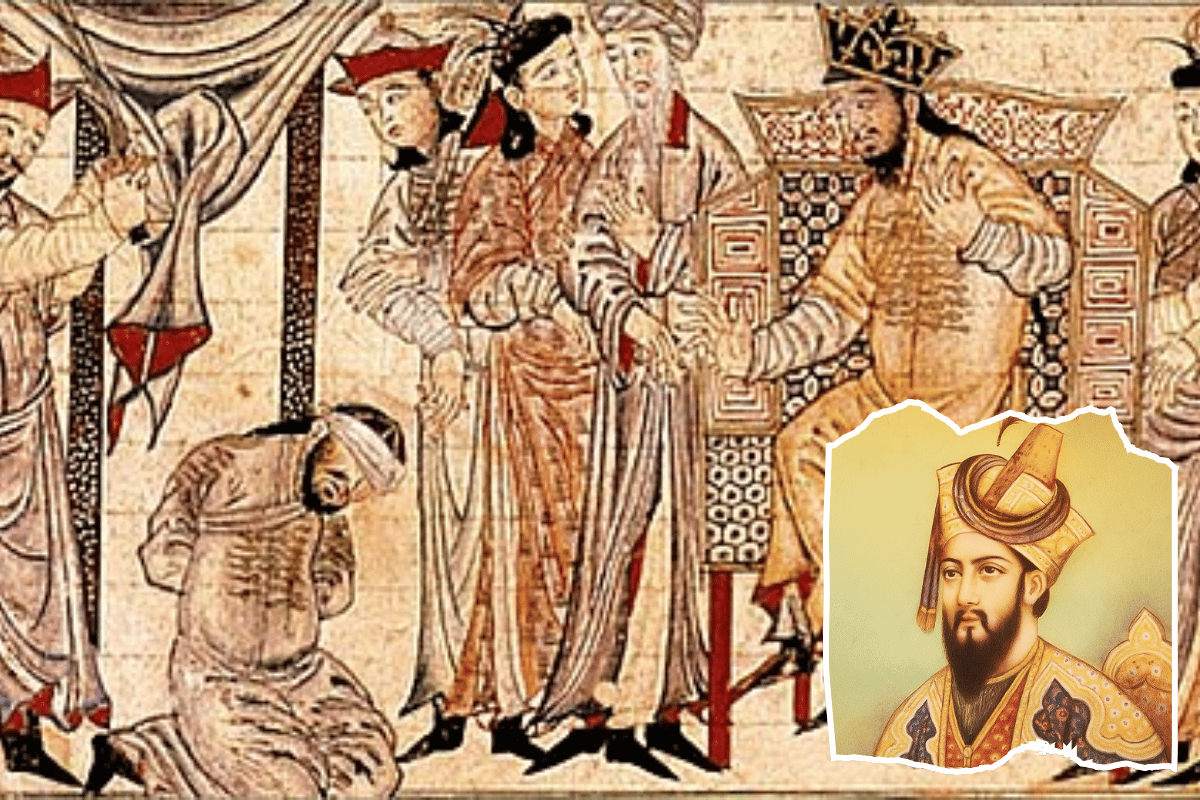
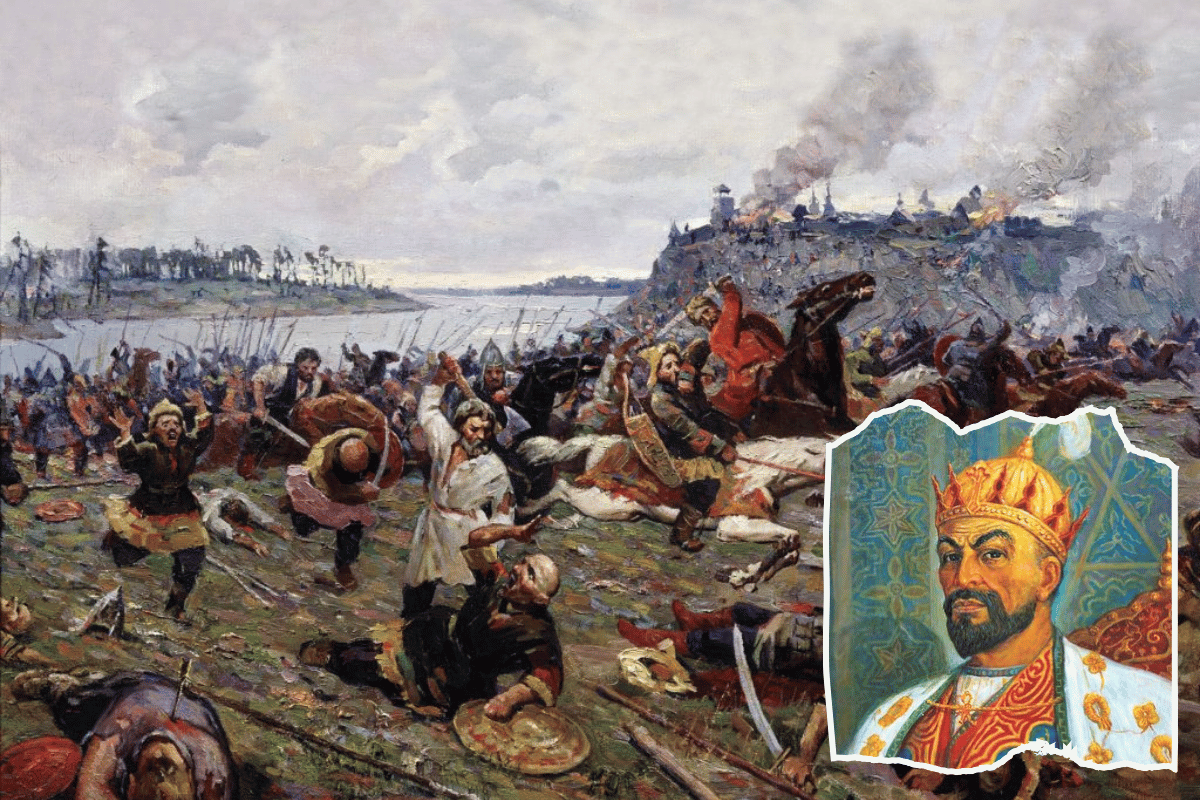
Muhammad Ghori occupies a pivotal and dark place in the history of Bhārat (India). Emerging from the power struggles of Central Asia, he carried the ambitions of the Ghurid dynasty deep into the Indian subcontinent. His invasions aimed at religious and cultural domination, bringing widespread destruction of Hindu and Buddhist temples, forced conversions, and mass violence. These campaigns reshaped the political landscape of the region and inflicted lasting wounds on the spiritual and cultural fabric of the land, setting the stage for centuries of foreign rule.
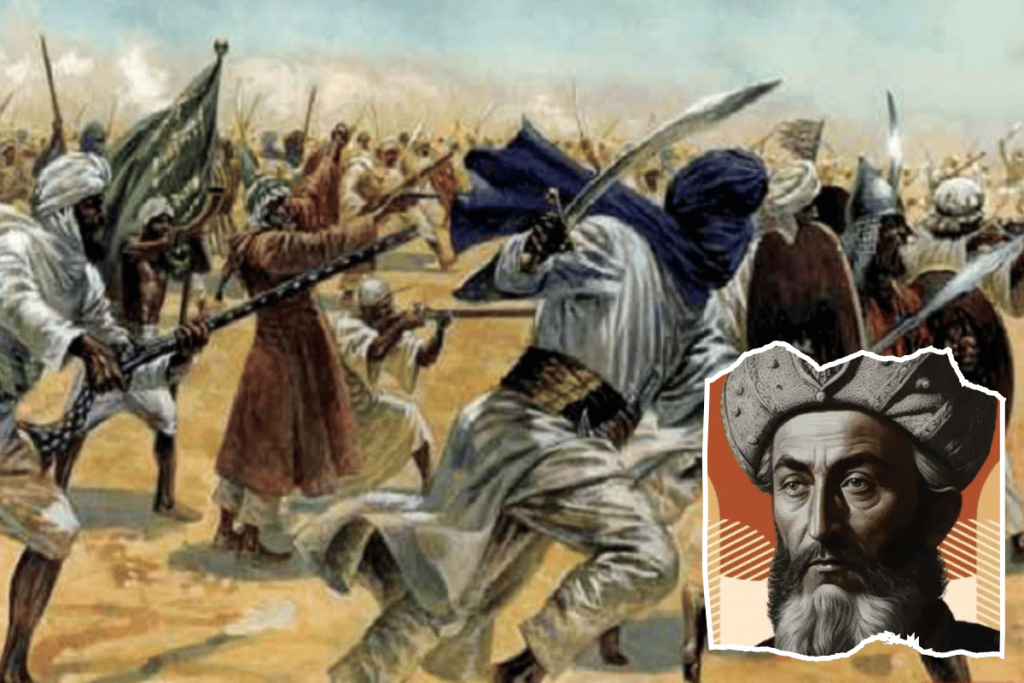
Brief history of the dynasty
The Ghaznavid Empire was established by Sabuktigin in 977. His successors included: Ismaiel (997–998); Mahmud, famously known as Mahmud of Ghazni (998–1030); Muhammad (1030, first reign); Masud I (1030–1040); Muhammad (1040, second reign); Maudud (1040–1049); Masud II (1049); Ali (1049–1051); Abdul al-Rashid (1051–1052); Torghul (1052); Farrukh-Zad (1052–1058); Ibrahim (1058–1098); Masud III (1098–1115); Shirzad (1115); Arslan Shah (1115–1117); and later Bahram Shah, Khusrau Shah, and Khusrau Malik. At its height, the Ghaznavid realm encompassed Ghor, located in present-day central Afghanistan.
In the late 12th century, Shahabuddin, also known as Muhammad Ghori or Mu’izz al-Din Muhammad bin Sam, launched a series of invasions into Bhārat between 1175 and 1205. His campaigns were marked by fierce battles, episodes of mass violence, forced religious conversions, and the destruction of Hindu and Buddhist temples, leaving enduring scars on the Indian subcontinent’s cultural and religious landscape.
Ghori’s invasions and initial defeats
Ghori’s early invasion in 1175–1176 led to the capture of Multan and Uch from the Carmathians. He captured Multan from Ismaili heretics and then advanced to Uch, which was ruled by a Hindu king of the Bhati Rajput tribe. Ghori cheated them to win a war, killed the king and abducted and forcefully married his daughter. These regions had a significant number of Hindu and Buddhist temples, which were desecrated during his invasion.
The year 1178 marked Ghori’s first defeat in Bhārat. Queen Naikidevi, a legendary Solanki Hindu queen of Gujarat, defeated Ghori. This Chalukya ruler of Gujarat decisively defeated Ghori at the Battle of Kayadara near Mount Abu. Queen Naikidevi is remembered for her remarkable victory, securing her son Bhima the title of “vanquisher of the king of Ghazni”. Ghori never turned to that side of Bhārat ever again.
After this defeat, Ghori tried to invade Ajmer and Delhi multiple times, but was defeated by Prithviraj Chauhan (Rai Pithaura) seven times. But Prithviraj made a mistake to mercy him all those times. It was the notorious Jaichand who plotted to support Ghori in his jealousy of Prithviraj. As a result, Prithviraj’s army was defeated and lost in the war. After defeating Prithviraj Chauhan in the Second Battle of Tarain (1192), Ghori ordered the destruction of Hindu temples in Ajmer and replaced them with mosques and Islamic structures. King Prithviraj was taken to Ghazni and brutally tortured, blinded and finally killed.
In 1194, Ghori crossed the Yamuna River with an army of 50,000 horsemen and commanders, where he confronted the forces of the Rajput Gahadavala king Jayachandra in the Battle of Chandawar. The Ghurid army was victorious, Jayachandra was killed in the battle, and much of his army and the Hindus in that area were slaughtered. Following the battle, the Ghurids took the fort at Asni, where they plundered the royal treasure of the Gahadavalas, destroyed the temple in Kannauj and went on to destroy the Hindu pilgrimage city of Varanasi, which was looted and a large number of its temples destroyed.
His campaign in Varanasi (Banaras) is said to have resulted in the destruction of around 1,000 temples in that area, with mosques built in many of their places. There was a mass slaughter, conversion and enslavement of Hindus. Historical accounts like those of Ibn Asir describe widespread killings of Hindu men, sparing only women and children, who were then taken as slaves and sold across the Islamic world. The Buddhist temples at Sarnath were also destroyed, and monks were massacred. Muhammad accumulated vast stolen riches according to the chronicler Juzjani, based on the authority of Muhammad’s comptroller, which included 60,000 kg (1500 mann) of stolen jewels.
He attacked the Shiva temple in Kiradu in 1178. The ruins of at least five temples exist at Kiradu. Of these, the Someshwar temple, dedicated to Shiva, is the only available destroyed structure.
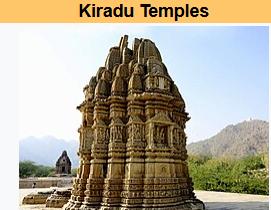 | 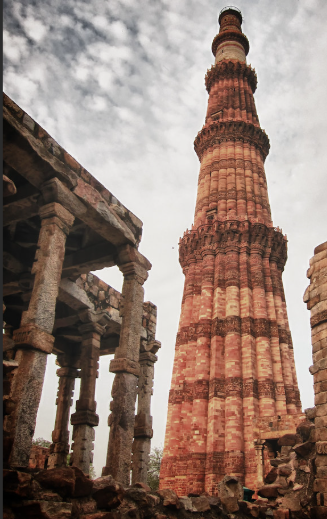 | 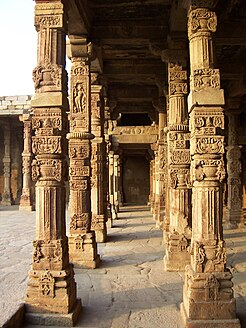 | 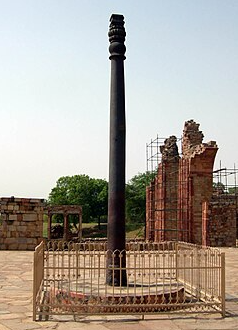 |
| Someshwar temple | Quwwat-ul-Islam (Might of Islam) Mosque | Quwwat-ul-Islam (Might of Islam) Mosque | Vishnu Pillar in complex |
In his final campaign, Ghori brutally crushed a revolt by the Khokhar Hindu tribe near the Salt Range. Many were killed, and others committed jauhar (mass self-immolation) to avoid capture.
The Assassination of Muhammad of Ghor occurred at Dhamiak, Punjab, on 15 March 1206. Of the numerous sources recounting the event, multiple perpetrators for the killing have been named, including the Punjabi Khokhar tribe.
Ghori’s relentless campaigns left an indelible scar on the sacred land of Bhārat. Temples that had stood for centuries were reduced to rubble, murtis (sacred idols) desecrated, and countless lives lost or uprooted. Yet, despite the devastation, the courage of defenders like Queen Naikidevi, Prithviraj Chauhan, and countless unnamed warriors endures as a testament to Hindu resilience. Their valour reminds future generations that while empires rise and fall, Sanātana Dharma survives the darkest of onslaughts, carrying forward the eternal spirit of dharma and unity.
Formation of the Delhi Sultanate: Loot and destruction
Ghori’s invasion east of the Indus (Sindhu) in the Indian subcontinent evolved into the formidable Delhi Sultanate under his slave commander Qutbuddin Aibak. A native of Turkestan, Aibak was sold into slavery as a child and purchased by Ghori. He consolidated the Ghurid rule in and around Delhi and started the Mamluk dynasty. His period is marked with widespread violence and destruction of Hindu, Jain and Buddhist temples. This destruction is still visible in the Qutub Minar complex and Quwwat-ul-Islam mosque, all built from idols collected from various temples.
The iron pillar is one of the world’s foremost metallurgical curiosities. The pillar, 7.21-metre high, encrypted with Sanskrit and Brahmi script, was originally erected by Chandragupta II Vikramaditya (375–414 AD) and is still there in that complex, showing that it was a Hindu temple of Vishnu.
Formation of Bengal Sultanate: Loot and destruction
A military general of Ghori, Muhammad Bakhtiyar Khilji, established himself as the ruler of Bengal and Bihar after his orchestrated colonial invasions.. He was a member of the Khalaj tribe, which was originally of Turkic origin. Khilji’s invasions of the Bhārtiya subcontinent between A.D. 1197 and 1206 led to mass flight and massacres of monks, and caused damage to the traditional Buddhist institutions of higher learning in Northern India.
The leading centre of teaching for Mahayana Buddhism was Nalanda. At the end of the 12th century, Bakhtiyar Khilji destroyed the monastery. His rule is said to have begun the Muslim rule in Bengal, driving conversions and loot in that wealthy region, most notably those of the Bengal Sultanate.
Khilji subjugated much of Bihar in 1200. His invasions destroyed the Buddhist university establishments at Odantapuri and Vikramashila Mahaviras. Minhaj-i-Siraj Juzjani’s Tabaqat-i Nasiri documents Bakhtiyar Khilji’s destruction of a Buddhist monastery and the mass killing of monks.
Hasan Nizami, a chronicler of Muhammad of Ghori’s period, has written, Kutub-ud-din [Aibak], purged by his sword the land of Hind from the filth of infidelity and vice, and freed the whole of that country from the thorn of God-plurality, and the impurity of idol-worship, and by his royal vigour and intrepidity, left not one temple standing. The army of Islam was completely victorious, and a hundred thousand grovelling Hindus swiftly departed to the fire of hell. He destroyed (at Ajmer) the pillars and foundations of the idol temples, and built in their stead mosques.
The Ghori mindset still exists
Ghori was an Islamic invader whose only goal was the expansion of his colonial Islamic project and the genocide of indigenous Hindus and others. He killed countless Hindus and Buddhists, looted wealth and destroyed temples. His poisonous attitude still exists in modern Pakistan (Interestingly, it was their ancestors that suffered the most because of Ghori’s invasion). There is even a modern shrine to Ghori, built by Pakistani scientist Abdul Qadeer Khan in 1994-1995, in Dhamiak, Sohawa Tehsil, Pakistan, where he was assassinated.
The Pakistani military named three of its medium-range ballistic missiles Ghori-I, Ghori-II and Ghori-III, in memory of Muhammad Ghori.
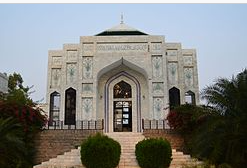
Mohummad Ghori’s Shrine in Pakistan.
It is this Ghori attitude in Pakistan which is visible from the continued persecution and genocide of Hindus in Pakistan. Ghori’s actions give us a picture of who he was – a barbaric invader who wanted to cleanse Bhārat of its indigenous Hindu identity by any means necessary. It is fitting that he is so revered in Pakistan, who as a country aim to do the same.
The legacy of Muhammad Ghori stands as one of the darkest chapters in the history of Bhārat. His campaigns sought to erase Sanātana Dharma, demolish sacred temples, and enslave entire communities through brutality and forced conversions. However, the spirit of dharma has proven to be stronger than the sword. The valour of defenders like Queen Naikidevi and Prithviraj Chauhan, along with the quiet determination of countless Hindus, safeguarded their faith and culture through centuries of turmoil. Though Ghori’s name lingers in monuments and missiles beyond India’s borders, Hindu perseverance has proved stronger. The lasting glorification of colonial invaders who orchestrated mass genocide, such as Ghori, must be addressed. And the Hindu defenders who protected indigenous faith systems and lands must be remembered and learned from.