Timur (1320s–1405), better known in the West as Tamerlane, was a Turco-Mongol ruler who founded the Timurid Empire across Central Asia, Iran, and Afghanistan, establishing the Timurid dynasty.
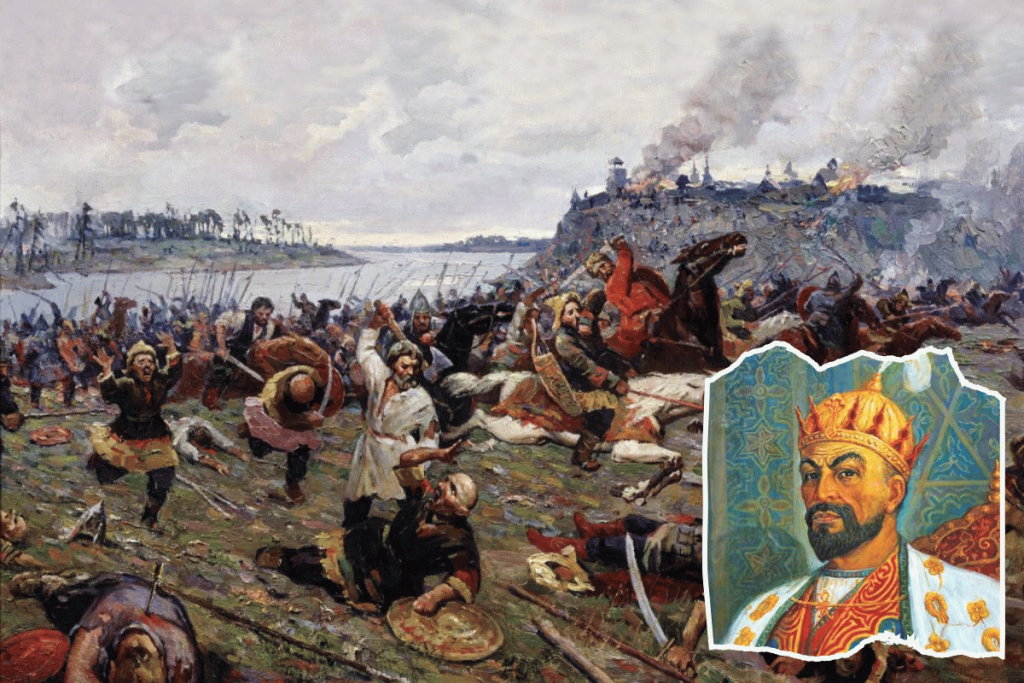
Born into the Barlas tribe in Transoxiana, he rose to power in the late 14th century and became one of history’s most formidable yet brutal military leaders, launching campaigns that devastated vast regions from Bhārat (India) to the Ottoman Empire and causing millions of deaths. Transoxiana is the Oxus and Jaxartes rivers in modern-day Uzbekistan. This region has been particularly productive in creating barbaric transcontinental rulers such as Genghis Khan, Timur himself, and later Babur, the founder of the Mughal Empire.
By the 1360s, Timur formed alliances with regional powers before consolidating his own authority in Transoxiana. After defeating rivals, including his brother-in-law Amir Husayn, he was proclaimed sovereign at Balkh in 1370 and legitimised his rule by marrying into Genghis Khan’s lineage, adopting the title güregen (“royal son-in-law”), and presenting himself as a divinely favoured conqueror with the messianic title Sahib Qiran (“Lord of Conjunction”). Though he could not claim the titles of Khan or Caliph, Timur ruled in the name of puppet Chagatai Khans while wielding true power. Over the next decades, he launched ambitious campaigns across Persia, the Caucasus, and Central Asia, defeating powerful foes such as Tokhtamysh of the Golden Horde and extending his influence from Moscow to Baghdad, laying the foundations of the Timurid Empire.
In 1398, Timur invaded the weakened Delhi Sultanate, exploiting its political fragmentation under the declining Tughlaq dynasty. Crossing the Sindhu (Indus) with a massive army, he crushed scattered resistance, massacred populations in his path, and marched on Delhi. On 17 December, facing Sultan Nasir-ud-Din Mahmud Shah’s war elephants, Timur used a stratagem of flaming camels to panic the animals, securing a swift victory. Delhi, then one of the richest cities in the world, was brutally sacked. Its inhabitants were slaughtered or enslaved, and its grandeur was reduced to ruins. The devastation was so severe that Delhi did not recover for nearly a century.
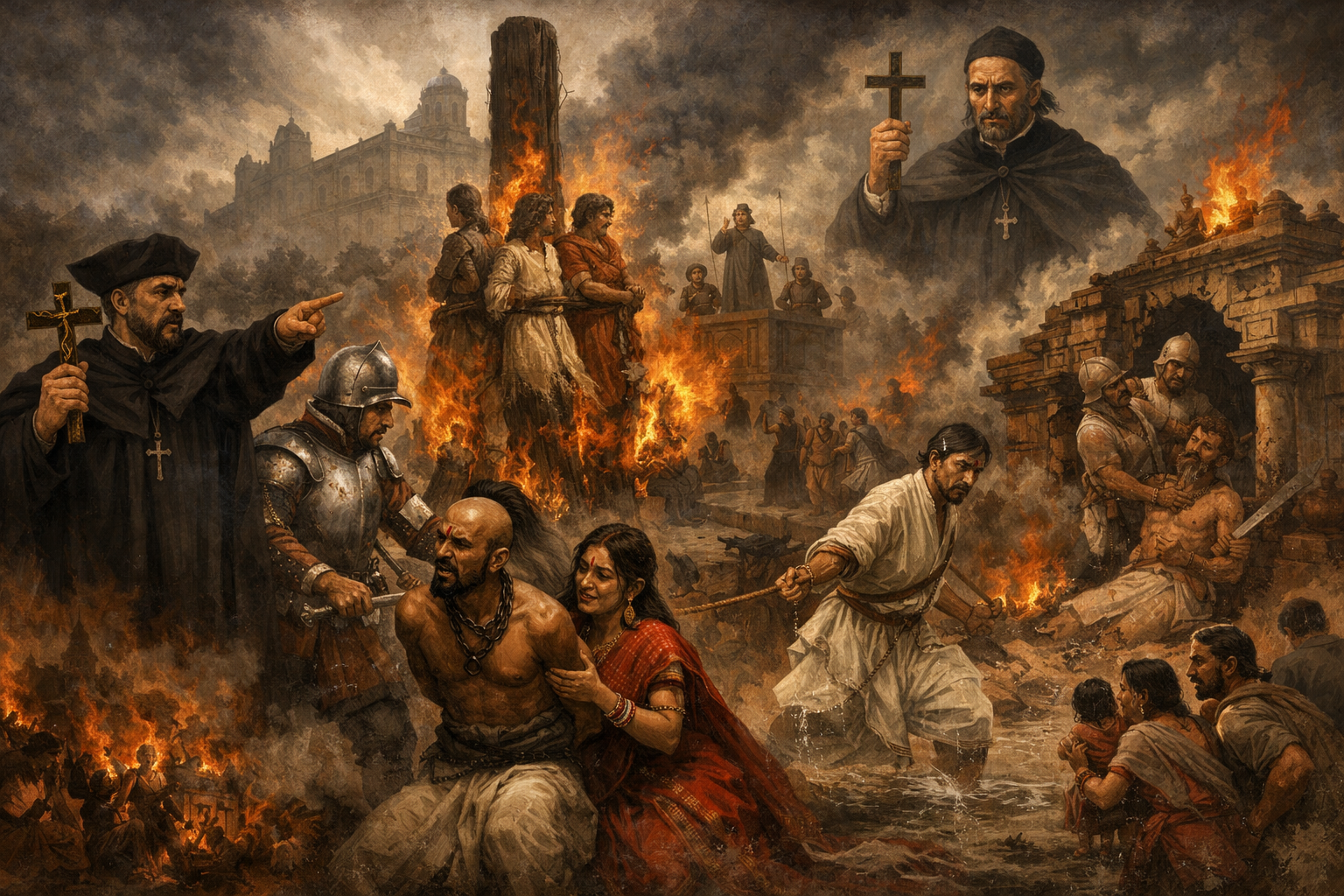
During his invasion of India in 1398–99, Timur unleashed extreme violence on Hindus. Contemporary sources, like Yahya Sirhindi’s Tārīkh-i Mubārak Shāhī and Sharaf al-Din Yazdi’s Ẓafarnāma, describe mass killings, enslavement, and destruction. On his march to Delhi, Timur’s army massacred both Hindu and Muslim populations, with Yazdi portraying Hindus as “infidels” deserving punishment. Before attacking Delhi, Timur ordered the execution of tens of thousands of captives (Yahya gives the figure of 50,000, Yazdi 100,000). After defeating Sultan Mahmud Tughluq’s forces, Timur entered Delhi and, despite initially granting protection in exchange for tribute, soon commanded that the entire population be enslaved. Large numbers of Hindus were slaughtered in their homes, while others were carried off as slaves to Central Asia. Delhi itself was left devastated, depopulated, and struck by famine and epidemic in the aftermath. Thus, Timur’s campaign inflicted catastrophic suffering on Hindus, framed by his chroniclers as part of a holy war but remembered in India as one of the most destructive invasions in its history.
The Mughals
The Mughals were deeply proud of their Timurid lineage and often invoked Timur’s legacy to bolster their dynastic prestige and justify conquest. From Babur’s emphasis on his descent to Akbar’s use of seals tracing genealogy to Timur, Mughal rulers used this connection as a marker of royal legitimacy. Shah Jahan went further, explicitly adopting the title Ṣāḥebe Qerān-e Sāni (“Second Lord of the Conjunction”) and framing his military campaigns, including attempts to expand into Central Asia and consolidate power over Hindu-majority lands in India as a continuation of Timur’s world-conquering mission. While Timur’s invasion had left a traumatic memory in India, Mughal rulers strategically reinterpreted it, portraying their wars against Hindu kingdoms as a rightful extension of Timurid destiny and as part of a sacred duty to subdue “infidels” and restore order. It can be said, therefore, that all Mughal descendants were ‘Timurid’ in both their beliefs and their attitudes towards Hindus and the indigenous people of Bhārat (India). The Mughal emperors of India embraced Timurid descent as a source of legitimacy and fostered a culture of suppression.
Modern-day portrayals of Timur are varied. In Uzbekistan, the Amir Timur Museum in Tashkent (opened in 1996) presents Timur as a national hero and visionary ruler. Exhibits emphasise his military genius, architectural projects, and role in unifying Central Asia, largely downplaying the violence of his campaigns. This portrayal is part of a broader state-sponsored narrative that celebrates him as a symbol of Uzbek identity and pride. Justin Marrozi’s book Tamerlane: Sword of Islam (2005) provides a detailed account of Timur’s brutal campaigns in India, highlighting the scale of violence against Hindus and the destruction of Delhi. It also situates his invasion within a broader narrative of religiously motivated conquests and their long-term impact on the region.
Timur’s form of imperialism, exemplified by his systematic use of terror through pyramids of human skulls, created a legacy in which violence became a deliberate political and psychological tool. This strategy of projecting fear to enforce submission has resonated through history, influencing the tactics of modern-day terrorism, where spectacular acts of violence are often used to send political messages and control populations, echoing the brutal logic of Timurid conquest.
Timur’s invasion of India represents one of the darkest chapters in medieval history. His campaign brought mass slaughter, enslavement, and destruction of Hindu cities, including Delhi, leaving deep social and cultural scars that lasted for generations. The brutality of his conquest, framed by his chroniclers as a holy war, is remembered in India as a catastrophic assault on Hindu society, highlighting the human cost of Timurid imperial ambition and the violent legacy that later Mughal rulers both inherited and justified.