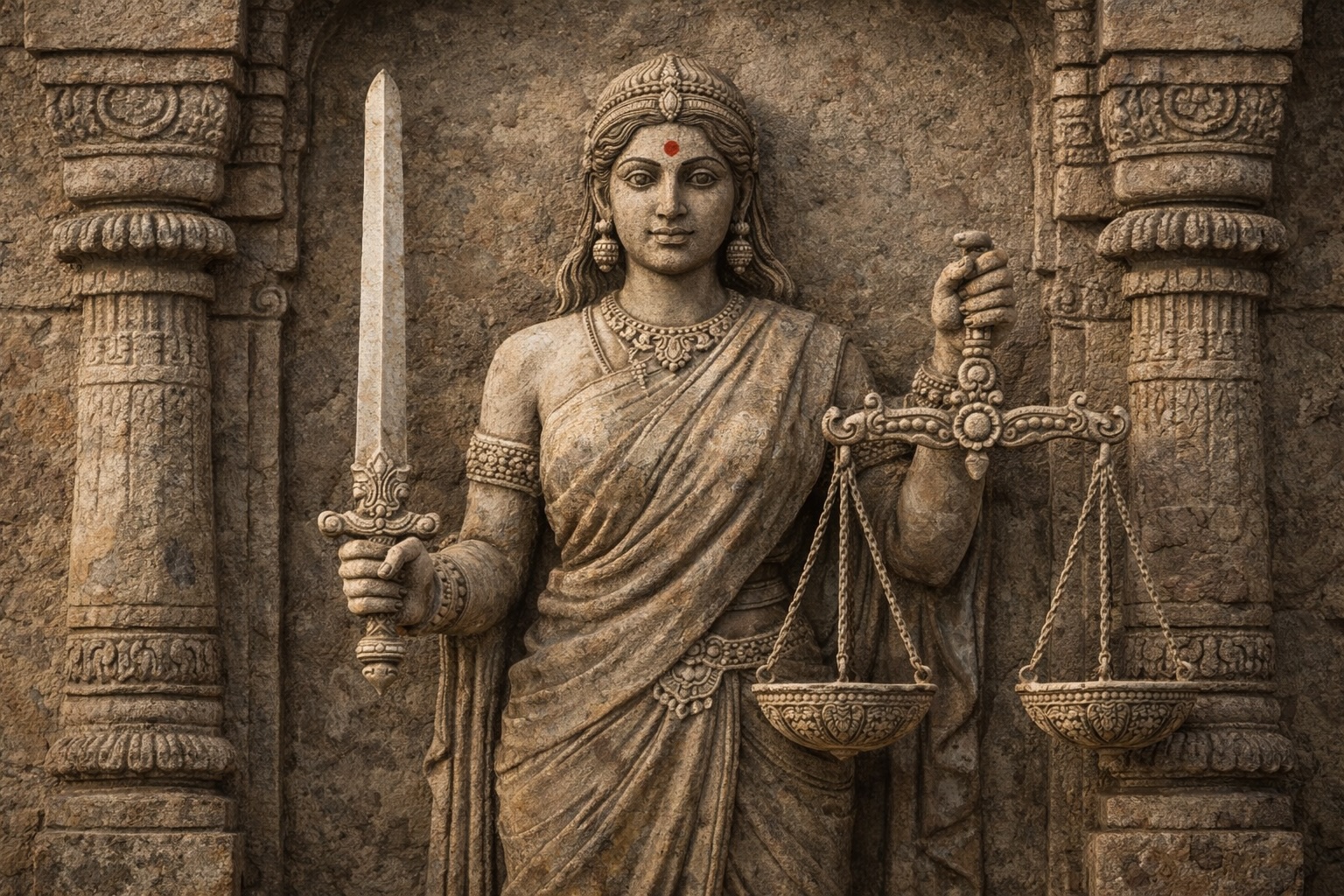
For many Hindus, placing a mark on the forehead, known variously as a tikka, tilak, bindi or tripuṇḍra, is a simple daily act with deep spiritual meaning. While these applications may look unfamiliar to some in Britain, they are not decorative, cultural habits or fashion statements. They are part of a long-standing Hindu spiritual practice that connects the body, the mind and one’s relationship with the divine.
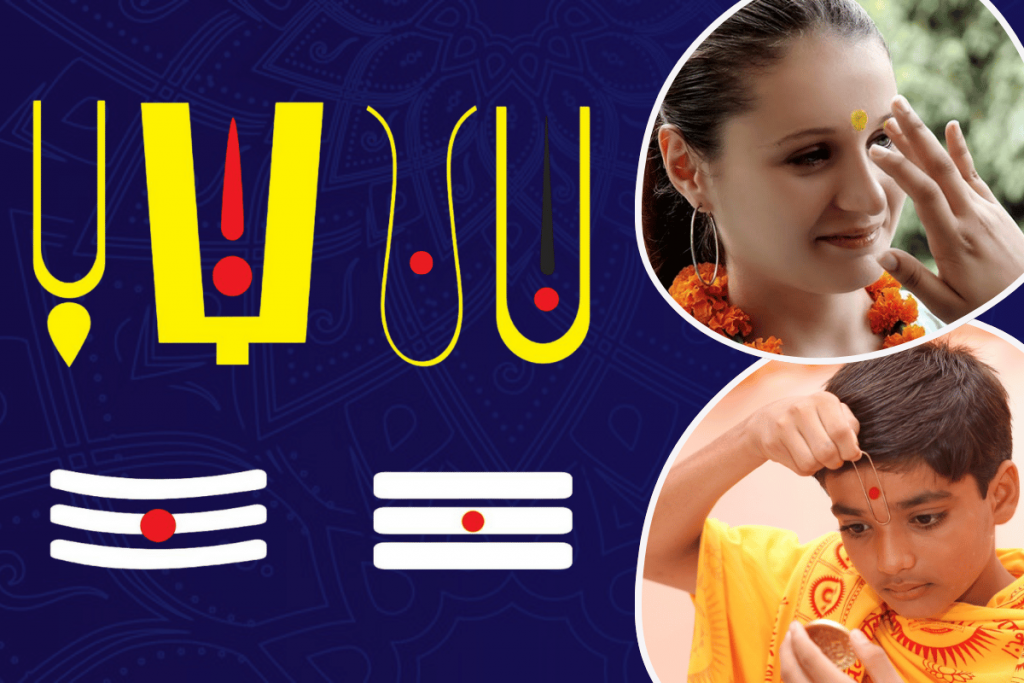
Understanding this practice begins with understanding why the forehead, in particular the point between the eyebrows matters.
The forehead and the centre of consciousness
In Hindu philosophy, the centre of the forehead is considered a sacred point. It corresponds to the Ājñā chakra (one of the seven main chakras in the human body), sometimes described as the “third eye”. This is understood as the centre of awareness, self-control, clarity of thought and moral judgement.
The chakras, in Hindu thought, are subtle centres of consciousness within the body. The Ājñā chakra plays a particularly important role because it governs how a person thinks, chooses, restrains impulses and understands right from wrong. By placing a sacred mark at this point, the individual is symbolically directing attention inward, reminding themselves to act with discipline, wisdom, awareness and within the tenets of Dharma.
In this sense, the forehead mark functions much like a physical reminder: think before acting; live consciously; keep the mind aligned with higher values.
A daily spiritual practice
Applying a tikka, tilak, bindi or tripuṇḍra is usually done during prayer or as part of a daily routine. The materials used, such as sandalwood paste, sacred ash, vermilion or clay, are chosen not for appearance, but for their ritual and symbolic meaning.
In many Hindu traditions, it also serves as a reminder that devotion to Bhagwan (loosely translated to God) must express itself through ethical conduct and service to society (seva), not belief alone.
The act itself is quiet and personal. It is not about making a statement to others, but about reinforcing an inner commitment. For practising Hindus, it serves as a reminder of their relationship with Bhagwan, their moral responsibilities, and their duty to live in accordance with dharma, a concept that broadly means righteous, ethical living, sustenance.
This practice brings spirituality into everyday life rather than confining it to places of worship.
Mind, conduct and self-discipline
A key aspect of Hindu spirituality is the idea that faith should shape behaviour, not just belief. The forehead mark is closely linked to this idea. Because it sits at the point associated with thought and awareness, it reminds the wearer that their actions should be guided by restraint, compassion, honesty and self-control.
Traditional Hindu teachings emphasise purity of thought, speech and conduct. The mark on the forehead symbolises this aspiration. It is not a claim of moral superiority, but a reminder of personal responsibility, a visible prompt to live up to one’s own spiritual standards.
Why this matters in modern Britain
In a modern, secular society like the UK, religious practices are often expected to be private or invisible. This can lead to misunderstandings when faith is expressed outwardly. The Hindu practice of marking the forehead is one such example.
For Hindus, these markings are a visible manifestation of sincerely held religious belief. They are comparable to other faith-based symbols that are widely recognised in Britain, such as the Christian cross, the Jewish kippah, or the Sikh turban. Removing or discouraging them is not a neutral act, it interferes with a meaningful religious practice that is tied to identity, conscience and spiritual discipline.
Removing or discouraging such markings is not a neutral act; it interferes with the manifestation of a sincerely held religious-spiritual practice.
A practice rooted in awareness
At its core, the practice of applying a tikka, tilak, bindi or tripuṇḍra is about mindfulness in the deepest sense of the word. It is a reminder to pause, to reflect, and to live deliberately rather than instinctively.
For a non-Hindu observer, understanding this practice offers a glimpse into how Hindu spirituality works: not as a set of abstract beliefs, but as a lived discipline that connects the inner world of thought and intention with the outer world of action.
Seen in this light, the mark on the forehead is not about difference, but about a universal human concern, how to live well, think clearly, and act with purpose.