When does a property stop being an inanimate object? What symbol does a decades-old community need to reflect its unity? And what responsibility do government bodies have toward the people they serve?
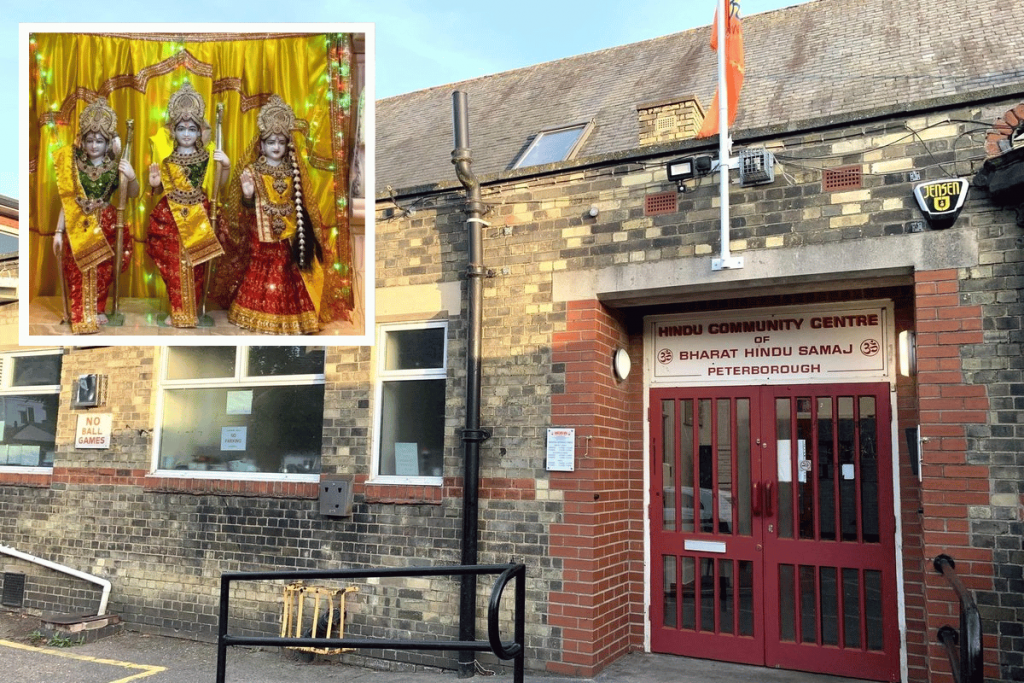
These questions sit at the heart of the recent sale of a council-owned property in Peterborough.
Across the country, councils are selling assets to raise funds as they struggle to maintain essential services. But when a sale carries the weight of cultural identity and community cohesion, treating it as a routine transaction feels deeply inadequate.
The property in question is not just a building, it is the Hindu place of worship and a cultural centre that has served Peterborough’s nearly 4,000-strong Hindu community for almost forty years. It has been a home for religious celebration, cultural wellbeing, yoga classes, community cohesion and countless shared moments. For families far from India, such places become the anchor of civilisational memory and collective identity.
To uproot an institution so woven into the lives of thousands is not only disappointing; it feels indifferent and unnecessarily harsh.
Even beyond sentiment, it is believed that the community made the second highest bid in the council’s auction. Given the context, history, and purpose of the property, the sale should have been straightforward, an outcome that honoured both community trust and financial responsibility. Instead, for a marginally higher profit, the council appears willing to disregard the emotional and cultural significance as well as the benefit to the community this space holds.
What further complicates the matter is this: the Hindu community has engaged with the council openly, cooperatively, and in good faith throughout this process. Dialogue has been consistent, constructive, and respectful. Yet goodwill has limits. Legal action on the grounds of human rights, religious freedom and the need to safeguard a place that has become indispensable to its identity and wellbeing that go beyond financial profit is an option worth considering if necessary.
However, such a scenario serves no one. Legal proceedings are enormously expensive, timeconsuming, and draining for both sides. They divert public resources, strain relationships, and create long-term consequences that outlast the dispute itself. And beyond the legal costs, the reputational damage to the council cannot be overlooked. Protracted litigation against a small, peaceful, longstanding community is not the kind of publicity any civic body wishes to attract.
If the sale proceeds, the council will receive its funds, but what becomes of the community it displaces? When symbols are uprooted, they must be reestablished for their meaning to survive. This is not a simple exchange between two parties; it is a public authority choosing to overlook a fair offer from a small community, effectively dismantling a longstanding place of worship without providing any alternative to maintain the cohesion built over decades.
It raises a difficult question: Was the goal truly profit, or something else entirely?
Food for thought
This situation also exposes a deeper challenge within the community itself: a lack of long-term planning. A leased property functioning as a Mandir for nearly forty years should have prompted clear thinking about its future. And with little to no representation within the council, the Hindu community has few voices advocating for its concerns.
It echoes the famous line from Alien: “In space, no one can hear you scream.”
Here, it becomes: without someone who can speak for you, there is no position from which to be heard. Is it not about time Hindus start actively engaging in civic bodies and politics?
Food for thought.