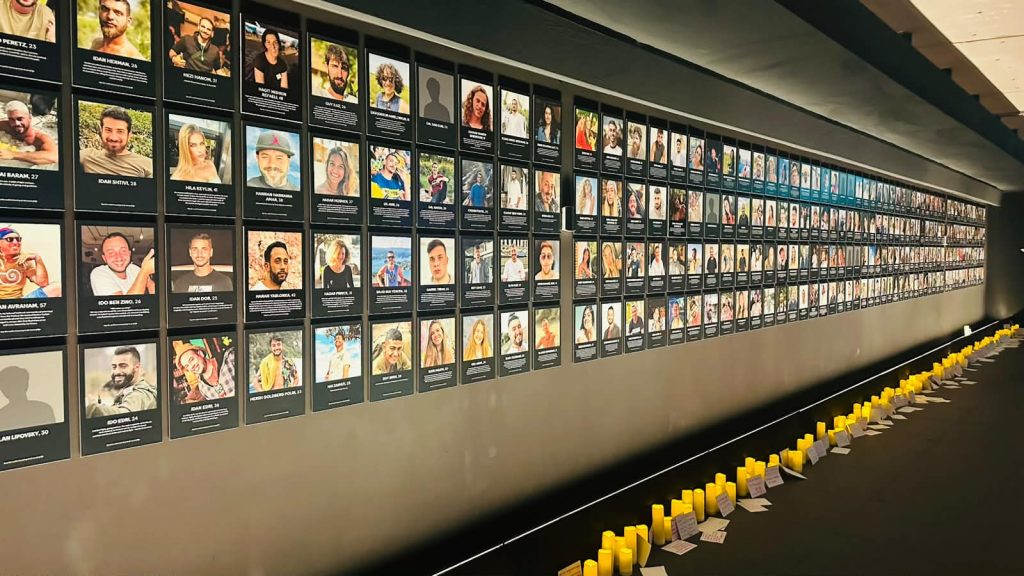
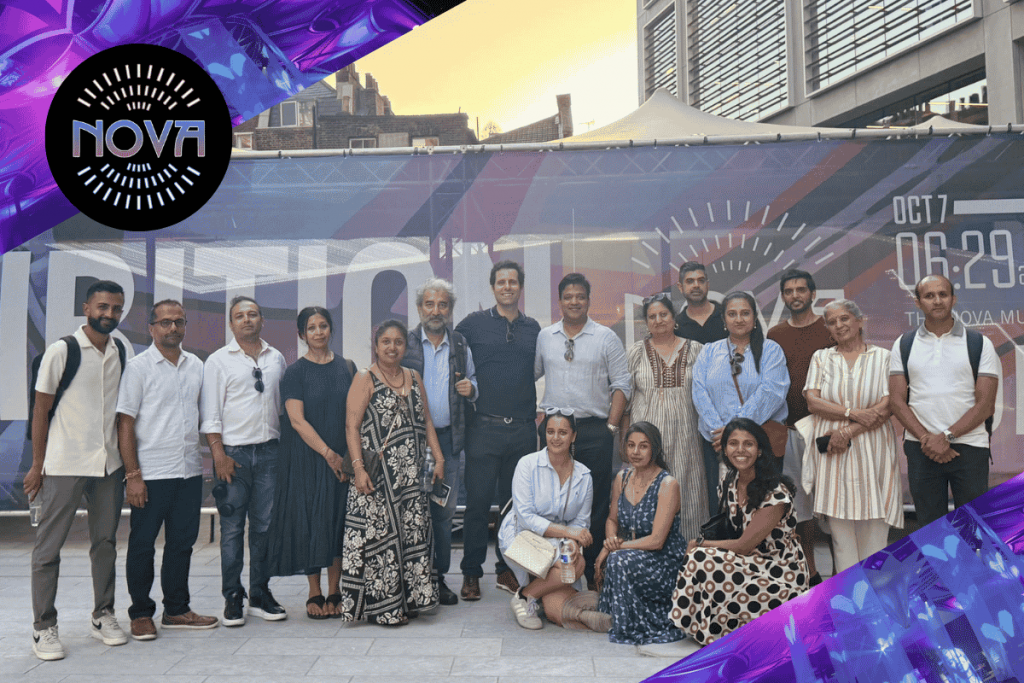
On Wednesday, 24th June, a delegation from the Hindu community, coordinated by INSIGHT UK and the Israel-India Friendship Club, visited the Nova Festival Exhibition in London. The visit served as a poignant act of solidarity and remembrance, marking a collective effort to bear witness to the terrorist attack and tragic events of October 7th, 2023.
Bearing witness to a global tragedy
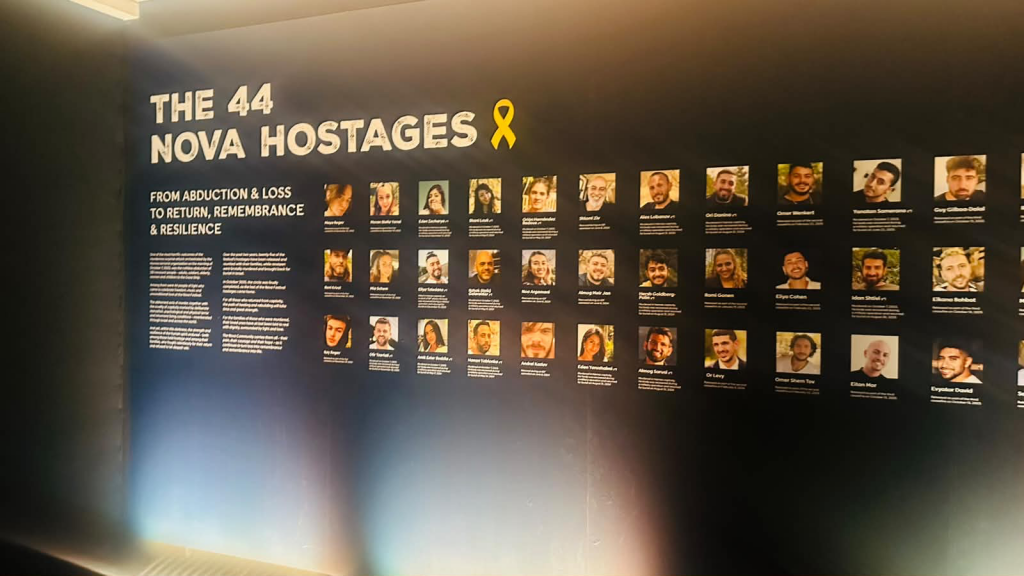
The Nova Exhibition provides an in-depth, immersive remembrance of the massacre at the Nova Music Festival, an event described as the largest music festival in history to be cut short by a brutal terrorist attack. The installation has already reached over 500,000 visitors across major global cities, including New York, Los Angeles, and Washington, D.C., serving as a powerful memorial. It is designed to empower visitors to honour the victims while acknowledging the profound human cost of the violence that occurred that day.
As members of the Hindu delegation, the experience was deeply moving and tragically familiar, having witnessed and experienced similar atrocities from terrorists who follow the same ideology. Surrounded by the personal stories, photographs, and testimonies of those who lost their lives or suffered unimaginable trauma, we were reminded of a fundamental truth: behind every headline lie real human beings, families, and communities forever changed by tragedy.
Reflections on solidarity and resilience
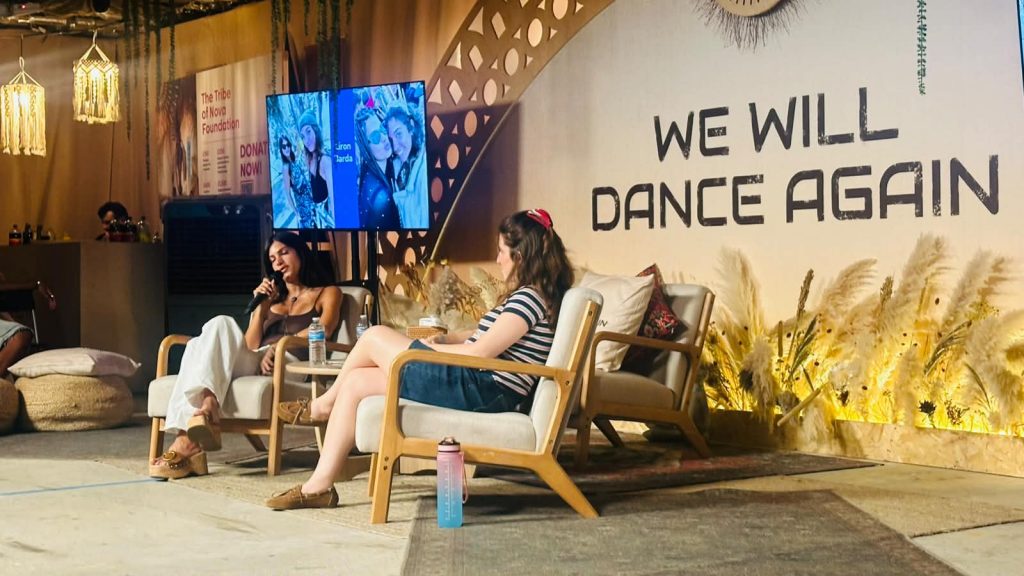
Beyond the grief, we were struck by the incredible resilience of the survivors and the unwavering determination of the families to preserve the memory and dignity of those they lost. We also had the opportunity to hear directly from survivors, and what stayed with us most was the remarkable courage they showed in recounting experiences that were profoundly traumatic. Reliving such moments cannot be easy, yet they chose to speak with extraordinary strength, clarity, and dignity, turning deeply personal pain into a powerful act of testimony.
One such account was that of Mai’s. It was genuinely moving to witness her resilience and her determination not to be broken by her experience at the hands of terrorists. Even in the darkest circumstances, she held on to hope, noticing the smallest signs of light and drawing strength from them. Her actions were guided by instinct and a strong conviction that even the smallest rays of light were enough to keep her going, and she refused to let fear take hold of her life.
Her story reinforced a profound truth: that while terrorism seeks to fracture the human spirit and instil fear, it does not ultimately define those who survive it. Instead, courage, hope, solidarity, and quiet defiance endure. There is a particular strength in the decision not to be governed by fear, and in refusing the outcome that violence intends to impose. Mai’s experience embodied this spirit with striking clarity. As survivors themselves expressed, “They will dance again!”
The significance of telling one’s story
The evening also served as a stark reminder of the importance of remembrance and testimony. Speaking, listening, and telling these stories – repeatedly and with care – plays a vital role in preserving truth, ensuring that lived human experiences are neither reduced to statistics nor forgotten over time. It also helps future generations understand the lasting consequences of terrorism, not only in terms of loss, but also resilience, dignity, and the enduring capacity to rebuild.
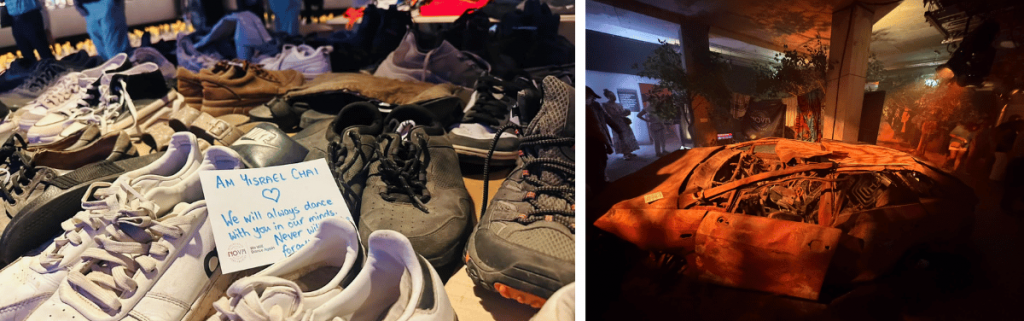
Yet what made this exhibition so exceptional was that the story was not merely told – it was experienced. The exhibition painstakingly recreated the festival campsite as it was on the night of the attack: tents still standing, scattered belongings, the charred remains of burnt-out cars, and the shoes and personal possessions left behind by those who lost their lives. Combined with authentic footage captured during the attack, it immersed visitors in an environment that was both moving and deeply unsettling. Walking through the space, we instinctively wanted to leave. Those who were there had no such choice. It was a powerful reminder that words can inform, but experiences endure. The most effective storytelling engages every sense, making history feel immediate rather than distant. It is this kind of creative, immersive storytelling that lingers long after facts have faded from memory.
More broadly, storytelling is one of humanity’s most powerful capacities. Through stories, communities preserve memories, pass on values, and transmit knowledge from one generation to the next. Stories connect people emotionally in ways that facts alone often cannot, making history both memorable and meaningful. The ability to share experiences clearly is not only a cultural strength but also a way of keeping societies connected, informed, and grounded in shared understanding. Communities that tell and receive stories effectively are often better able to cooperate and support one another, because knowledge, values, and lived experience are transmitted in ways that are memorable and meaningful.
Storytelling also plays a crucial role in shaping awareness in a world where narratives strongly influence how people understand reality. Public perception is often formed less by isolated facts and more by the stories that carry them. In this context, ideas do not exist in isolation; they compete through narratives. Harmful or misleading narratives are rarely overcome by silence; they are challenged and replaced only by stronger, clearer, and more truthful accounts.
This is why storytelling matters so deeply. It is not only about preserving memory, but also about actively shaping understanding and resisting distortion. A false or harmful narrative is, in effect, best countered by another narrative, one that is more grounded, honest, and compelling.
This idea is echoed in the ancient Sanskrit invocation: “Asato ma sad gamaya, tamaso ma jyotir gamaya” – “Lead me from untruth to truth, from darkness to light.” It expresses a timeless human aspiration: the movement from confusion to clarity, from ignorance to understanding, and from fear to awareness.
In this way, storytelling becomes more than communication. It becomes a means of guiding perception toward truth and light, ensuring that remembrance is not passive but active, continuously shaping understanding in a world where meaning is formed and sustained through the stories we choose to tell and believe.
A call to action
Below are some thoughts on the way forward for the Hindu community to learn from the Jewish community, to enhance our voice, increase historical awareness and capacity for informed advocacy:
- Prioritising historical literacy: Focusing on educating the youth about Hindu history and providing them with the tools and resources they need to learn and engage.
- Articulate our story and mass outreach: Increasing the volume of high-quality content across blogs, documentaries, exhibitions, podcasts, news outlets, films, social media, and immersive experiences to ensure Hindu history and contemporary issues are communicated in ways that are emotionally engaging, memorable, and widely accessible.
- Empowering the next generation: Building the confidence and courage of young Hindus to be assertive and unapologetic, speak out, and create content that is bold, imaginative, and engages people emotionally — not just intellectually.
- Cultivating spokespersons: Preparing confident voices to represent the community on news outlets, talk shows, radio, etc.
- Integrating education into institutions: Urging Mandirs and community organisations to incorporate historical teachings into their regular classes and assemblies, and host dedicated sessions to ensure these lessons remain part of the community’s collective consciousness.
By turning reflection into action, we hope to ensure that these stories are neither forgotten nor distorted, and that the community continues to grow as a resilient, informed, and compassionate force for good.