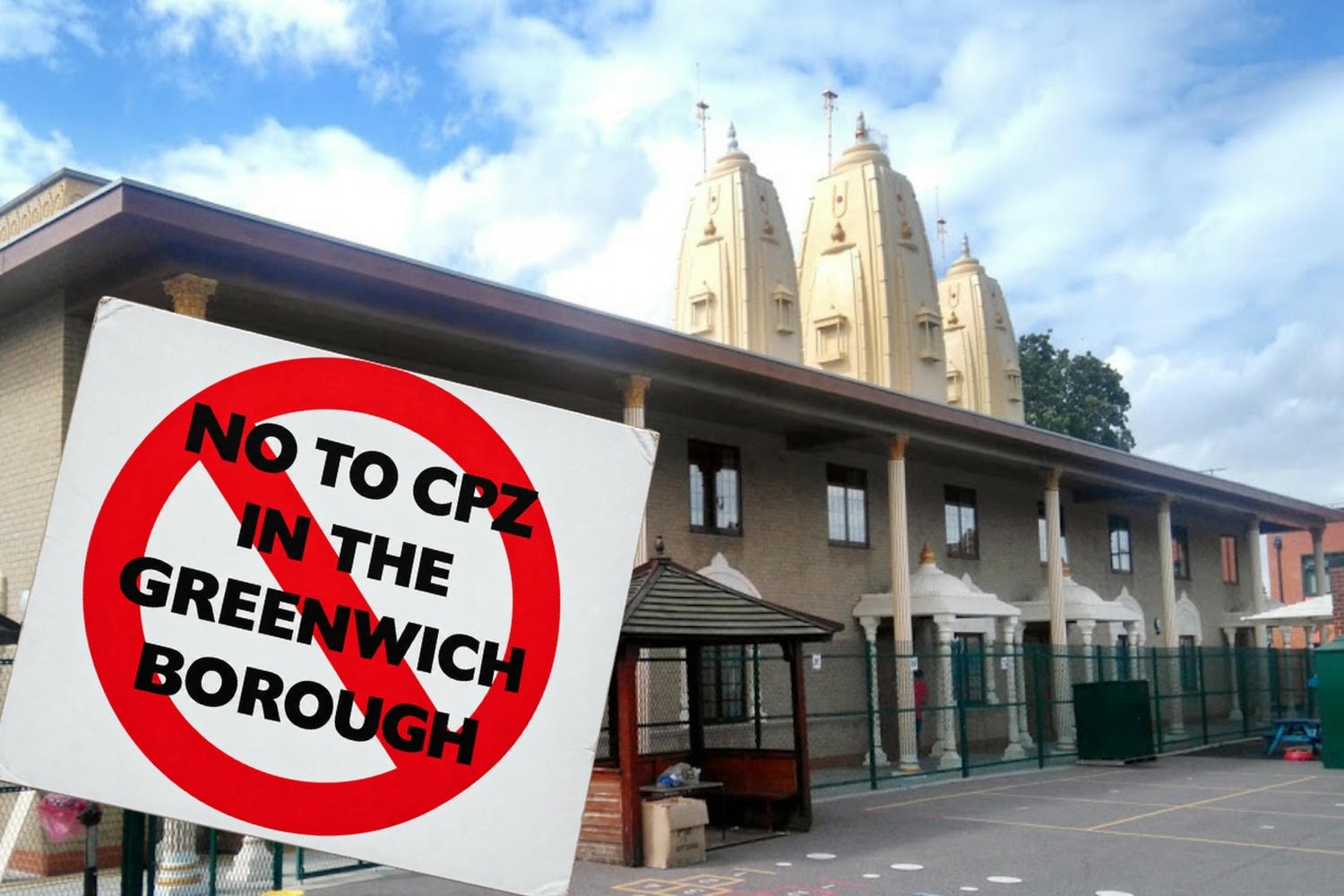
A few months ago, INSIGHT UK reported on how Hindus are feeling excluded from public space due to increasing Islamist acts of domination and the curtailing of religious festivals. Those earlier pieces examined the pressures on festivals from Deepavali to Yom Kippur to Christmas and the broader sense that Hindus are being edged out of shared civic life in modern Britain. Public space is varied and ranges from town squares to schools and places of worship. However, arguably, one certain public space, transport, is the most important of all of them, as it not only acts as a public space in its own right, but also connects other public spaces to each other.
It is therefore a perfect target for hateful ideologies to push their message and make Hindus and members of other faiths feel unwelcome and uncomfortable in public space.
The London Underground carries roughly 3.2–5 million passenger journeys per day, depending on how you measure it. According to TfL Network demand data, it totals around 1.181 billion journeys (2023/2024) annually, with more recent data showing 1.216 billion passenger journeys in 2024/25 (Source: https://tfl.gov.uk/corporate/publications-and-reports/network-demand-data).
Assuming an average (not busiest, not quietest) Tube station, with an ad placed somewhere most passengers pass (like a ticket hall or gateline), and roughly 50% of people through the station actually noticing it starting from the network’s ~3.23 million daily journeys spread across 272 stations (~11,900 entries/exits per station per day) that works out to roughly 5,000–6,000 people per day seeing one advert at a typical station (far higher at busy hubs like King’s Cross, far lower at quiet outer stations).
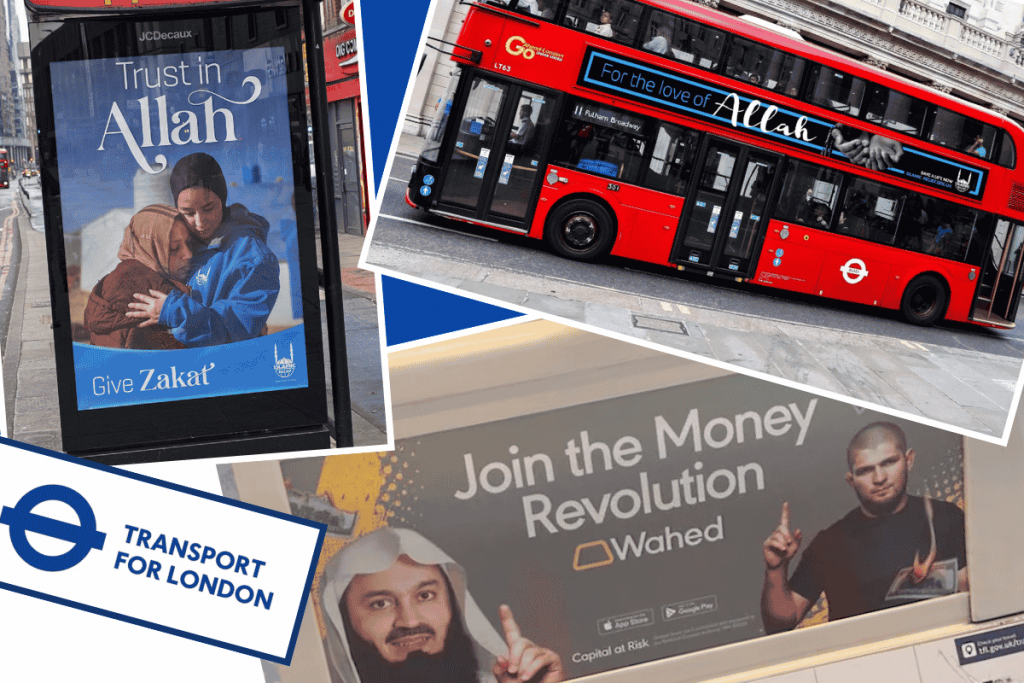
Guerrilla advertising is a low-cost, unconventional marketing approach that uses surprising or unofficial placements in public spaces to grab attention and provoke a strong reaction rather than relying on traditional paid ad formats. Guerrilla advertising has recently taken over the Underground, with many politically driven adverts targeting people of various faiths, even Hindus. Recent adverts portraying hateful ideologies include those from Wahed Invest, materials linked to Musa Menk, and the Trust in Allah advertising campaign involving Islamic Relief UK and Zakat UK.
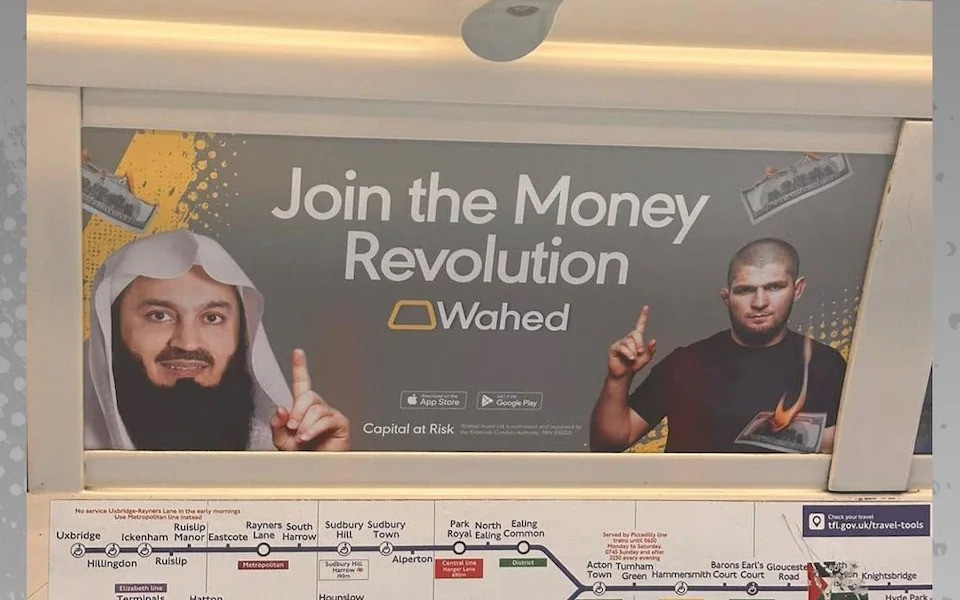
One prominent example is the Wahed Invest advertising. The advert features the “one-finger” hand sign, raising the index finger upward. This represents Tawhid, the fundamental Islamic belief in the absolute “oneness of God” (meaning there is only one god: Allah). While widely used by mainstream Muslims globally during prayer and statements of faith, it has also been prominently co-opted in propaganda by militant groups like ISIS and other extremist organisations. Coverage of the campaign can be found here: https://www.bbc.co.uk/news/articles/clyg7n4qx0yo.
Another figure whose messaging has appeared in this space is Musa Menk (also known as Mufti Ismail Menk). In 2013, the Muslim cleric who preaches that gay people are worse than animals was at the centre of a fierce “free speech” row after being invited to speak at universities across the country, as reported by the Huffington Post. Mufti Ismail Menk was due to visit six universities (Oxford, Leeds, Leicester, Liverpool, Cardiff and Glasgow) the following week. But the speaking tour was cancelled after student unions and university officials expressed concern about his views. In 2017, Singapore’s Ministry of Home Affairs barred Menk from entering the country, citing “segregationist and divisive teachings” regarding his stance that Muslims should not greet people of other faiths on their religious festivals. These positions sit against the backdrop of recent attacks on Pride events in Germany, where a man pledging allegiance to ISIS killed one and injured 29 before he was shot by police the next day.
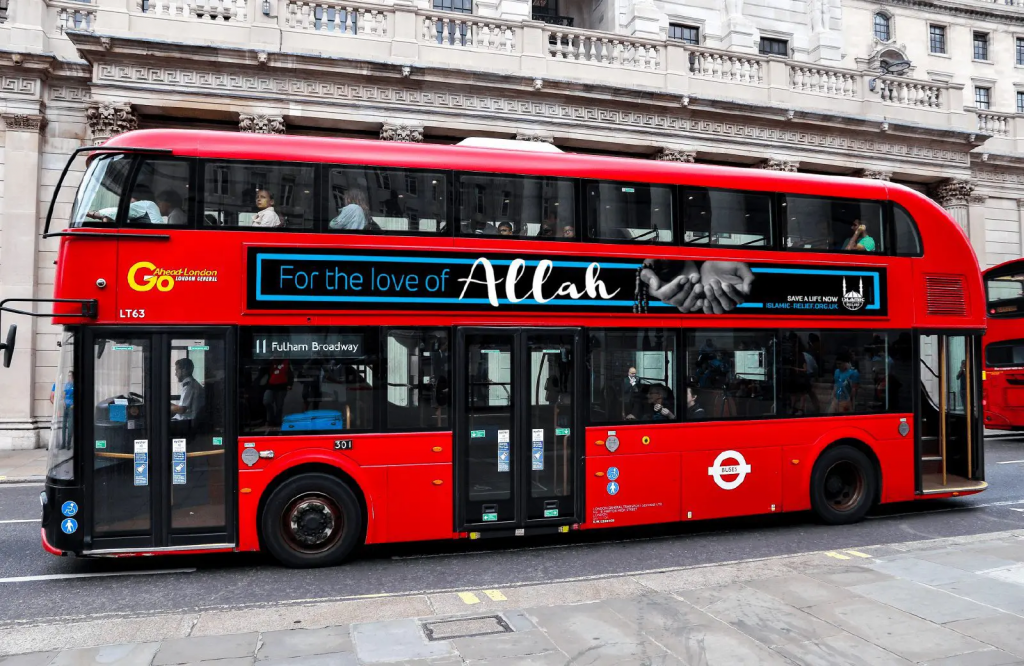
The Trust in Allah advertising campaign, associated with Islamic Relief UK and Zakat UK, has also been featured. Islamic Relief Worldwide (IRW) has had to fight to defend its reputation in recent years after being put under the spotlight by some of the UK’s closest allies regarding what they claim are its links to the Islamist Muslim Brotherhood network and the Palestinian terrorist group Hamas. IRW fiercely contests the claims and is pursuing legal avenues in Israel in what it says is an attempt to set the record straight. Further discussion of the organisation’s controversies can be found at https://counterextremism.org.uk/the-uk-must-consider-further-action-on-islamic-relief/. A recent Telegraph article published on 8 August 2026 reports that the FBI uncovered a UK Muslim charity, Al-Khair Foundation, that was used to channel money and goods to Hamas. Its global director was arrested in London on 31 July 2026.
Whilst not directly targeting Hindus in any of these instances, the ideologies that hate preachers and terrorist funding networks disguised as charities always also target Hindus, much like they target peaceful minorities. Therefore, unlike INSIGHT UK’s previous reports on the curtailing of displays of Hinduness through festivals, guerrilla advertising in transport and public space actively reminds Hindus and people of other faiths and orientations that they are NOT welcome here.
When taken on its own, an example such as guerrilla marketing may seem trivial and easily dismissed. But when paired with the recent curtailing of Hindus in public space, documented in INSIGHT UK’s earlier reporting (linked at the beginning of the article), collectively, the trend is becoming increasingly noticeable and may soon become intolerable in modern Britain.