Few lineages in history have been more deliberately sanitised than the Mughals. Babur, the first of this lineage, is portrayed as a cultured ruler, a poet king, even a liberator. Yet his own words tell different stories.
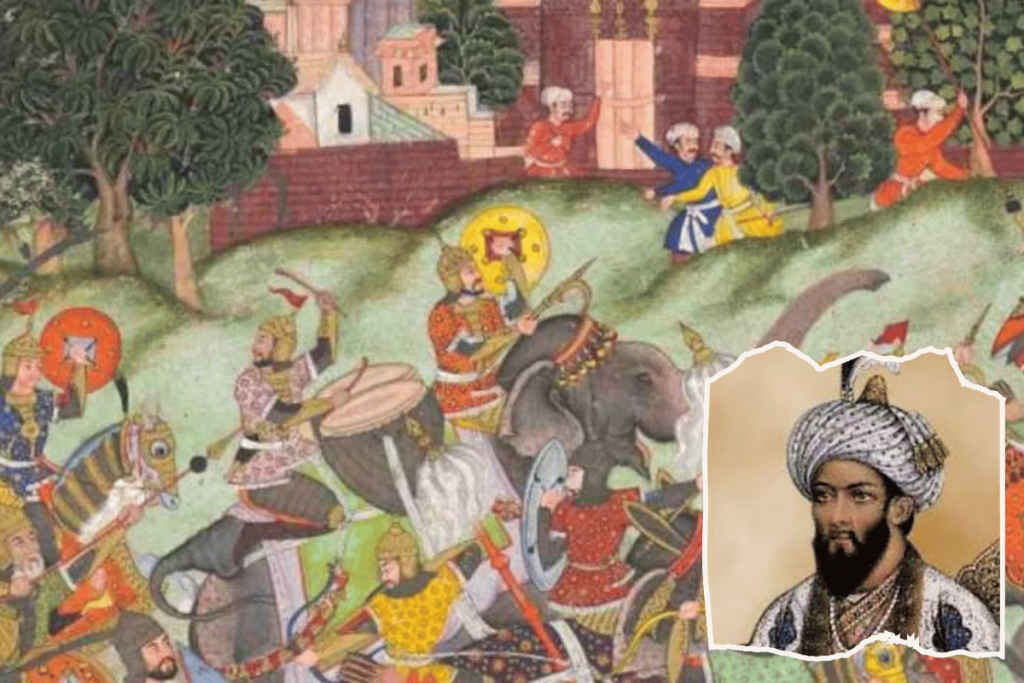
Read the full series here: Islamic invasion of India: The neglected history of colonialism
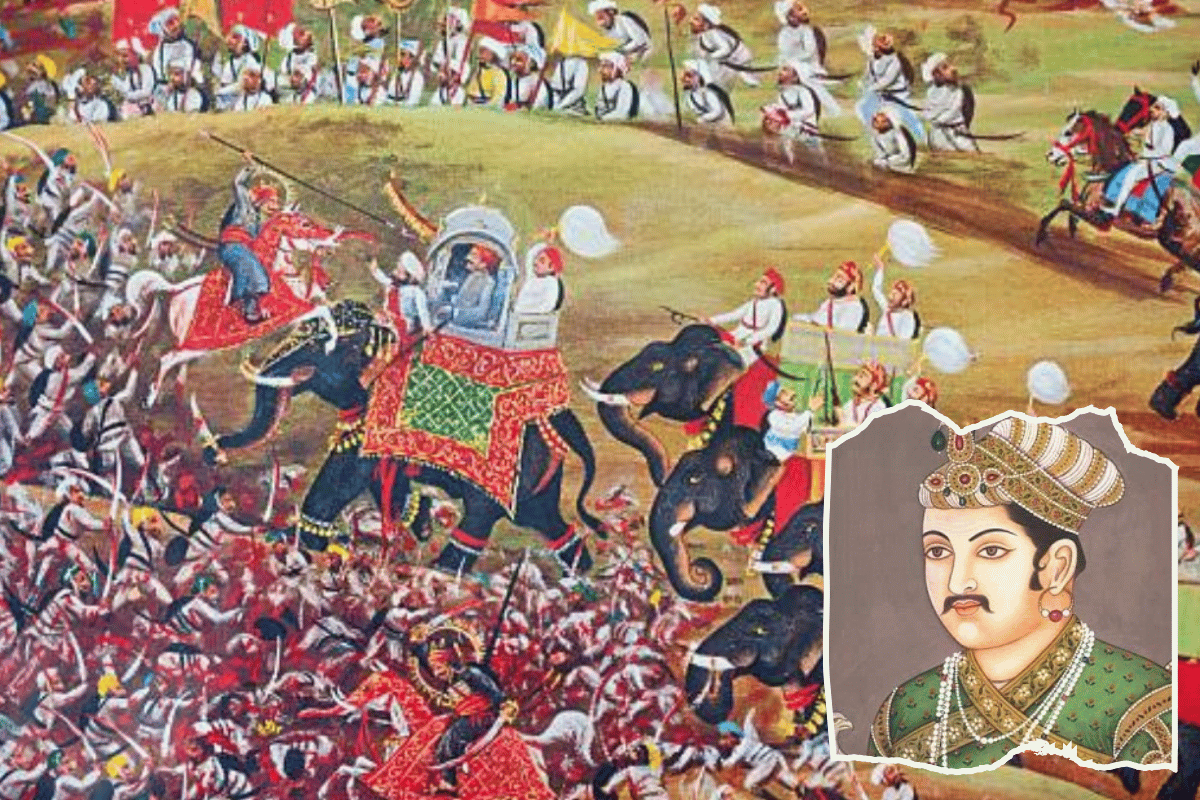
In his memoirs, his Baburnama, he boasts of temples razed, civilians massacred and towers of skulls built from the heads of slaughtered indigenous societies. These were not the unfortunate costs of conquest but deliberate acts of destruction and terror – carried out with pride. This series, Decolonising Hindu History, aims to challenge these distortions and confront the past as it was, not as it has been written.
Timur’s invasion of India in 1398, an event preceding Babur’s arrival, was also marked by significant violence and religious persecution. Motivated by reports of the Delhi Sultanate’s weakness and the immense wealth of India, Timur aimed to dismantle Hindu culture and other non-Islamic faiths. Upon entering India, his forces massacred approximately one hundred thousand Hindus and extensively plundered and destroyed cities like Jaisalmer. Historical accounts, such as the Zafarnama, detail the widespread looting, burning, and enslavement of the local population in Delhi, highlighting the brutal nature of Timur’s campaign and its devastating impact on the region.
Babur was a descendant of a lineage of violence. Genghis Khan Timur Babur. Born in 1483 in the Timurid Empire in Central Asia, Babur became the ruler of Ferghana at the age of 12. In 1501, aged 18, he lost Ferghana to rival warlords. After several failed attempts to gain back his old empire, he set his sights on Bhārat (India) – launching an invasion on Delhi in 1526, defeating Sultan Ibrahim Lodi. It must be said that Lodi was no saint – himself a leader of the colonial Delhi sultanate, which had already oppressed Hindus through cultural suppression, Jizya taxation, slavery, forced conversions and religious persecution. Babur merely expanded the infrastructure of depravity that was built by the Delhi Sultanate.
To consolidate power, Babur targeted Hindus. Guru Nanak Dev ji, the founder of Sikhism, documented in four of his hymns his eyewitness accounts of Babur’s forced religious conversions and extensive cruelties against non-Islamic populations, primarily Hindus and Sikhs. Accounts also suggest the construction of “towers of skulls of infidels” under Babur’s authority in Muslim camps. Furthermore, Babur himself, in his memoir Tuzak-i-Babari, mentions targeting not only Hindus and Sikhs but also those he termed “Pagans” and even non-extremist Muslims like Sufis during his northwest campaign.
Yet there were those who refused to bow, such as Rana Sanga of Mewar. Even the barbaric Mughals couldn’t deny his resistance and greatness; Babur described him as the greatest Hindu-Indian ruler of the time, and Mughal historian Abd Qadir Badayuni said he was the bravest of Rajputs. Before Babur, Rana Sanga was instrumental in weakening Ibrahim Lodi’s forces and extending his influence from Rajasthan to Agra. At the Battle of Bayana in 1527, the Mughal advance guard was defeated under the forces of Abdul Aziz. Rana Sanga successfully united many Rajput rulers to counter Babur.
However, at Khanwa in 1527, Babur’s armies defeated the combined forces of Rana Sanga of Mewar and other allied Rajput rulers. After this, he systematically targeted Hindu temples to delegitimise indigenous faith systems. In his memoirs, he regularly boasts of ordering massacres of Hindus who dared to resist. He put out propaganda depicting the campaign as a jihad (holy war) against Mewar, a Hindu state. After this victory, he declared himself a ghazi: a victor over the enemies of Islam. However, Babur, in his narrow-minded thirst for oppression, failed to grasp that the indigenous people of Bhārat, those who had lived there for millennia, didn’t rely on temples to sustain their faith. The spirit of the people endured through resilience and belief, unaffected by the destruction of their symbols.
The Babri structure (falsely named “Masjid” or Mosque of Babur) stood as a material witness to Babur’s reign. Babur ordered Mir Baki to build a trophy structure on Ramkot Hill in Ayodhya in 1528. Knowing that to gain control of Bhārat, he must destroy all symbols of Hindu culture, Babur built a structure over the birthplace of Bhagwān Shri Rām, Rām Janmaboomi. And for centuries, the land wept in silence, its voice drowned beneath the heavy footfalls of those who would rewrite its story. In 2019, almost 500 years after Babur first created his structure on Rām Janmabhoomi, and 9 years after the Allahabad High Court upheld the claim that Babur had built a mosque on Rām Janmabhoomi, the Supreme Court of India decided to build a temple on the 3-acre site where the Babri structure stood.
The inscriptions in the structure, which date it to be built in 1528, are refuted by historians. Well, there’s no mention of it in the Baburnama, they say. Yes, let us believe the very same Babur, who in his conquest, left a trail of blood traceable to Ferghana. Well, there’s no mention of it in the Ain-i-Akbari (the Laws of Akbar), they say. Ah, yes, of course that must be true – the grandson of Babur must surely be unbiased, as if a grandson’s silence could erase a grandfather’s sins. The trend in refuting material evidence and relegating Hindu culture and history to ‘myths’ and ‘mythologies’ is itself a remnant of what Babur was trying to achieve: first, destroy temples; second, destroy culture; and finally, create a system of discourse which will forever prevent indigenous justice. The modern readings of the Babri structure seek to deny the authenticity of Hindu heritage and perpetuate a colonial narrative that undermines sovereignty and identity. One God, one religion, one place of worship, one one one. Such echoes of fanaticism and intolerance are visible throughout the world today and can, in a small part, be attributed to Babur’s cruelty.
In the dominant historical narrative, Babur has been glorified as a peace-loving, liberal, secular poet. He is said to have advised his son, Humayun, in a letter not to interfere with the local religions, advocating respect for all. This advice was credited with influencing Akbar’s (his grandson) supposedly secular approach. However, Babur’s conquest of Chanderi in 1528 tells a darker story; he describes a brutal massacre, with a tower of skulls erected from the slain infidels. What was the crime of the infidels? Being anti-secular? Being anti-peace? Being anti-liberal? Their only crime was being Hindu.
Contrary to many translations of The Baburnama, there were no “two Baburs” (good, bad), only one. The critical mistranslations of history have led to an inversion, with Hindus painted as oppressors and Babur as the secular god. His claims of a liberal, enlightened rule fell apart in the face of his brutal conquest of Chanderi, of Khanwa, of Delhi, of Ayodhya, where his “liberal” outlook was drowned in the blood of countless Hindu lives. The history of Bhārat is one of civilisation, resistance and survival, not of passiveness and victimhood. The temples will rise again, as they always have. And Babur? He must remain where history has placed him, in the shadows of the past, where the ghosts of his deeds await him.