The loss of native religious, spiritual and ecological worldviews through religious conversion is irreversible and cannot be recovered through scientific environmental policy or superficial recontextualisation within alien theological frameworks, nor can the anchoring effect of native sacred geography for spiritual adherents of different nationalities ever be recreated once it is lost.
In well-known public discourse, Rashtriya Swayamsevak Sangh (RSS) chief Mohan Bhagwat reiterated what is propounded by many to be a core tenet of Hindu philosophy: that humanity is ultimately one, and that diverse religious and spiritual traditions represent different paths toward the same ultimate truth. Commendable as this ethos of universal harmony is, it stands in stark, troubling contrast to the ground realities facing native and indigenous traditions today: if everyone believed that all religions fundamentally lead to the same goal and are equally worthy of respect, there would be no need to proselytise, and no need to protect against proselytisation.
At a 2026 session of the United Nations Human Rights Council (UNHRC), BJP Tamil Nadu State Secretary Ashvathaman Allimuthu articulated the reality on the ground: the aggressive, systematic erosion of ancient, indigenous civilisations through deliberate religious conversion activities.
For centuries, if not millennia, indigenous, nature-centric, and old-world spiritual traditions have preserved irreplaceable frameworks of human wisdom, ecological stewardship, and metaphysical understanding. Yet, across the world (and currently particularly within India), these fragile cultural ecosystems are being dismantled by predatory conversion activities. To safeguard human and ecological diversity, it is time to confront a fundamental truth: passive pluralism cannot survive unidirectional conversion.
Hinduism and the Concept of Conversion
A central distinction between Sanatana Dharma and some other dominant faiths lies in their core theological approach to diversity of faith and belief. In Hinduism, religious conversion as an institutional goal simply does not exist.
Because Hindu thought views the divine as multifaceted and accessible through infinite modes of realisation, there is no single authority and no mandate to impose singular belief systems or a standardised form of worship on everyone. Traditional Hindu philosophy does not claim an exclusive monopoly on salvation, nor does it glorify and idealise the conversion of “non-believers” (for want of a better term). Hinduism has no concept of conversion because it has no gate to pass through. It has no founder whose acceptance is required, no single creed, no central organisation, and no universal doctrine that fundamentally and actively condemns or “others” the outsider. The Rig Veda’s line that truth is one, and the wise call it by many names, is a working principle. Many view Hinduism itself as an umbrella term to describe a massive set of several diverse Sampradayas (or spiritual traditions) rather than a singular monolithic religious entity.
It is why Hindu kingdoms have made room for the Zoroastrian, the Syrian Christian, the Muslim and the Jew for centuries. It is also why diverse offshoots of Dharmic tradition, such as Jainism, Buddhism and Sikhism, emerged from the Indian subcontinent and thrived (developing into major world religions in their own right) rather than being viewed as heresy. Many tribal and forest traditions of India sit in an unbroken continuum within or alongside mainstream Hindu life, sharing sacred groves, ancestor veneration and reverence for rivers and mountains. A tradition that does not seek converts cannot be expansionist by design. That is a source of pride, and also a vulnerability.
By contrast, some expansionist traditions view proselytism as a sacred obligation or ideal, operating somewhat imperialistically under the assumption that non-adherents must be brought into a specific theological fold for their own salvation. When an ancient culture is targeted by methodological conversion campaigns, the loss is not merely a shift in formal religious affiliation—it is the complete disruption of an organic, ancient ancestral worldview.
Methodological Drivers of Conversion in India
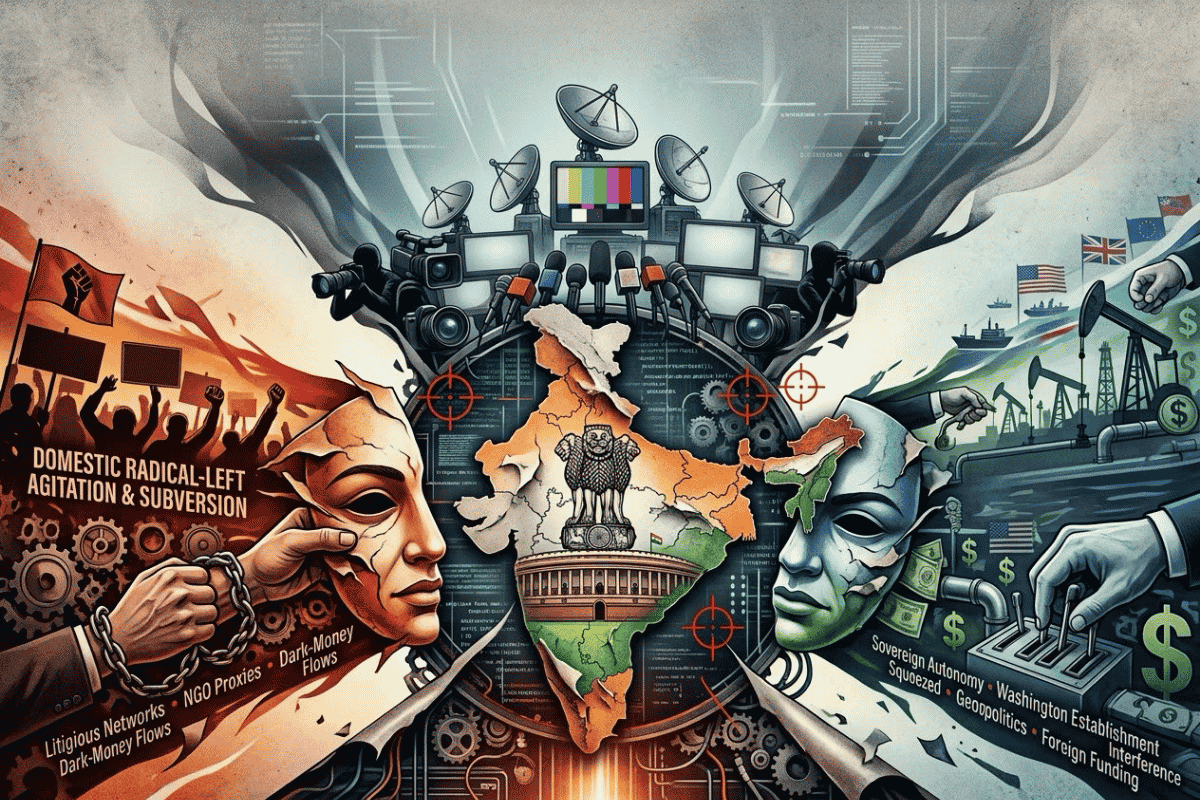
The machinery driving religious conversion in India operates through vast global financial networks and multi-layered organisational strategies. Rather than relying solely on theological debate, conversion activities frequently exploit socioeconomic vulnerabilities.
Large-scale international funding flows into India through foreign-backed non-governmental organisations (NGOs). While many operate under the guise of noble humanitarian causes—such as providing healthcare, education, disaster relief, or community development—these services often serve as entry points for evangelical or proselytising agendas. Community aid becomes contingent upon attending religious gatherings or abandoning ancestral practices.
In regions inhabited by marginalised remote communities, Scheduled Tribes (as an aside -the history of how this terminology came about and the divisions it has sowed is itself worthy of a separate article) and economically disadvantaged populations, conversion efforts systematically undermine traditional nature-centric customs. Ancestral sacred groves and temples, local customs, rituals, and oral traditions are frequently vilified as “backward” or “superstitious,” replaced by rigid dogmas that alienate communities from their original heritage.
In many rural areas, medical aid, education scholarships, and micro-loans are deployed as incentives. This exploitation of economic vulnerability and leveraging of financial assistance against spiritual identity creates a coercive dynamic where vulnerable individuals are encouraged by design to trade their heritage for basic needs.
Added to all of these methodologies is strong and well-resourced narrative building – discussed further later.
Once ancient cultures and worldviews have been wiped out, they cannot be recovered, and restorative justice becomes almost impossible: a deep dive and detailed case study is required in places where this has happened to truly understand the systemic failures that led to the annihilation of native faith and knowledge traditions and to learn lessons going forward
Many people would argue that this article is partisan, that the scale and threat of conversion activities is being over-exaggerated, and that the attraction to convert is entirely voluntary, with the entire blame falling squarely in the court of the native “parent community” due to its own unwillingness or inability to resolve its own internal evils.
While some of this may be true – several decades of conversion practices and demographic engineering in the North-East of India and the complete erasure of the once-majority sacred Dharmic traditions of Kashmir and other pockets of India have shown how quickly and easily people can become entirely alienated from the native roots and ancestral heritage of any particular land – and this alienation and loss is irreversible. Each and every pocket of India (or indeed the world) where such erasure can be exemplified is worthy of a deep study to understand the systemic failures in protecting, preserving, safeguarding, and, where necessary, reforming native cultures rather than complete erasure of them.
One will find that factors such as toxic and nefarious foreign funding and interference to enable such engineering to occur, lack of internal political will or wherewithal, corruption, frank genocide and ethnic cleansing feature more prominently as underlying factors that enabled conversion and hastened the clearly intended destruction of living native sacred heritage, rather than the more simplistic reasons such as socioeconomic or caste inequalities, or organic and peaceful intellectual attraction to foreign faith and belief systems.
Added to this heady mix is crafty narrative building, misinformation and propaganda that is meant to ensure the complete subversion of the truth of the ground reality, and is backed by strong geopolitical forces that influence mighty media houses and have a strong social media reach. These false narratives are targeted at anyone and everyone, oftentimes fine-tuned to maximise their impact on the intended recipient – be that recipient a native practising their ancestral faith, the government of the country within which conversion activities are occurring, as well as the lay audience worldwide. One will find too that much of the blame lies not only with faith adherents who genuinely believe that proselytic activities are mandated by their faith for the benefit of the non-believers as well as the promise of heavenly reward for those that engage in active conversion activities, but also with governments and geopolitical entities that use people with such fanatic ideologies to convert local populations for their own geopolitical ends, given that alienation from one’s ancestral roots and sacred geography is the first step in a slippery slope to conflicting loyalties, internal divisions and even regime change operations.
The preceding examples are from within India itself. The condition of ever-dwindling native or indigenous traditions of non-secular nation-states carved out of India and how they got to this sorry state also warrants examination.
Such deep dives and detailed case studies are vital to understand the systemic drivers that have already led to the annihilation of native traditions so that lessons can be learnt going forward to preserve what is left of ancient cultures, faith and knowledge systems in other pockets of the Indian subcontinent and around the world. History stands as testimony to the fact that once religiously motivated demographic changes (by a variety of means) have occurred beyond a tipping point, protections for native religions remain a matter of lip service rather than genuine intention.
When an indigenous community is converted, centuries—if not millennia—of accumulated wisdom, unique and beautiful worldviews, traditional ecological knowledge, and unique linguistic idioms are permanently erased. Geography that was once held sacred is no longer sacred, as loyalties and ideals are shifted. This loss cannot be recovered through scientific environmental policy or superficial recontextualisation within an alien theological framework.
The Limits of Passive Pluralism
Mohan Bhagwat’s assertion that all paths lead to the same goal is a noble representation of internal thought and idealism shared by many Hindus. However, holding this belief passively becomes hazardous when expansionist religious communities explicitly reject it and even take advantage of it.
Pluralism is a two-way street. If one tradition practices complete acceptance while others actively work to replace it, the end result is not peaceful coexistence, but the systematic elimination of the tolerant tradition.
One can no longer afford to assume that goodwill and magnanimous worldviews will be reciprocated by those who hold dear to their hearts an ideological mandate for expansion or who are unable or unwilling to reform and upgrade such worldviews. Recognising the dignity of all paths requires that adherents of all major faiths genuinely accept the validity of other traditions—including the right of indigenous peoples and practitioners of old-world native faith systems to be respected and remain free from predatory conversion activities, and the responsibility that all of humanity holds to preserve such diversity.
What’s good for the goose is good for the gander: why preservation of original native sacred geography matters, and the anchoring effect of original sacred geography on worldwide diasporas
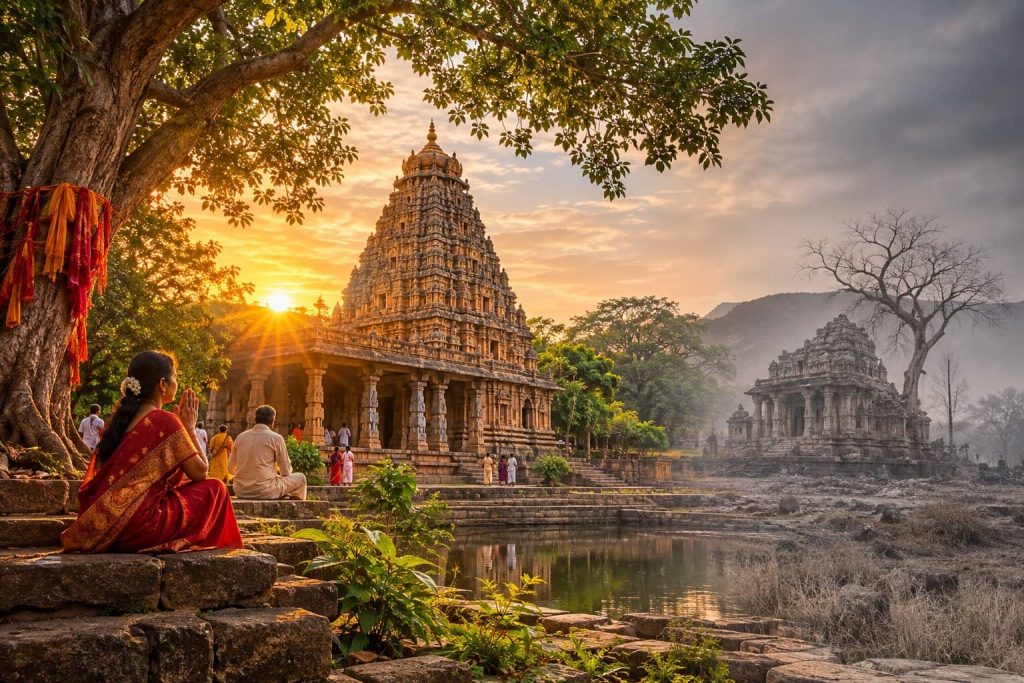
Native sacred geography matters. While the entirety of Earth and nature is seen as one large interconnected family born of Bhumi Devi (Mother Earth) in Hinduism, the concept of sacred Kshetras and their energies accumulated over aeons due to sadhana (spiritual practices) by pilgrims, and the concept of Tirthayatra (pilgrimage to specific sacred sites pertinent to one’s spiritual lineage), does exist. Similarly, other mainstream religions also encourage adherents to visit sacred historical sites regardless of nationality. Sacred geography anchors people in their faith and identity and this is why demographic change and conversion activities in India matter and directly impact the experience and understanding of Hinduism that current and future generations of global Hindus will have, no matter what their nationality.
One may argue that Kashmir Shaivism as a philosophy still exists as a concept – even if no longer in its original sacred geography – but is that good enough? Religion is seen as a protected characteristic in most secular countries, and this is meant to ensure adequate freedoms and protections within those countries. However, this is no replacement for protecting the actual sacred geography and land of origin of such diverse faith traditions. Like a kite without strings, it is easy for ancient knowledge to be civilisationally appropriated when one has surgically excised it from its geographical heartlands and alienated the people who live on those lands from their own ancestral heritage.
Perhaps a lesson can be learnt from Abrahamic faiths – while some sacred sites are common to them all and are shared, there is little if not any room for non-Abrahamic faiths to practice conversion activities – or in some instances even enter – some of these sacred lands. Any stance by the government of India to protect its native heritage is often met by foreign outrage, and this raises the wider question – why are Hindu sacred lands not seen as worthy of the same protections as Abrahamic sacred lands, by the world at large?
Hinduism is unique in having well-known and mainstream deities as well as a plethora of Gram Devathas (deities associated with different places and localities) and Kul Devathas (family deities venerated and worshipped by ancestral tradition from generation to generation). Although many “local” deities from regional sacred sites or family traditions are oftentimes associated with mainstream deities, they oftentimes also carry their own very bespoke and diverse traditions, rituals, histories and folklore that may even diverge from mainstream traditions while at the same time being part of them, as this is not seen as mutually exclusive. It follows that Hindu sacred geography cannot be condensed down to a few key sites, but requires a wider sphere of protection if its sacred diversity is to be kept alive. Sacred sites – even those that are lesser known – in each region of India are associated with bespoke spiritual, ritualistic, philosophical, linguistic, intellectual, folk and other traditions – all of which contribute to the incredible diversity of Hinduism. Conversion practices and demographic changes at such sites make the upholding of such traditions extremely difficult, particularly for diasporas hailing from such traditions living away from those specific lands. While some may argue that mainstream Hinduism may remain intact in some of the larger, well-known centres, this argument fails to consider the loss of sacred, intellectual and cultural diversity that happens when smaller regional sites are overlooked. One need only study the various large and small pockets of the Indian subcontinent (in particular, lesser-known and remote locations) where niche and precious regional traditions that thrived for thousands of years either no longer exist, or exist in theory but not in practice.
It must be clarified that the above factors do not necessarily mean that those that do not share Hindu worldviews should be banned from these spaces in a similar way that non-adherents of certain religions may be banned from certain sacred sites of other religions. However, a distinction must be made between peaceful and integrated coexistence, and the disrespectful underlying ethos that leads people to want to convert others and all of the associated enabling factors that aid and abet conversion activities.
When Hindus are more rooted in Palestine than the Indian subcontinent, but the converse is usually not true
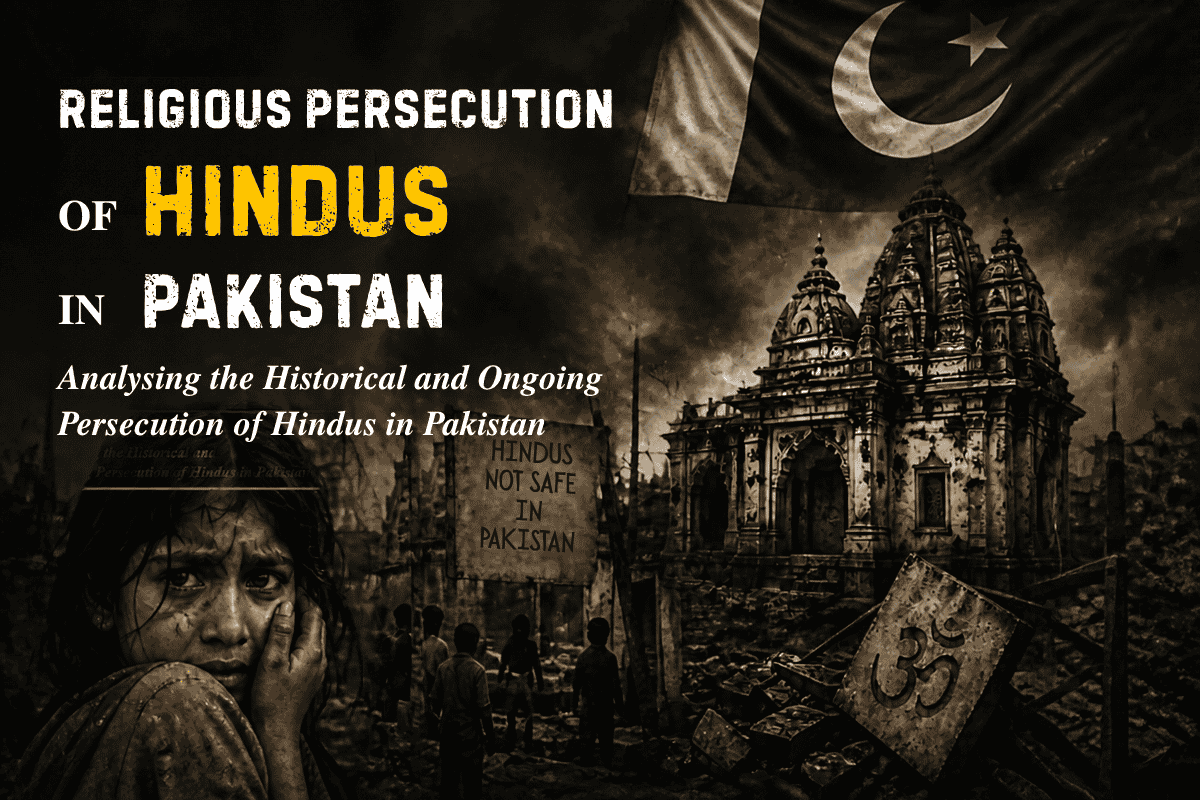
There are many worthwhile and valid causes requiring activism in this world. However, we now live in a dystopia where many Hindus, particularly next-generation Hindus born outside India – know nothing about or turn a blind eye to their own sacred geography or the challenges their ancestors or co-religionist brethren faced (nothing short of genocide in various instances), all the while championing causes for other communities. While those other causes may be important, there is a strange sense of cognitive dissonance in the fact that other communities rarely, if ever, champion Hindu causes – be they restorative justice for Kashmiri Hindus, the plight of Hindus in Pakistan and Bangladesh, the targeting of indigenous faith systems in the North East and other pockets of India – the very country that, if the media were to be believed, is a safe haven for Hindus and a veritable hell for other minorities despite demographic trends and historical evidence to the contrary.
It is a matter of concern that many young, non-Indian Hindus around the world appear to lack the awareness (or the will to develop it) that young people from other communities seem to have about their own respective civilisations – regardless of modern nationality. The lack of grounding in one’s civilisational history, lack of understanding of how misinformation is easily spread by reputable media houses as well as common social media, and unequal importance in all dimensions and spheres of prevalent culture within and outside India, given to Hindu sacred geography and Hindu welfare, mean that several international Hindus around the globe are like the aforementioned proverbial stringless kite, just waiting for other communities to attach strings that anchor them in each and every cause and activity except those that benefit Hindus. Advocating for the welfare of Hindu sacred geography (and all of the geopolitical and demographic factors feeding into this) suddenly carries the risk of being labelled “right-wing Hindu nationalism” while being a champion for the sacred geography or sites of importance to other faith groups is legitimised and even systemically encouraged. Indeed, this demonstrates that people have an issue with Hinduism, rather than with religious nationalism, and are therefore, by definition, Hinduphobic. This makes it even more important that India’s role as a land of sacred geography for Hindus across the world is recognised and protected as a matter of urgency.
A Call for Cultural Protection
If international religious and political leaders from different faith backgrounds are unable or unwilling to demonstrate in practice and reciprocate the message of mutual respect and non-interference that Mohan Bhagwat is trying to spread, international bodies must step in – as aptly put by Ashwathaman Allimuthu – and countries with any surviving vestiges of indigenous or old-world faith systems that are not expansionist in their ethos must work harder to protect and preserve their fragile heritage before it is lost forever, with fragments of their cultures wistfully preserved behind the glass of a museum at best.
It is imperative that the UNHRC and global human rights institutions implement stronger, enforceable protections for indigenous, old-world, and nature-centric spiritual traditions. The preservation of these communities is not merely a localised cultural issue; it is a global imperative. Just as the loss of biological diversity threatens planetary ecosystems, the loss of human spiritual and cultural diversity impoverishes collective human consciousness and erases an ancient, sacred reverence for nature that can only be achieved through living and breathing those traditions rather than simply theoretically acknowledging, repackaging and appropriating them. Protecting these ancient worldviews from predatory, globally financed conversion networks is essential for preserving the irreplaceable cultural, spiritual, philosophical and intellectual diversity, ecological wisdom and ancient sacred reverence for nature that the modern world desperately needs.