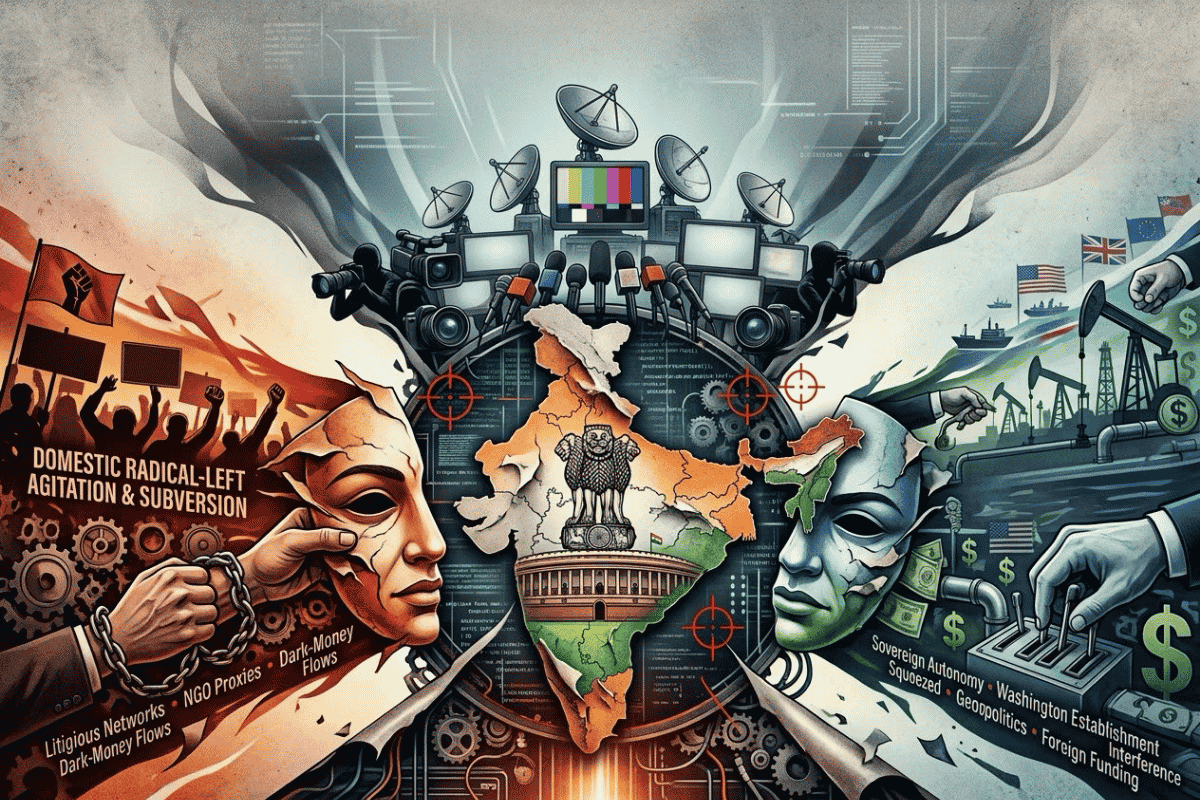
Part II of the Investigative Series: Unveiling the Cadre, the Clustering Logic, and the Playbook Behind the Cockroach Janta Party
Read Part 1 – Target India – Unmasking the nexus threatening the world’s largest democracy
In investigative work, when a mysterious entity bursts onto the scene with frictionless precision, viral saturation, and immediate global amplification, a seasoned detective does not look at the noise; they look at the actors.
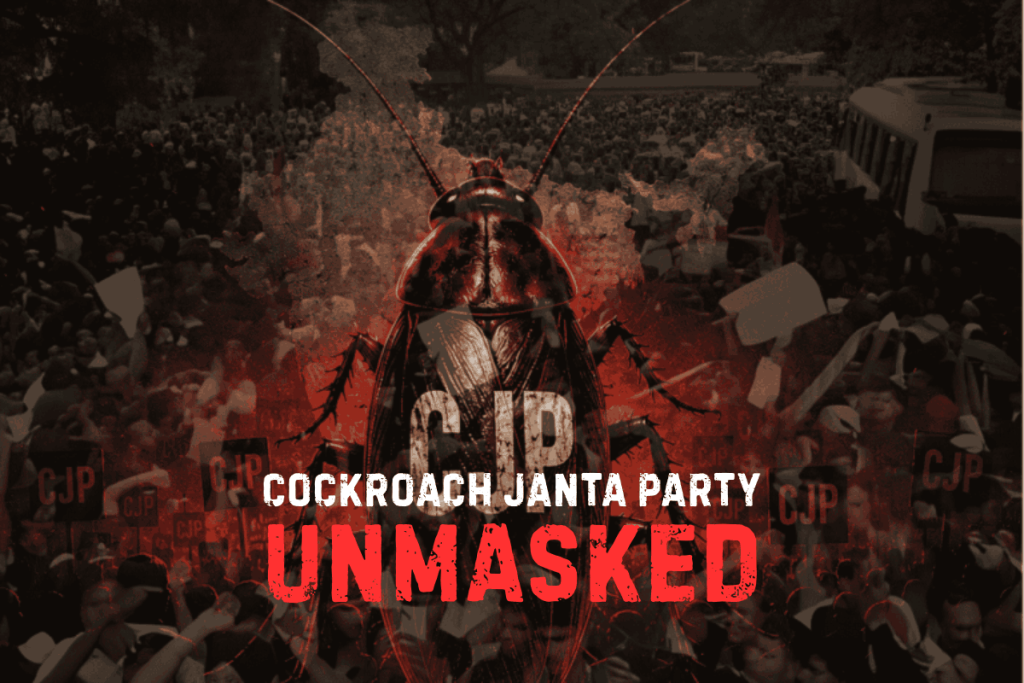
The Cockroach Janta Party (CJP), launched under the banner of satirical youth protest, styled its moniker around resilience, adopting the insect as a badge of honour (“cockroaches never die”). But when you lift the memetic rug and track the financial, academic, and political paper trails, the picture shifts dramatically. What is marketed as a spontaneous uprising of ordinary students is, in reality, a meticulously assembled operational cadre.
Investigative Premise: This is the standalone investigative dossier exposing the core actors driving the swarm, the mathematical improbability of their convergence, and why this playbook poses an urgent warning far beyond India’s borders.
1. The Roster of the Swarm: Profiling the Key Operatives
A close examination of the CJP leadership reveals a triad of individuals whose backgrounds are far too specialised, international, and interconnected to be the product of casual coincidence.
Abhijeet Dipke: The Memetic Frontman
- The Background: Founder of the CJP and a political communication strategist, Dipke completed postgraduate studies, earning a Master of Science in Public Relations from the Boston University College of Communication. His credentials have been actively contested.
- The Political Incubation: Before establishing the CJP, Dipke spent years working within digital communication and social media cells for the Aam Aadmi Party (AAP) between 2020 and 2023, engineering youth-targeted messaging and policy outreach.
- The Role: Dipke functions as conversational friction and the public-facing memetic engine. His training in American strategic communications allows him to weaponise internet irony, turning administrative grievances into viral anti-establishment soundbites designed for maximum digital traction.
Ashutosh Ranka: The Operational & Policy Architect
- The Background: Holding a B.Tech in Materials Science from IIT Kanpur and a Master of Public Administration from the London School of Economics (LSE), Ranka represents an elite blend of technical grounding and Western policy training.
- The Professional Pivot: After cutting his teeth as a consultant at McKinsey & Company, Ranka pivoted abruptly into high-friction political organising, leveraging prior volunteer linkages with the AAP ecosystem.
- The Role: While Dipke commands the digital narrative, Ranka provides the structural backbone, logistical frameworks, and institutional planning required to scale online outrage into physical street blockades.
Saurav Das: The Global Media and Transparency Conduit
- The Background: Serving as Chief Spokesperson and legal-transparency advocate for the movement, Das operates as an investigative journalist and RTI litigator. However, one wonders how a middle-class student, presumably with student loans, manages to coordinate a political campaign that obviously requires sustained funding. It is a classical mismatch of income source versus his preferred lifestyle of political activism.
- The International Pipeline: His work is backed by prestigious fellowships and grants, including from the Pulitzer Center, and features regular bylines across global and domestic platforms such as Al Jazeera, The Wire, and Article 14.
- The Role: Das acts as the narrative transformer. His deep integration into international media desks ensures that domestic political disputes are instantly repackaged as “human rights crises” for Western consumption, unlocking global diplomatic and media shielding.
2. The Rule of Clustering: Why Coincidence is Mathematically Dead
In intelligence profiling, the Rule of Clustering asks a simple question: What are the odds that multiple rare, independent anomalies occur within the exact same closed group?
- The Anomaly: In the Indian socio-economic framework, middle- and upper-middle-class youth who secure elite technical degrees (IIT) or prestigious Western graduate slots (Boston University, LSE) follow a normative trajectory: career building, debt servicing, and corporate advancement.
- The Deviation: The sudden, synchronised abandonment of high-ROI corporate and academic tracks by individuals sharing direct historical ties to the same political machinery to lead high-friction street agitations defies ordinary sociological probability.
Deductive Analysis: When you cluster an American PR specialist, a British policy-trained McKinsey alumnus, and a Pulitzer-grant investigative journalist under a single decentralised banner, probability dictates one conclusion: this is not an organic student union; it is an engineered operational unit designed for maximum strategic disruption.
3. From Satire to Street Escalation: The Mechanics of the Swarm
The CJP’s trajectory, moving from satirical online posts following judicial remarks to high-stakes confrontations at Jantar Mantar and coordinated nationwide protests, reveals a calculated escalation playbook:
- Manufactured Grievance: Intercepting legitimate domestic frustrations, such as administrative exam delays or electoral roll revisions.
- High-Friction Mobilisation: Deploying leaders to stage dramatic public confrontations designed to trigger state enforcement measures.
- The Optics Trap: The moment law enforcement deploys preventive detentions or crowd-control barricades, the apparatus swings into motion: foreign media desks amplify the visuals, local legal fronts file emergency petitions, and the sovereign state is framed as authoritarian.
Appendix: Relevance to British Politics & The Universal Warning
The architecture of asymmetric destabilisation detailed in this case file is far from a localised phenomenon. It serves as an urgent wake-up call for open democratic societies worldwide, most notably the United Kingdom.
- The Westminster and Campus Parallel: In the UK, foreign-funded activist networks, dark-money think tanks, and elite non-governmental organisations routinely operate within Westminster corridors and university campuses. They weaponise genuine civic concerns such as digital speech laws or economic strain to convert local democratic debate into political paralysis. This also begs the question: since when did University campuses across both sides of the Atlantic become breeding grounds of political issues occurring in a completely different continent, hyperfocused on one strip of land?
- The Universal Warning: Weaponising and defiling genuine democratic processes to further global geopolitical agendas, unseat uncooperative administrations, and install proxy vassals for global superpowers represents an extraordinarily dangerous precedent. When elections, judicial rulings, and peaceful protests are subverted by external money and foreign-trained operatives, democracy ceases to be the will of the people; it becomes a weapon of foreign policy.
- Safeguarding British Sovereignty: The British public and political establishment must remain fiercely watchful of covert interventions in national politics. Citizens must learn to look past polished memetic branding, foreign academic credentials, and moralising headlines to ask the fundamental detective’s question: Who funds the logistics? Who controls the narrative? And whose strategic interests are served if national governance is paralysed?
Befitting Conclusion: Exposing the Nest
When you follow one cockroach, you don’t just find an isolated insect; you find the structural nest, the nourishment lines, and the hands that let them loose.
The leaders of the Cockroach Janta Party are not accidental revolutionaries. They are anarchists who disguise and present themselves as revolutionaries, thereby maligning a term that carries deep historical connotations. They are a purpose-built cadre equipped with Western academic credentials, elite corporate discipline, and international media pipelines. Unmasking these actors and recognising their cross-border playbook is the vital first step in seeing past the memetic theatre and protecting sovereign democratic governance from manufactured chaos.